© Hansruedi Weyrich
Over the last century the populations of Bearded, Cinereous, Egyptian and Griffon Vulture have declined dramatically and seen their distribution ranges across the continent severely restricted. Habitat loss, food scarcity, electrocution and collision with windmills and powerlines, and poisoning are threatening Thanks to your support we can help them thrive again.
We are the world’s leading wildlife organisation solely dedicated to protecting, conserving and restoring Europe’s four species of vultures.
Our conservation initiative to return the Bearded Vulture to the Alps mountain range, one of the most remarkable wildlife comeback stories of the last 50 years, shows vulture conservation can work.
Through collaboration with governments, businesses, local communities and non-governmental wildlife organisations, we are applying our expertise in:
Captive breeding vultures for conservation
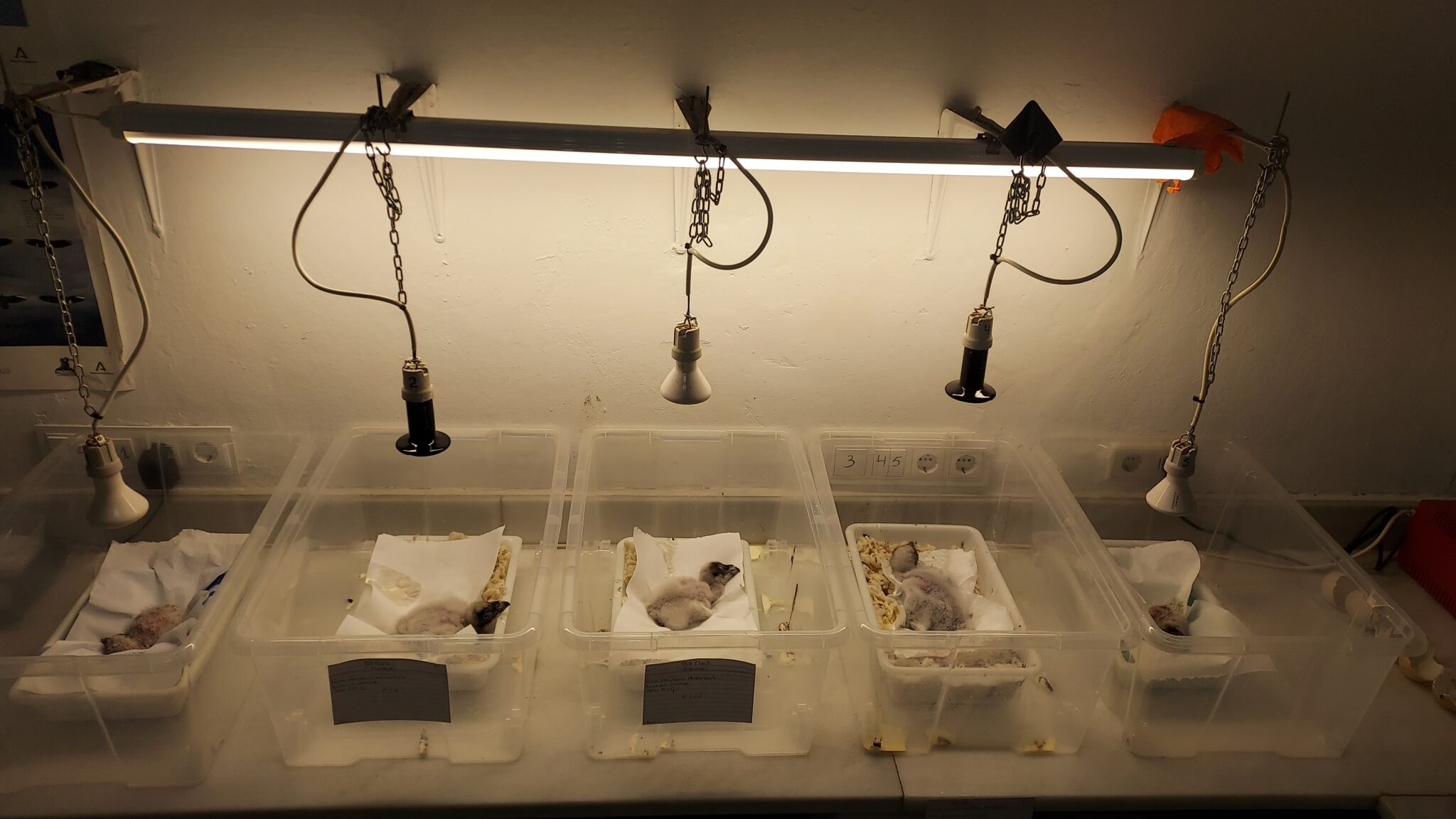
When a species’ wild population becomes under significant pressure or is at risk of becoming extinct, it is often necessary to intervene to create a captive breeding programme by either managing the population of a species in captivity for breeding or by establishing a new captive population specifically for breeding purposes.
We currently coordinate the Bearded Vulture captive breeding network on behalf of EAZA’s European Endangered Species Programme (Bearded Vulture EEP)
Restoring vulture populations
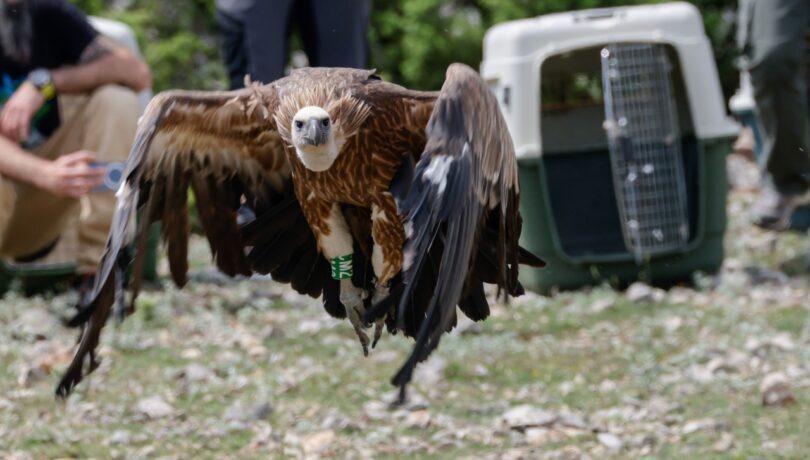
Conservation efforts to restore vultures to areas where they are near extinction or have gone extinct in Europe involves addressing the issues the populations face, such improving the natural habitat or food availability, and releasing birds into the wild to either reintroduce a new population or strengthen existing populations, by releasing either captive-bred young birds or wild birds from one more abundant population in one country to a smaller population in another country.
We have been working for over 30 years with partners in Austria, Bulgaria, France, Italy, Spain and Switzerland.
Monitoring and tracking birds
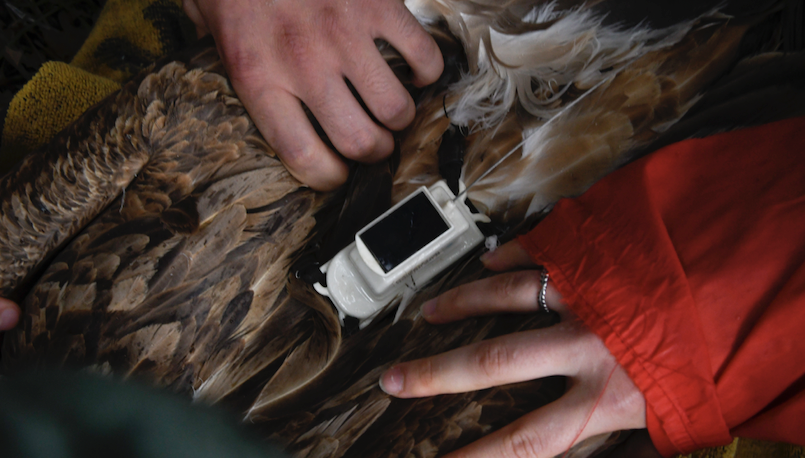
We closely monitor birds we released into the wild as well as wild birds using different techniques such as colour-ringing, wing feather marking and fitting the birds with small lightweight GPS transmitters.
It helps us and our conservation partners to understand the movements of vultures, identify potential threats and carry out accurate actions to prevent unnecessary deaths.
Shaping vulture conservation research
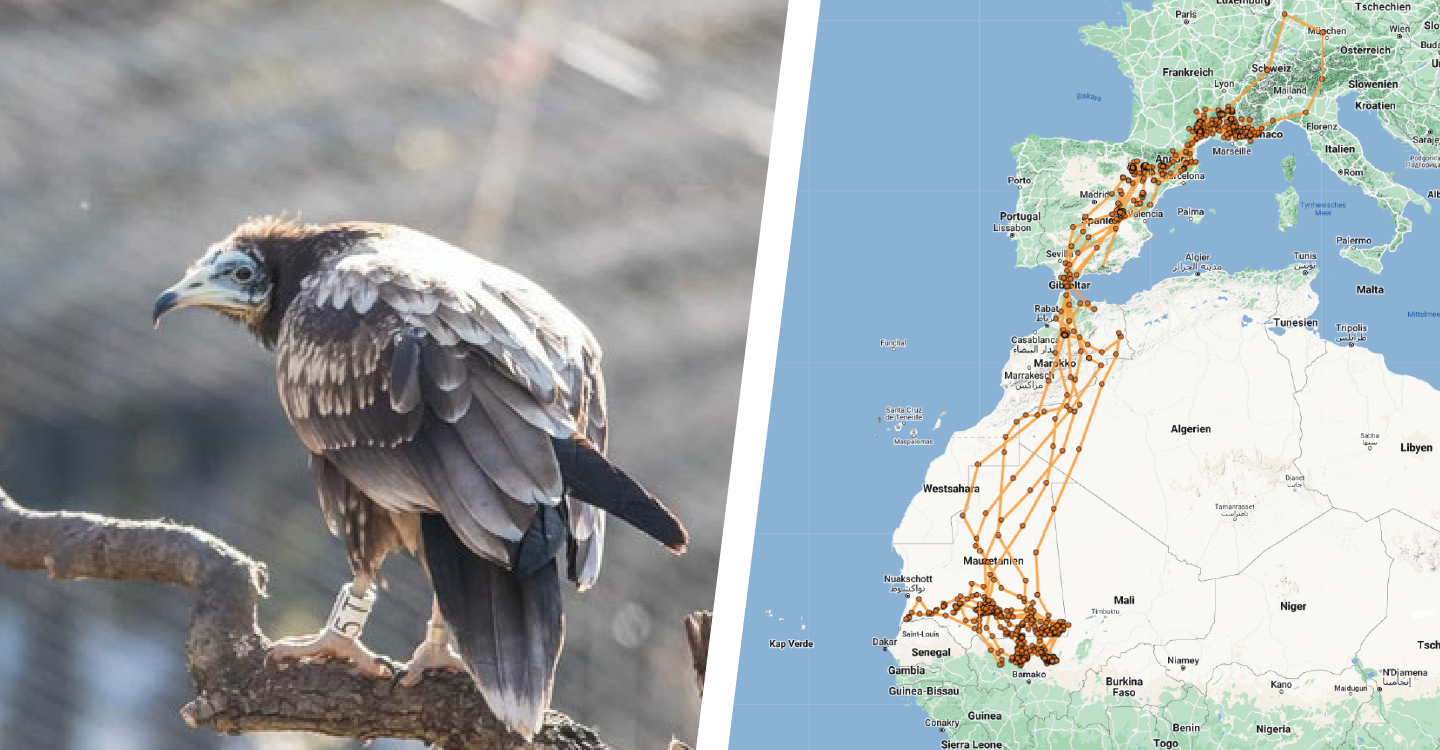
We use monitoring results and research techniquest to to better understand vulture behaviour and ecology to inform conservation actions.
From conducting feasibility studies to inform reintroduction projects to tracking and analysing GPS data of hundreds of birds, we have researched a wide variety of vulture topics.
Tackling threats to vulture survival

Illegal wildlife poisoning, accidental poisoning with veterinary drugs, lead poisoning, electrocution and collision with electrical infrastructures are some of the human-indiced threats that have led to a vulture population dramatic decline over the 20th Century in Europe.
We mitigate such threats head-on through executing concrete conservation actions, developing action plans based on solid scientific research and sharing our expertise.
Which actions will you support with your donation?
You can donate once, or make a monthly donation.
Your contribution counts
Thank you for your support!
You can also support us also via bank transfers
Name: Stichting VCF
Bank name: Triodos Bank nv
BIC: TRIONL2U
IBAN: NL33 TRIO 0390 3553 80
For our Dutch donors
You can support the VCF with a regular donation or a periodic donation.
Ordinary gift
An ordinary gift is a gift that you only make once. Or a donation that you make annually, but that you have not laid down in an agreement. A threshold applies to ordinary donations. You may deduct the amount above that. But no more than the maximum amount. The threshold amount and the maximum amount depend on your threshold income. That is the total of your income and deductible items in box 1, 2 and 3, but without your personal allowance. If you file a tax return online, the Tax Authorities will have entered your threshold amount on the screen where you can deduct your donations. The threshold amount is 1% of your threshold income, but a minimum of € 60. You may deduct what you have given more. Up to a maximum amount of 10% of your threshold income.
You do not need to send any supporting documents to the tax authorities. However, in the event of an inspection, you must be able to demonstrate that you have made the donation by submitting written documents, such as bank statements or receipts.
Voorbeeld €
Uw drempelinkomen is € 27.000. Het drempelbedrag is dan € 270 en het maximumbedrag € 2.700. Als u € 450 ann gewone giften geeft, berekent u uw aftrek zo:
| Title | Price |
|---|---|
| U geeft in totaal | € 450 |
| Daarvan trekt u het drempelbedrag af | € 270 |
| Dus u mag in totaal aftrekken | € 180 |
Periodic donation
Use the ‘Periodic cash donation’ form if you wish to make a cash donation to the VCF for at least 5 years . The form contains a section for you and a section for us. When everything is completed, you can send the agreement to us and keep your own part for your own records.
Do you want your regular cash donation to be automatically transferred to the VCF? Then you can use the ‘Payment authorization’ form. If you fill in the form completely and send it to the VCF, you give us permission to automatically debit the donation from your account.
You can send the completed forms to info@4vultures.org . We will contact you as soon as possible!
Do you have any questions?
You can email us at info@4vultures.org or contact us on our social media channels!