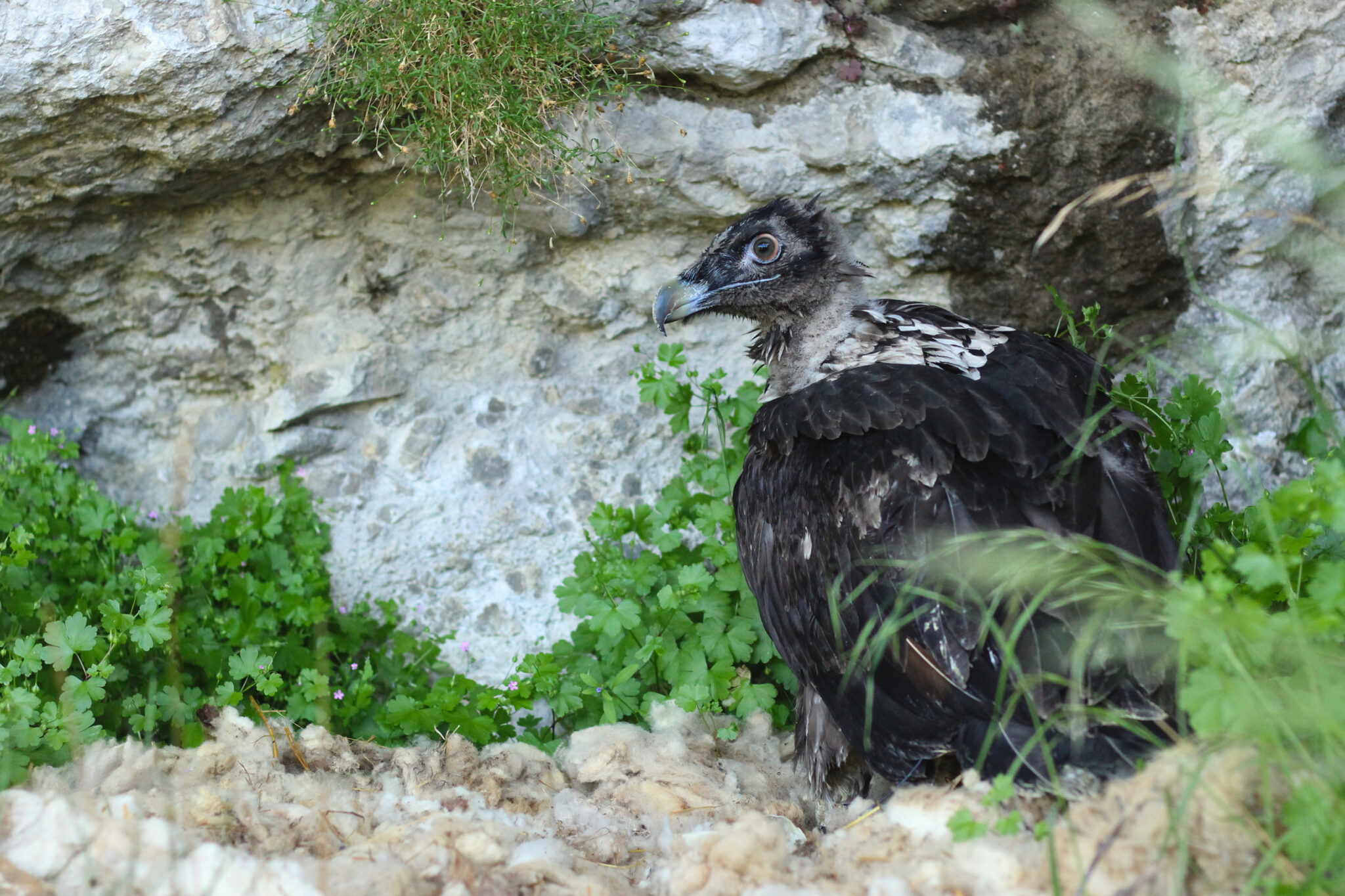
Four more young Bearded Vultures, all female, have begun their lives in the wild as part of Andalusia’s long-running reintroduction programme. Three were released in Sierra Nevada National Park in late May, and a fourth followed in the Sierras de Cazorla, Segura y Las Villas Natural Park early June 2026. The releases also mark the 20th consecutive year Bearded Vultures have been reintroduced to the region.
Three birds in Sierra Nevada
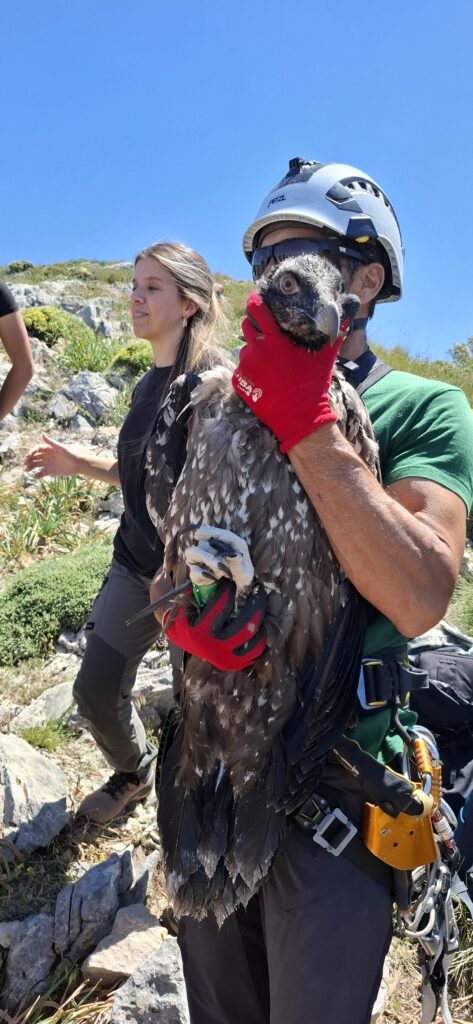
All three Sierra Nevada birds hatched on 1 March 2026. Ragua (BG1307) came from the Richard Faust Breeding Centre in Haringsee, Austria. Alhorí (BG1308) was bred at Prague Zoo in the Czech Republic. Sabika (BG1317) hatched at the FCQ (Fundación para la Conservación del Quebrantahuesos) in Aragón, Spain.
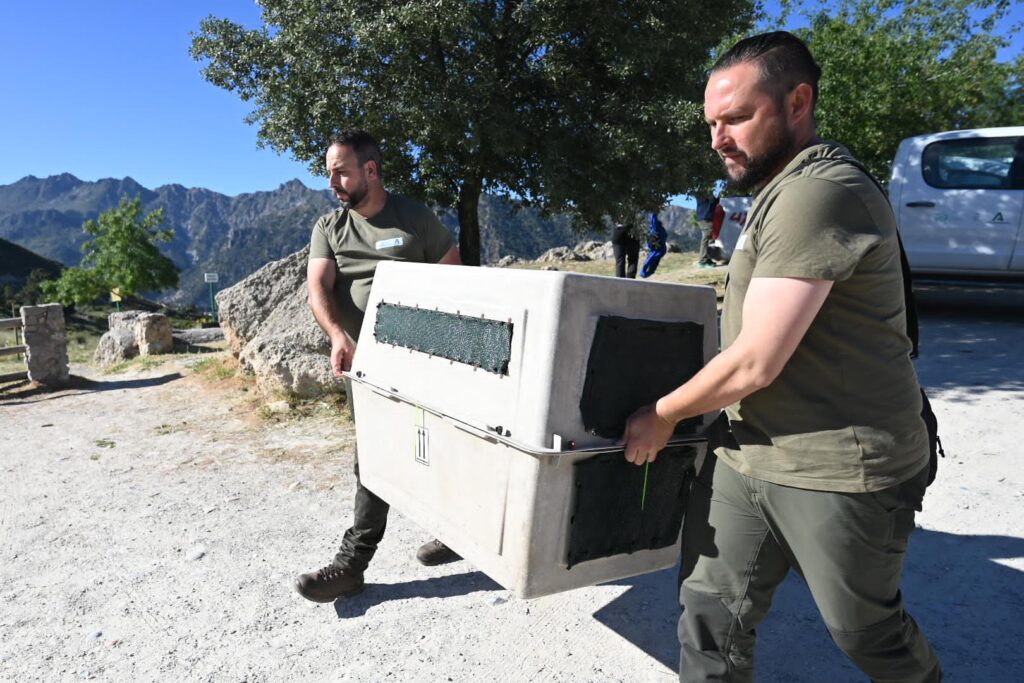
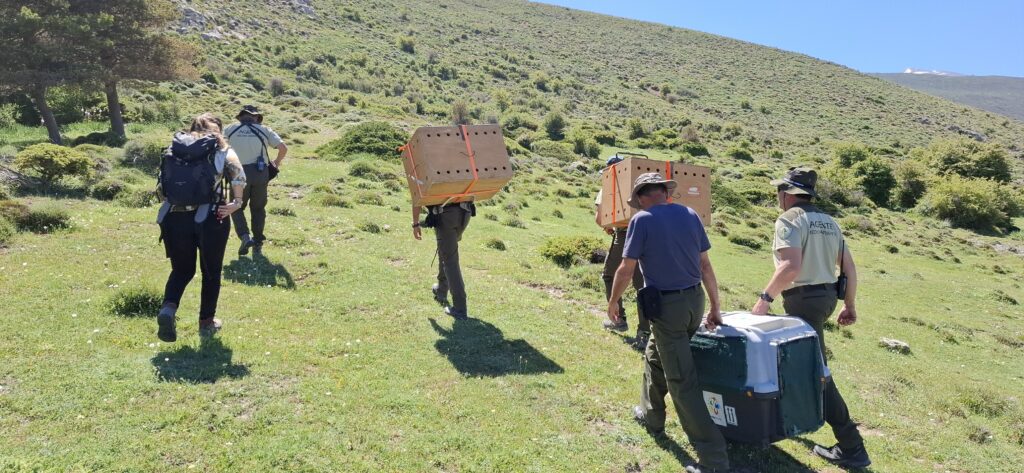
On 29 May, the three were released at a site around 2,000 metres above sea level in Sierra Nevada National Park. Representatives from the Andalusian Government and partner organisations attended, including Antonio Granados (Junta de Andalucía, Granada), Jesús Quesada (Director of Sierra Nevada National Park), Juan Antonio Martin (the coordinator of the regional scavenger bird recovery plan), and Pakillo Rodríguez (Guadalentín Captive-Breeding Coordinator from the Vulture Conservation Foundation).
Sierra Nevada only joined the programme in 2024, but it’s a key site to accelerate the return of the species in Andalusia. The habitat is well suited to Bearded Vultures, and birds from elsewhere in Andalusia are already visiting regularly.
One bird in Cazorla
The fourth bird, Baza (BG1309), hatched on 6 March 2026 at the Guadalentín Bearded Vulture Captive-Breeding Centre. She is the daughter of breeding pair Montero and Nona, and was the largest chick hatched at the centre this year. Her release on 1 June was attended by Catalina García (Acting Regional Minister for Sustainability and the Environment), María José Lara (Acting Regional Representative for the Environment), Jesús Quesada, Juan Antonio Martin, and other project collaborators.
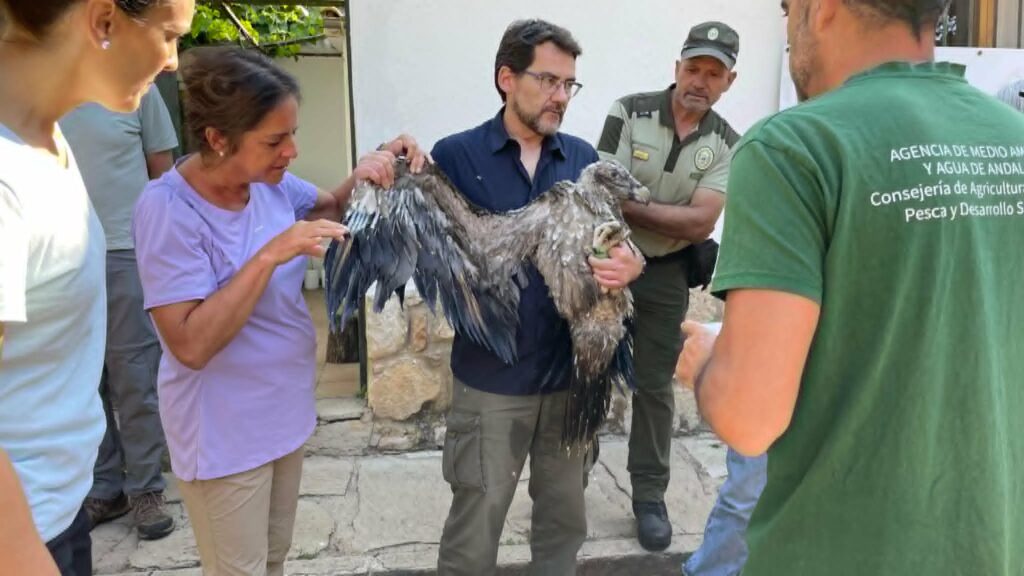
Cazorla and its surrounding ranges have been central to the programme since the beginning. Several breeding pairs now living in the area are descended from previously released birds.
This is the second release in Cazorla this year, as two Bearded Vultures were released on 7 May.
How the releases work
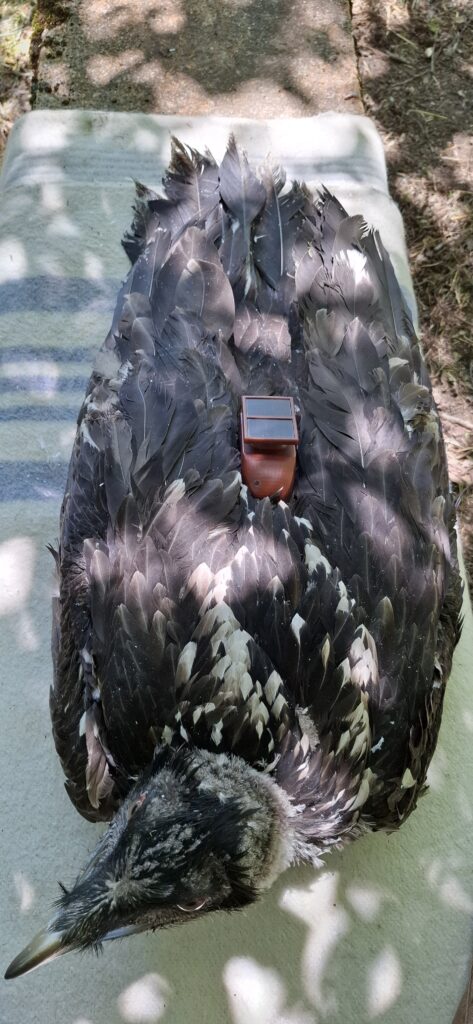
Before release, each bird was fitted with a GPS transmitter and identification rings, and a unique pattern of their feathers was bleached to allow identification in flight. Camera traps around the release sites will help the monitoring team track them through the early weeks.
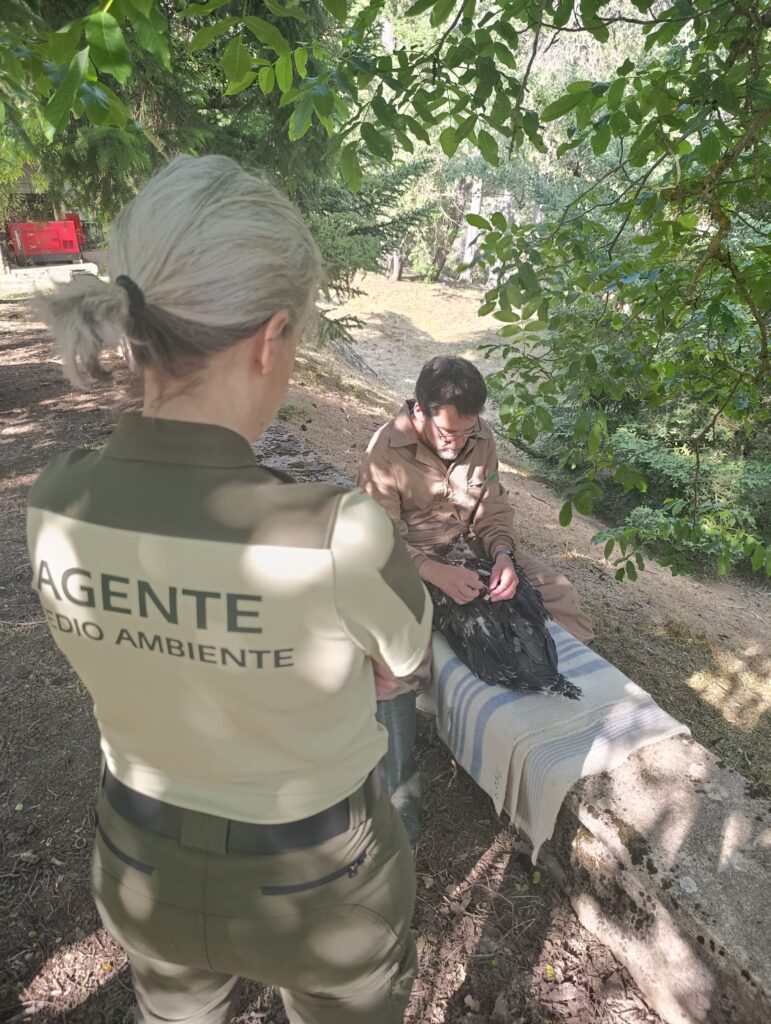
As with previous releases in Andalusia, all four birds were released using the hacking method. At around three months of age, captive-bred chicks are placed in an artificial nest in a suitable habitat, closely matching the stage at which wild young Bearded Vultures are preparing to leave the nest. They are then fed without direct contact with people, allowing them to become familiar with their surroundings while maintaining natural behaviour. Over the following weeks, they will make their first flights from the release site.
Bearded Vultures tend to return to where they fledged once they reach maturity, so the hope is that these birds will eventually come back and breed, adding to the population already established in the region.
Twenty years of reintroduction
The Bearded Vulture disappeared from Andalusia in 1986. After years of preparation, the first reintroduction releases took place in 2006. The programme has been a collaboration between the Junta de Andalucía, the Vulture Conservation Foundation, the European Bearded Vulture captive-breeding network, and other collaborators, combining captive breeding, releases, field monitoring and threat mitigation.
A turning point came in 2015, when a pair of reintroduced birds successfully raised the first chick hatched in the wild, a confirmation that the reintroduction efforts worked out. Around 70 Bearded Vultures and approximately 15 breeding pairs are now established across Andalusia.
One bird stands out as a symbol of that progress. Esperanza was the first chick hatched in the wild after the reintroduction. In 2025, she hatched a chick of her own, part of a generation hatched entirely in the wild, with no direct connection to captivity.
As these four young females begin their lives in the wild, we wish them the best start and look forward to following their journey in the years to come.