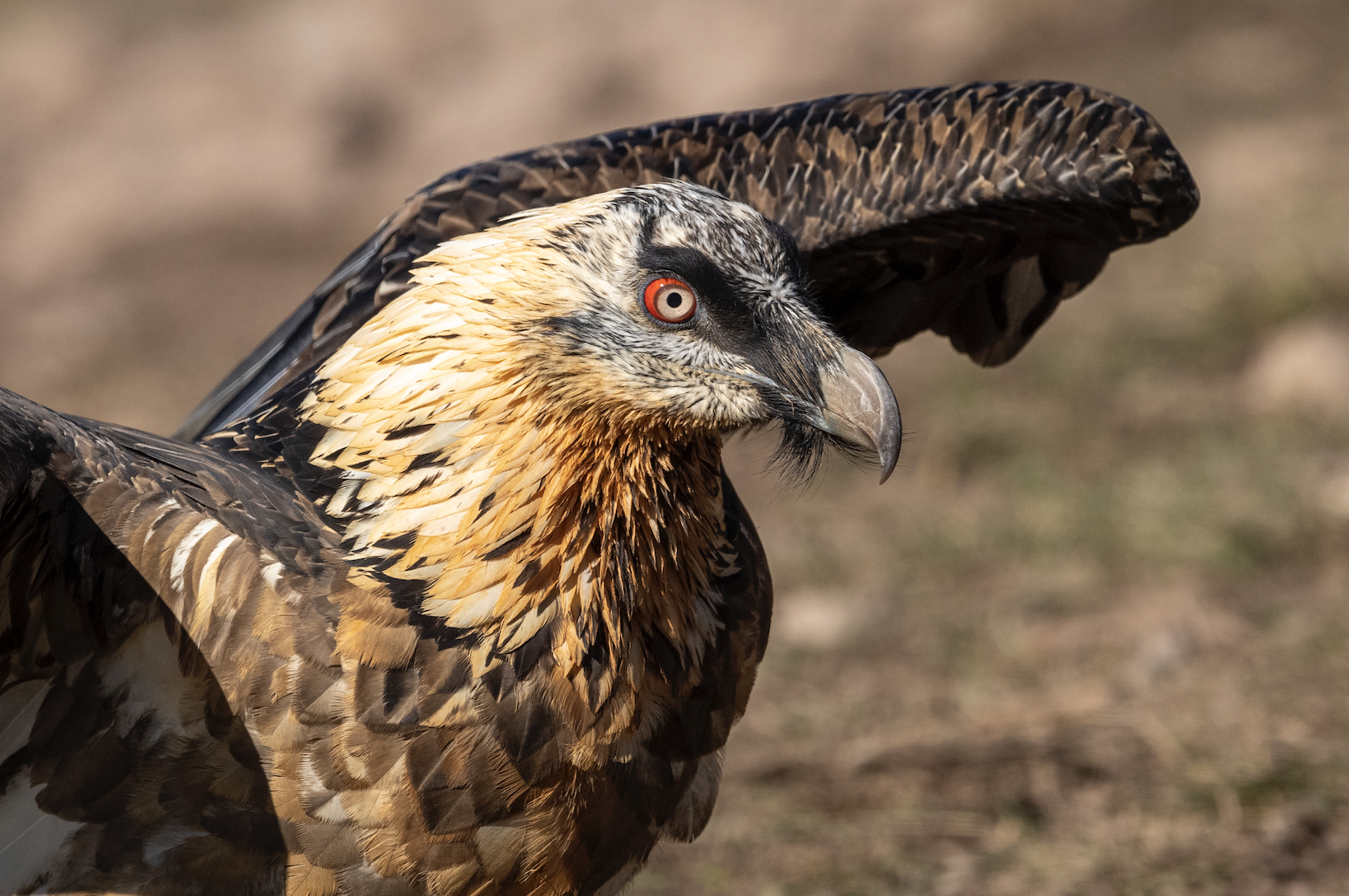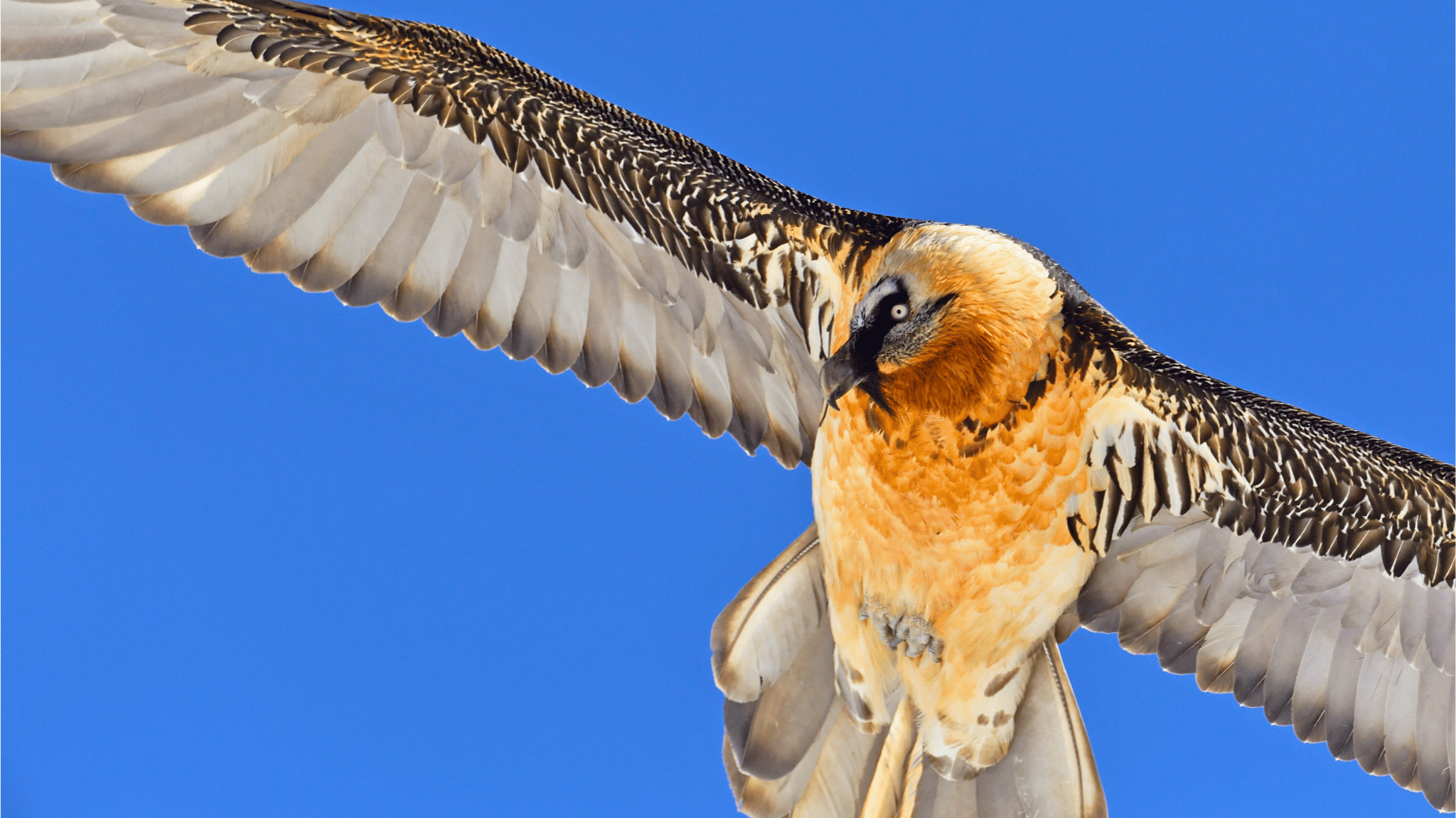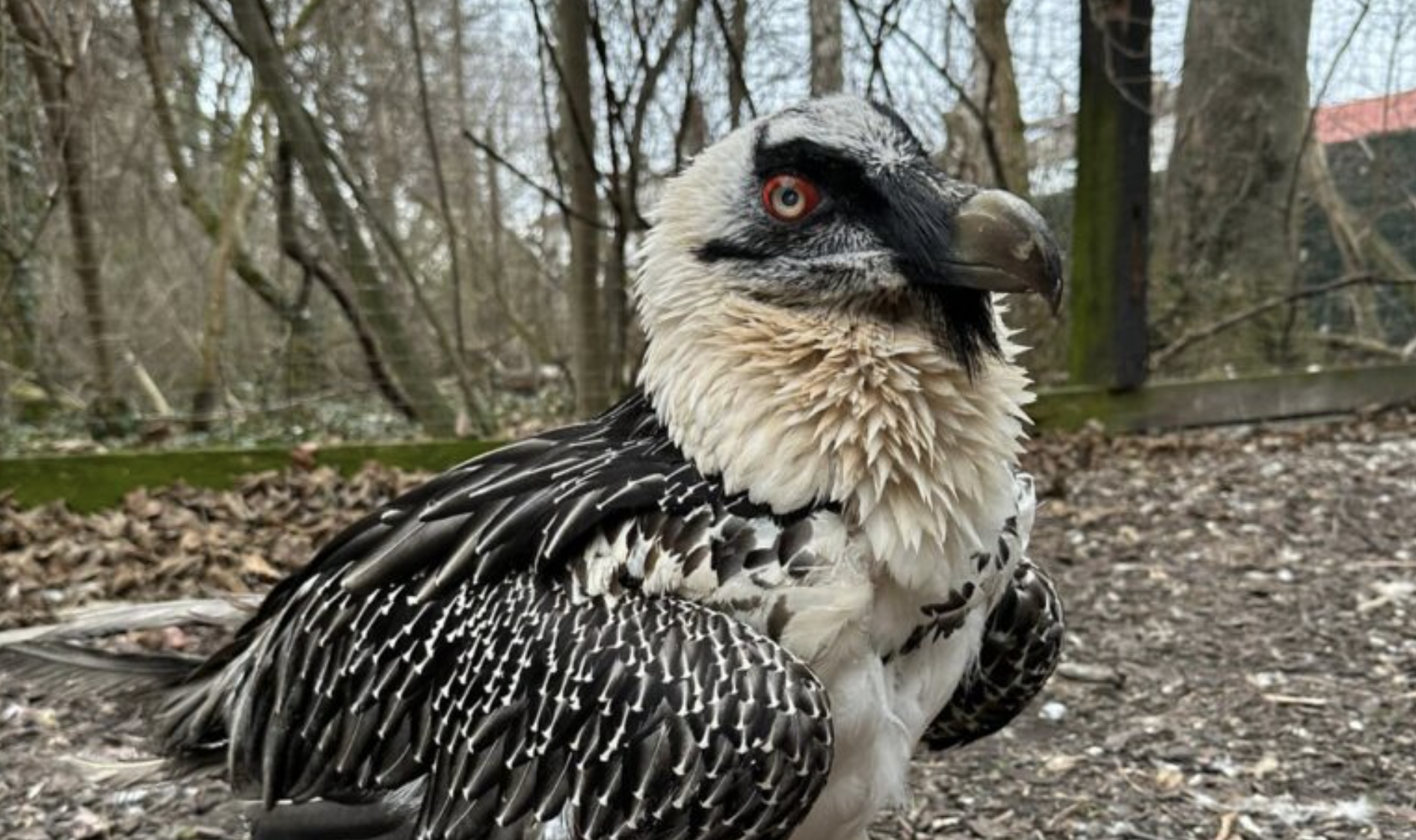
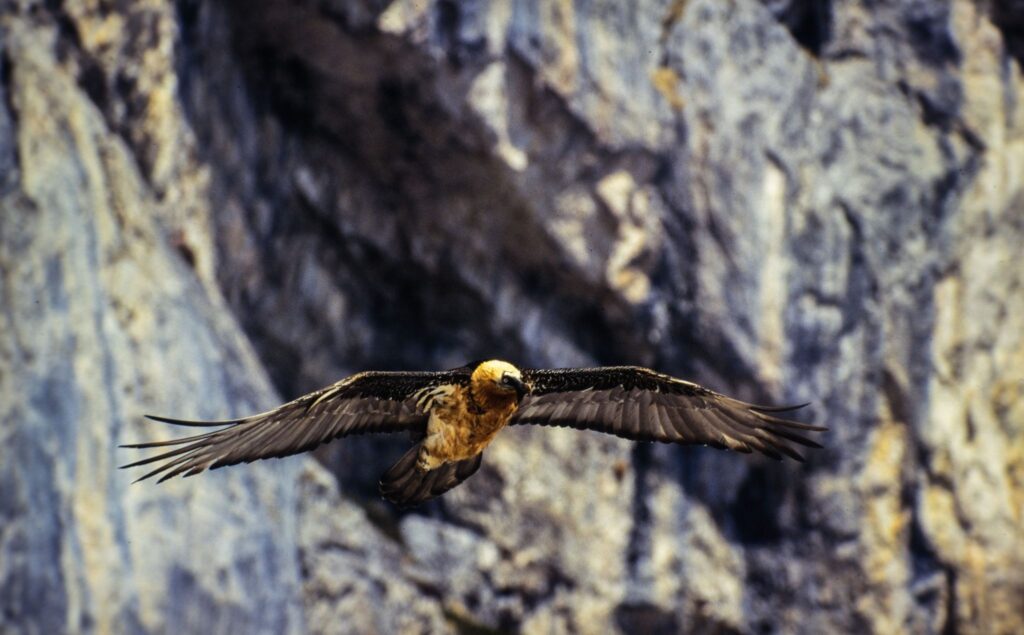
The oldest Bearded Vulture (Gypaetus barbatus) ever recorded in the wild was recently rescued in the French Alps. His remarkable story, closely intertwined with the international reintroduction and conservation programme, also reveals a more troubling reality: a lead fragment lodged in his foot, most likely the result of an old shooting incident. It is a stark reminder that, despite its strictly protected status, the species remains at risk.
In a remarkable loop in time, the same conservation programme—and some of the very people—who released him 37 years ago were now involved in his rescue, bringing his extraordinary life story full circle.
A weakened vulture and a fortunate chain of events
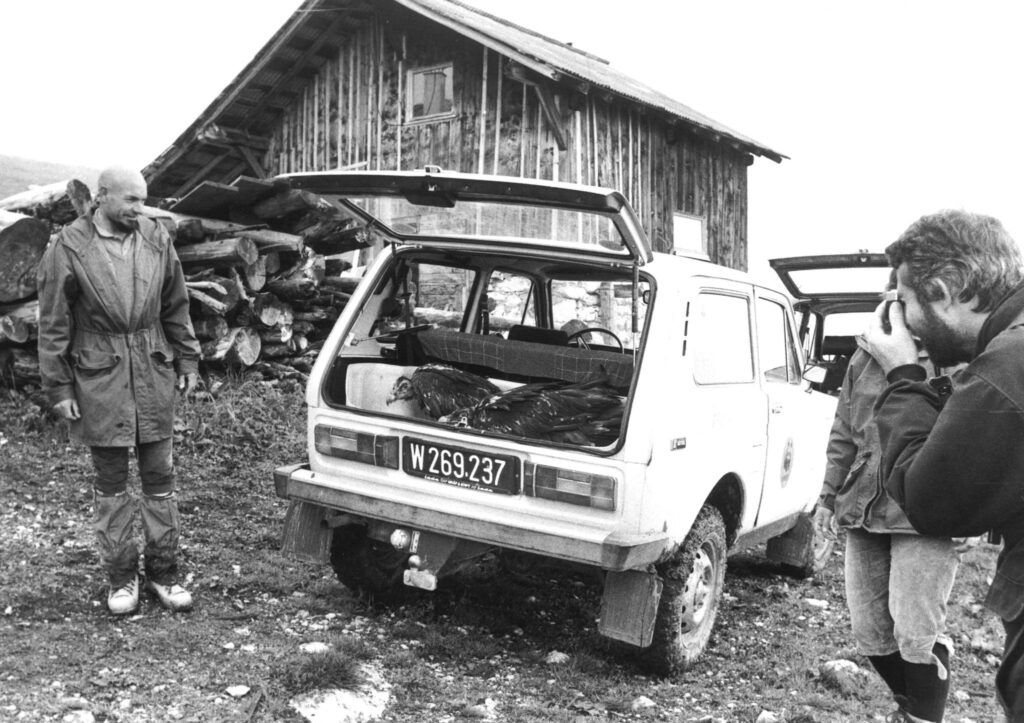
On Monday October 27, a call reported the presence of a Bearded Vulture on the ground in Thyez, Haute-Savoie. The weakened bird was easily captured and taken to the nearby Coteau Veterinary Clinic. A stroke of luck—this is the reference clinic for the Bearded Vulture captive-breeding centre managed by Asters-CEN74, the nature conservation agency leading the national action plan (PNA) for the species in the French Alps.
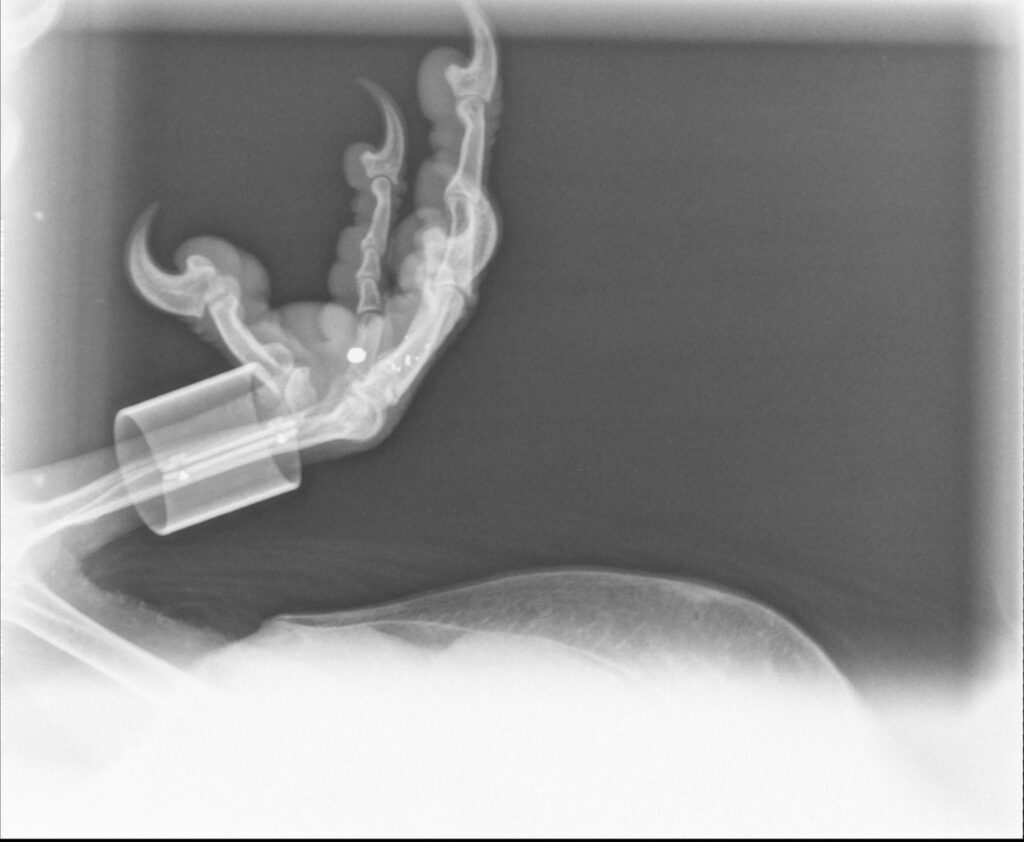
Examinations revealed a debilitated but alive bird weighing 4.8 kg. X-rays showed a cyst-encased lead pellet in the right foot and significant signs of arthritis. No recent trauma was detected. The vulture was transferred to the breeding centre the following day, where he rapidly improved, gaining 1 kg in just a few days.
A revelation that shook the conservation community: Balthazar is alive!
The rings on the bird’s legs revealed an astonishing discovery: this vulture was none other than Balthazar – the oldest Bearded Vulture ever recorded in the wild.
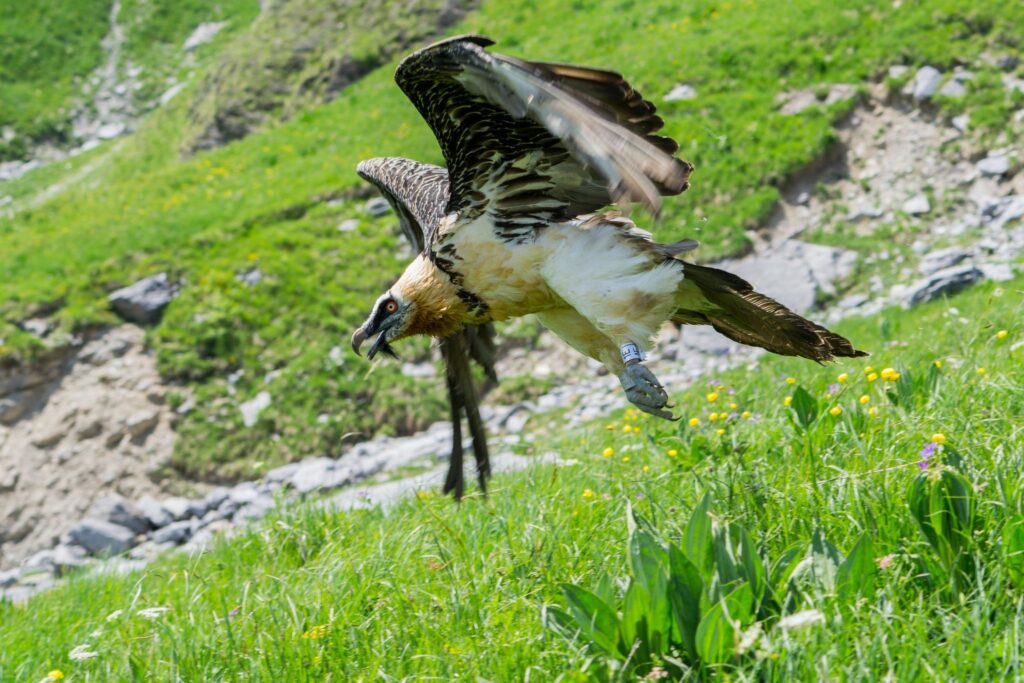
Hatched on 17 February 1988 at the Wassenaar breeding centre in the Netherlands—one of the first zoos involved in the breeding programme—he was released the same year in the Bargy massif as part of the international reintroduction project. He later became the first male to successfully reproduce naturally in the Alps, raising his first chick in 1997—a decisive milestone for the species’ return to the Alpine arc.
Since then, Balthazar has fathered 15 wild-born chicks, whose descendants now exceed 30 individuals. They carry the future of the Alpine Bearded Vulture population.
Genetically monitored until 2016 as part of the Bargy Sud trio (a breeding group consisting of three individuals), Balthazar had vanished from observations. Many assumed he had died. His reappearance in 2025 confirms he likely remained within the trio but no longer contributed to reproduction.
At more than 37 years old, he is now the oldest wild Bearded Vulture ever recorded in both the Alps and the Pyrenees.
The lead found in his foot: A troubling sign
Balthazar’s rescue highlights a serious concern: the lead pellet in his foot almost certainly originated from an old shooting. Even after many years, such embedded lead poses a toxicological threat (lead poisoning) and exemplifies the dangers faced by raptors.
In France, the Bearded Vulture—and all raptors—is strictly protected. Any shooting, destruction or attempted destruction is a criminal offence with severe penalties. Despite 40 years of conservation and awareness efforts, this incident shows that persecution remains a real threat.
Lead can also cause severe poisoning in birds, leading to neurological impairment, weight loss, loss of coordination and often death—a major risk for a species with still-fragile population numbers and slow reproductive rates.
A carefully coordinated release
On November 5, given his good overall condition, Asters-CEN74, LPO (the national PNA coordinator for the species), the centre’s veterinary team, and the Vulture Conservation Foundation—coordinator of the European captive-breeding network (EEP)—agreed to release him back into the wild. The French State services (DREAL Nouvelle-Aquitaine and Auvergne-Rhône-Alpes), coordinators of the PNA’s implementation, validated the release location and date.
On November 6, the bird was returned to the mountains of the Bargy massif, equipped with a GPS tag. He took flight immediately towards Grand-Bornand.
Ultimately, Balthazar had to be recaptured
GPS data allowed close monitoring after his release. He moved regularly but flew very little and remained at low elevations. At one point, he perched in a spruce tree among the chalets of Grand-Bornand—an unusual behaviour for the species.
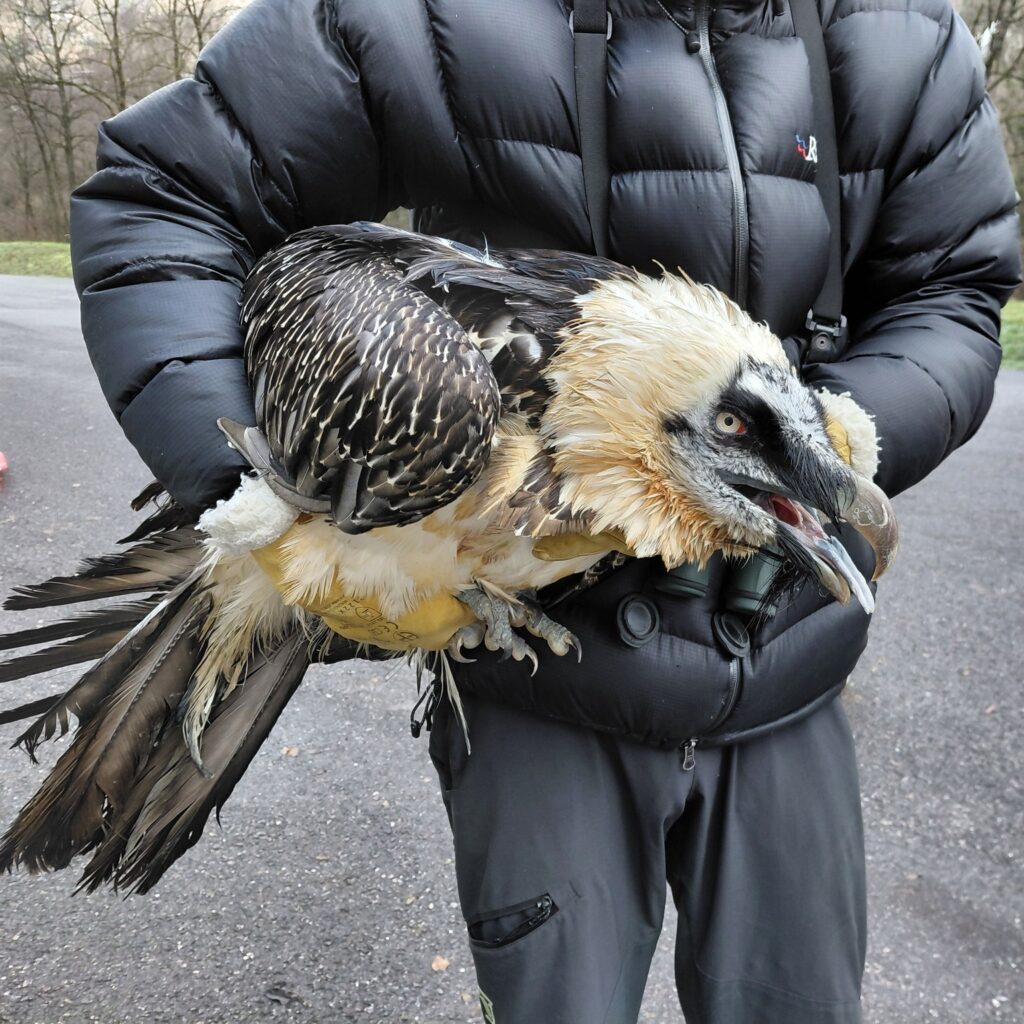
After several days of monitoring, he was recaptured on November 27 and is now in captivity under observation while further analyses are conducted. Regardless of the results, he will now remain in captivity—where a new reproductive life may await him. In captivity, under optimal conditions, Bearded Vultures can live beyond 50 years.
An international conservation success story
Balthazar’s journey reflects the scale and success of the reintroduction programme launched in 1986:
- The species’ return to the Alpine massifs after its extinction in the early 20th century
- 264 young birds released between 1988 and 2025 across the Alps (from 1986 onwards, and from 1987 in the French Alps)
- The first natural reproduction in 1997 in the Bargy massif—where Balthazar himself was released in 1988 and again in 2025
- A unique international reintroduction and conservation programme
- The involvement of numerous institutional, NGO and local partners
Balthazar is not only a historic witness but a living symbol of the resilience of a species Europe chose to save.
His story is also a reminder that protecting the Bearded Vulture remains a daily effort, driven tirelessly by Asters-CEN74, the VCF and the LPO: combating persecution, reducing lead poisoning risks, preventing collisions with aerial cables and wind turbines, ensuring nest site tranquillity, and continuing scientific monitoring.
All actions carried out by CEN Haute-Savoie are conducted under the ministerial decree of 4 June 2021, which provides exemptions for the capture, transport and release of this protected species.