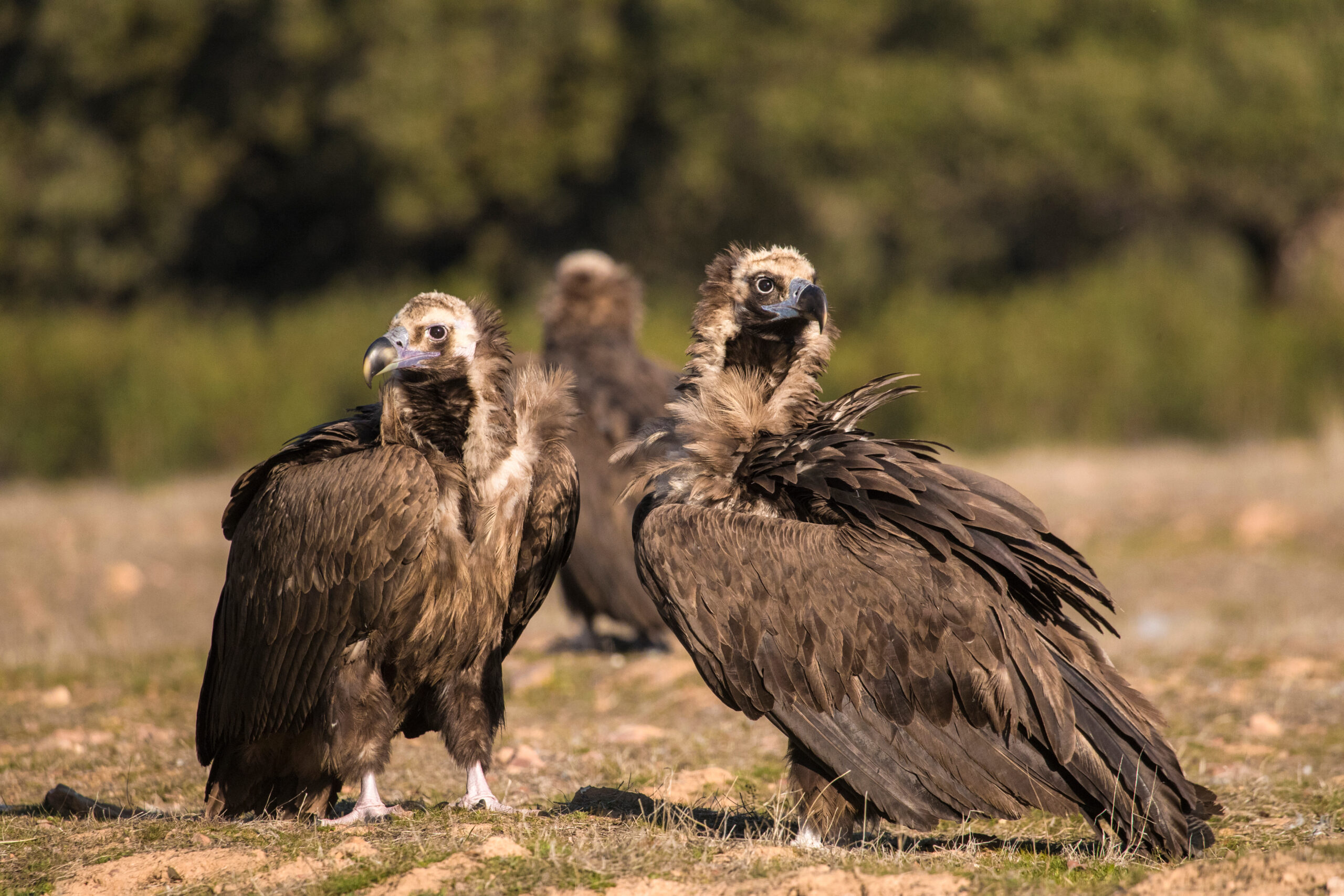
The impacts of the catastrophic episodes that have ravaged Portugal and Spain in recent weeks on Cinereous Vulture nests are still being assessed in some colonies. This autumn and winter, the LIFE Aegypius Return teams built 26 new artificial nesting platforms and reinforced 18 existing nests across Portugal and Spain.
A three-month break in breeding
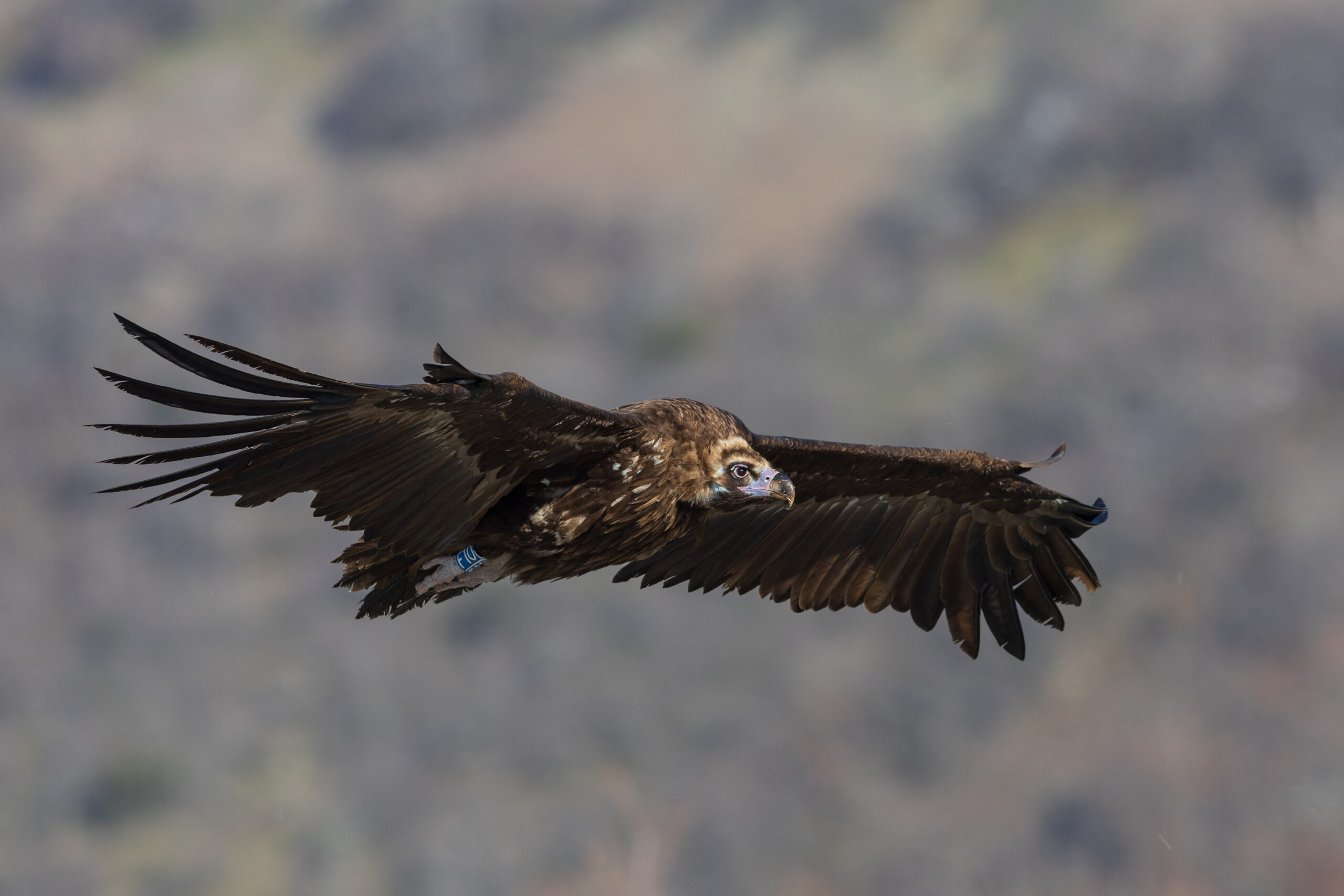
La Cinereous Vulture (Aegypius monachus), Europe’s largest bird of prey, has one of the longest breeding seasons among our fauna. The first searches for nesting sites usually begin in January, with some records occasionally appearing as early as December. Months pass between courtship, mating, egg-laying, incubation, hatching, and parental care; it is only around September that the chicks become (relatively) autonomous. That makes nine months dedicated to reproduction every year. During this period, any disturbance near the nest can negatively impact breeding or even cause it to fail.
Therefore, the scant three months between breeding seasons are the only time when the LIFE Aegypius Return teams and the Institute for Nature and Forest Conservation (ICNF) can survey the Cinereous Vulture nests and reinforce the structures that need maintenance, without disturbing the birds.
Stormy winter
This winter has been relentless, with successive storms with cyclonic winds, heavy rain and floods affecting mainly the west and centre of Portugal.
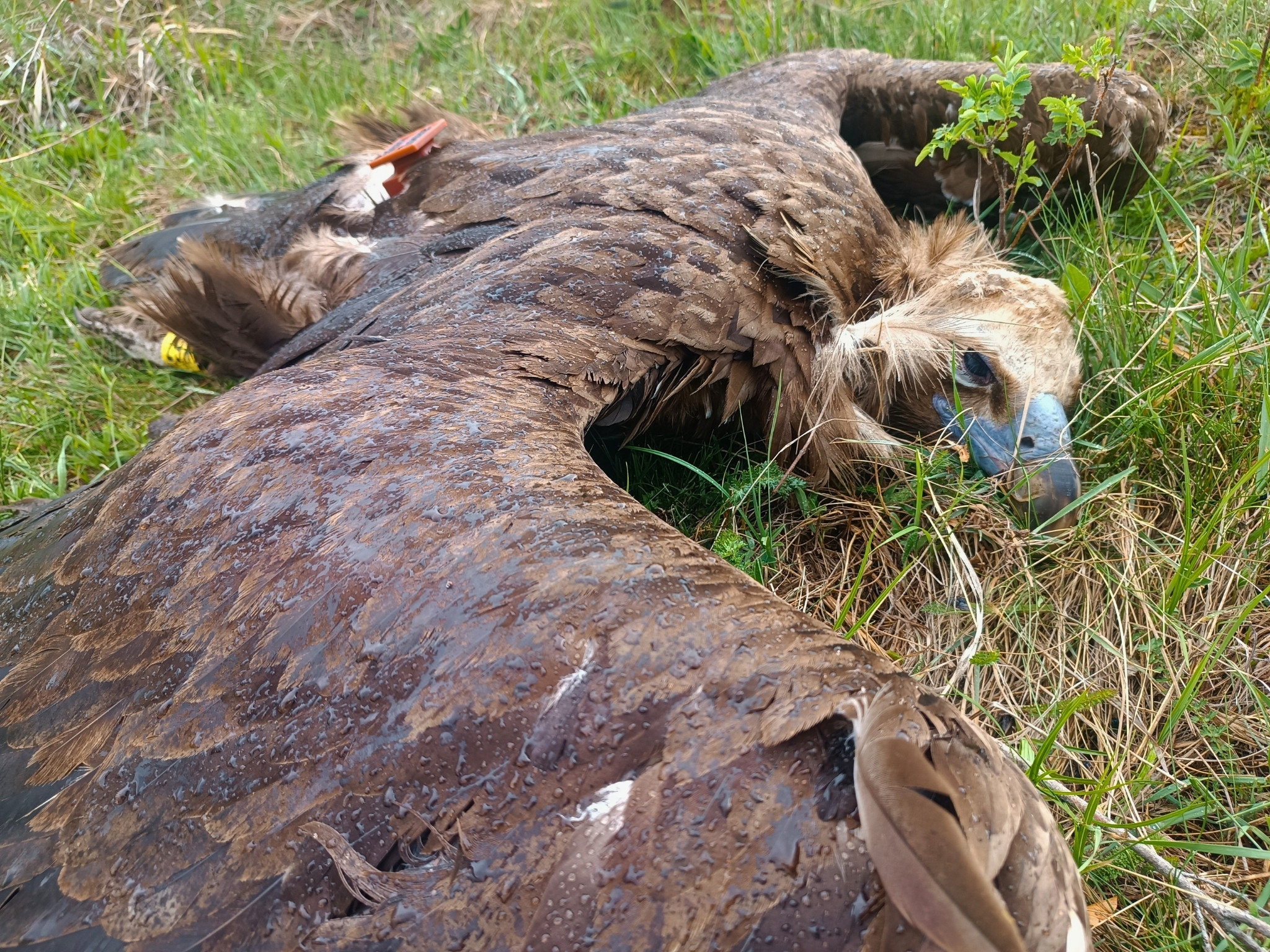
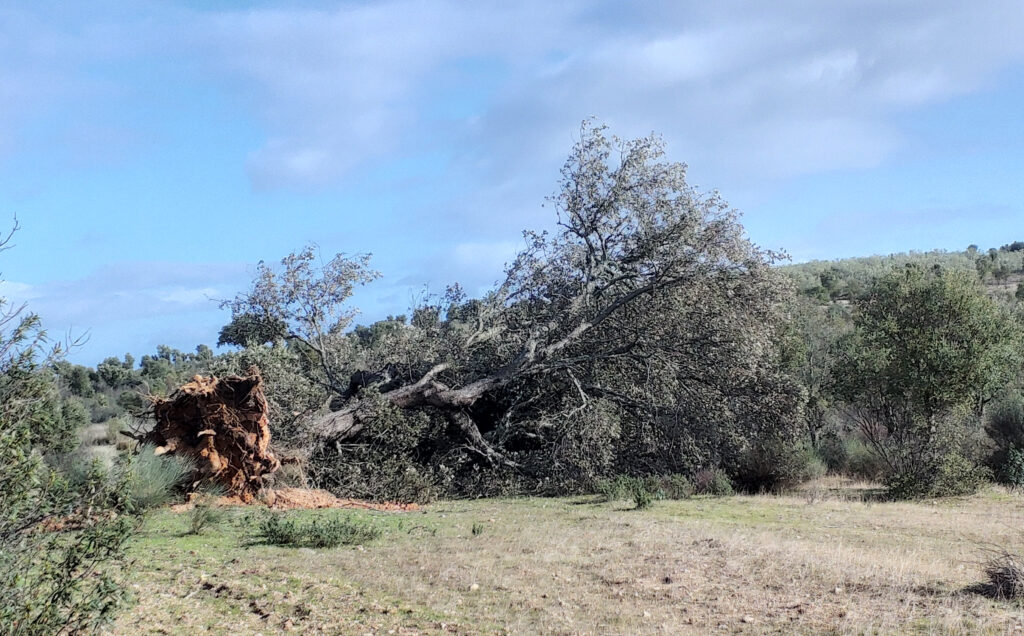
The interior of the country, and the border strip in particular, has been less impacted; however, the damage to the nesting areas of the Cinereous Vulture is still under evaluation. Storms in breeding areas cause trees with nests to fall or collapse, and these can often be destroyed in the middle of the breeding season, crushing the egg, the chick, or even the adults. Even if the nest remains intact, an intense episode of rain, wind, and low temperatures can cause breeding failures (for example, through the death of the chick), with consequences for the population size and the breeding success of that year. As an example, the breeding data for the Cinereous Vulture in the Serra da Malcata (Portugal) and in Sierra de Gata y Valle de las Pilas (Spain), in 2025, were severely impacted by the bad weather recorded early that year.
New platforms and safer nests
Since the start of the LIFE Aegypius Return project, the partners have built 89 new nesting platforms and rebuilt or maintained 73 existing nests in Portugal and Spain. These figures represent just over 70 per cent of the targets for this task, which will be carried out according to the needs of each year until 2027.
In recent weeks, the LIFE Aegypius Return teams have been on the ground checking all known nests and have completed various interventions in the project areas.
Douro Internacional
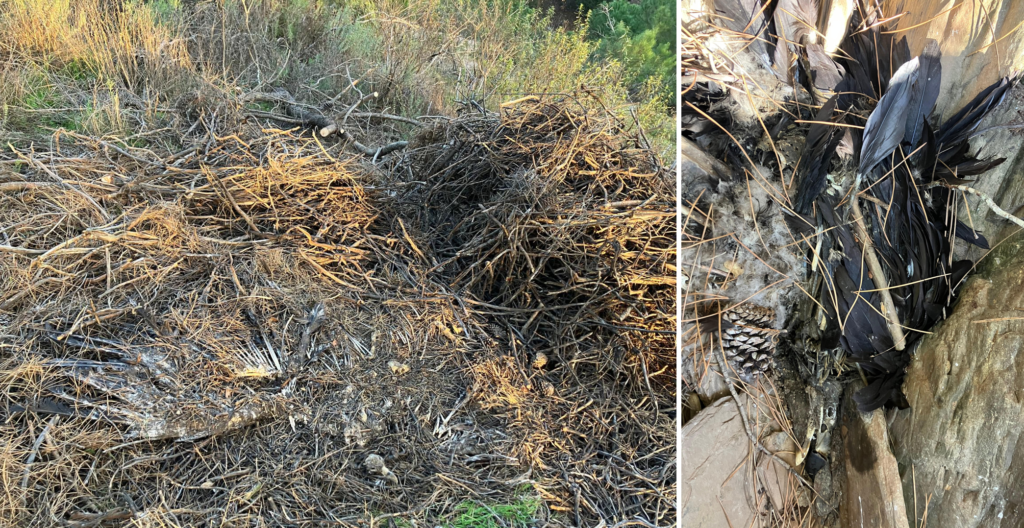
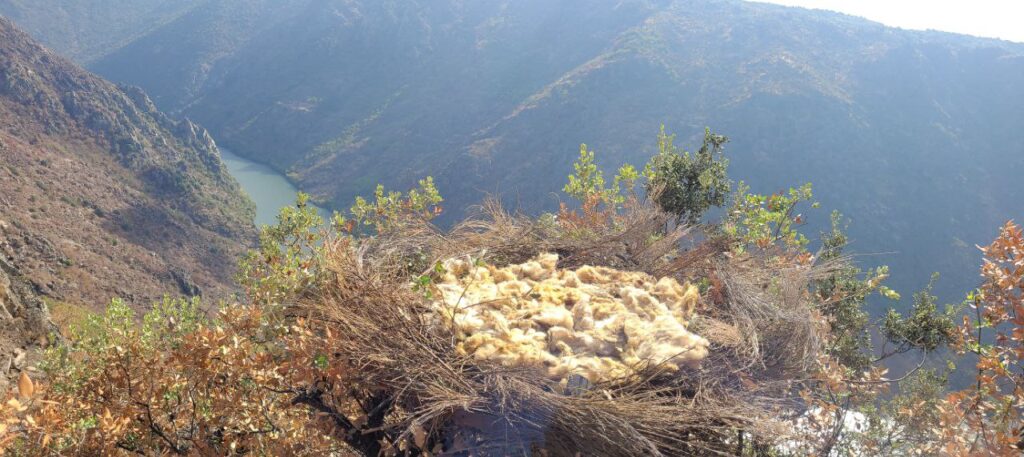
After the tragic fire last August, Palombar (in collaboration with the Grupo de Intervención en Altura (GIAM) of the Agentes Forestales de la Comunidad de Madrid) rebuilt four nest platforms affected by the fire, carried out maintenance on three more and built three new nest platforms. This work, along with habitat restoration and food reinforcement – among other measures already implemented as part of the post-fire recovery plan – aims to restore some normality to the landscape, encouraging the Cinereous Vultures to continue breeding in this fragile and isolated colony.
Coa Valley
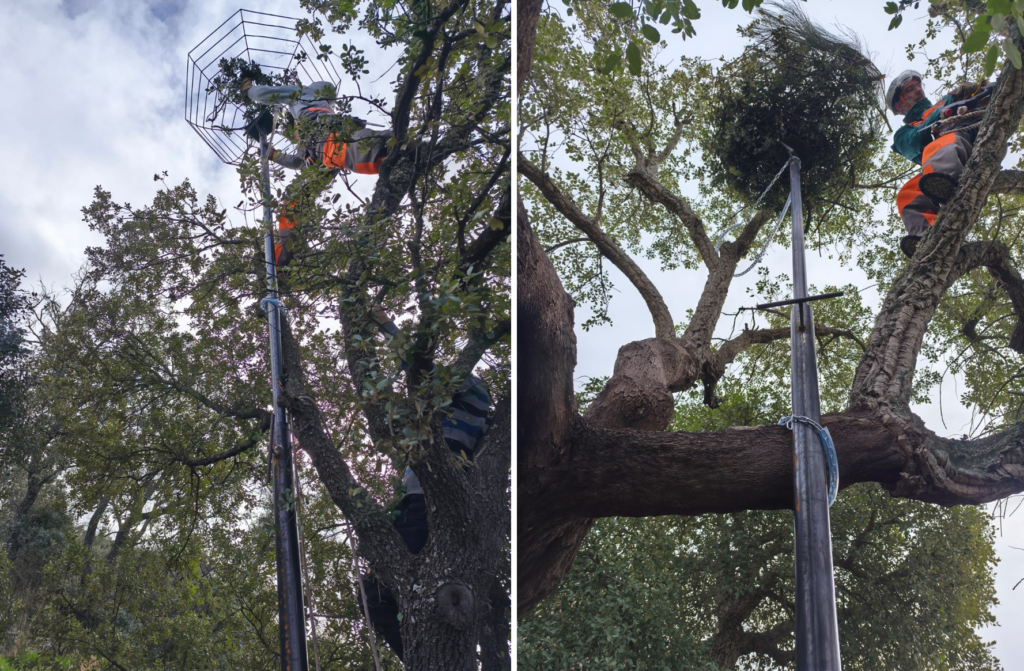
The Coa Valley received six new nest platforms for the first time as a way to encourage Cinereous Vulture breeding in this region, expanding the Douro colony and promoting connectivity between the Douro and Serra da Malcata colonies. These works were carried out by the partner Faia Brava – Associação de Conservação da Natureza, with the support of Samuel Infante (a duly qualified technician experienced in work at height). The installation of these platforms was authorised by the ICNF, whose Rangers will help monitor any eventual occupation by Cinereous Vultures.
Tejo Internacional
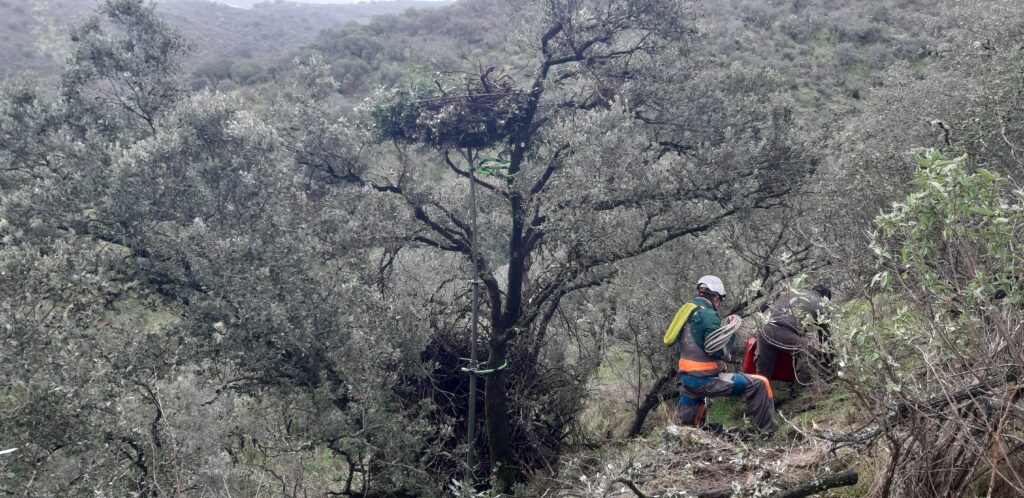
The Tejo Internacional Natural Park also now benefits from two new nesting platforms that replace natural nests that were recently occupied and fell at the beginning of 2025; these were installed on land belonging to the NGO Quercus, and Herdade da Cubeira. These platforms mimic natural nests, being built at the top of holm oaks and resting on a reinforced metal support. The work was carried out by the partner Sociedade Portuguesa para o Estudo das Aves – SPEA, with the support of Samuel Infante and Rangers from the ICNF.
Herdade da Contenda
The autumn inspection of the nests at Herdade da Contenda, in Southern Portugal, revealed the need to reconstruct four nests: one on the Portuguese side and three in the Spanish Contienda. The work was carried out by the partner LPN, with the support of biologist Carlos Pacheco (duly accredited and experienced in work at height). The fieldwork, done before the storms, also yielded an important discovery: a new nest found on the Spanish side!
The Herdade da Contenda colony, along with the Vidigueira/Portel colony, may have been more severely hit by the storms, but weather conditions have not yet allowed for a full damage assessment to be completed.
This transboundary colony benefits from cooperation between Portuguese entities (Herdade da Contenda E.M., Liga para a Protecção da Natureza – LPN, and ICNF – DR Alentejo) and Spanish entities (various bodies of the Junta de Andalucía) in its monitoring and protection.
Sierra de Gata y Valle de las Pilas
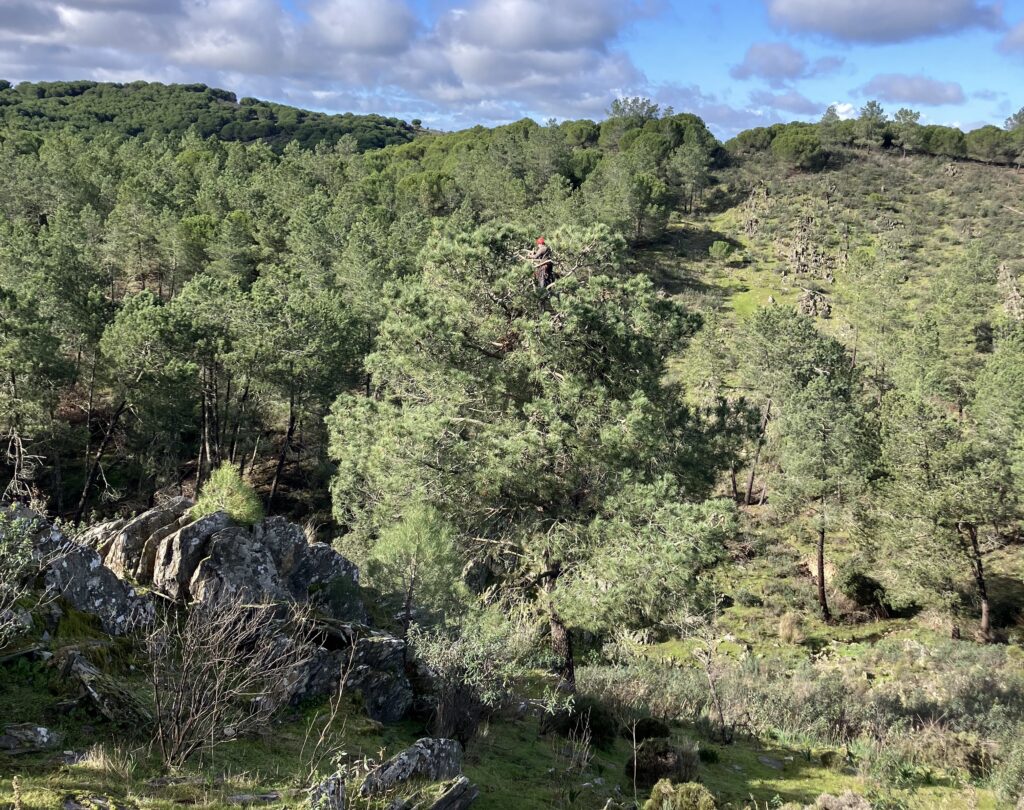
In Spain, this winter, work was concentrated in the ‘Sierra de Gata y Valle de las Pilas’ Special Protection Area, where many of the trees that burnt in the 2023 fire eventually fell recently due to strong winds. The work was carried out by the partner Fundación Naturaleza y Hombre, with the support of Samuel Infante.
Fifteen new nesting platforms were built and the structure of seven others was reinforced. All these works require authorisation from the Spanish authorities, in this case, the Junta de Extremadura.
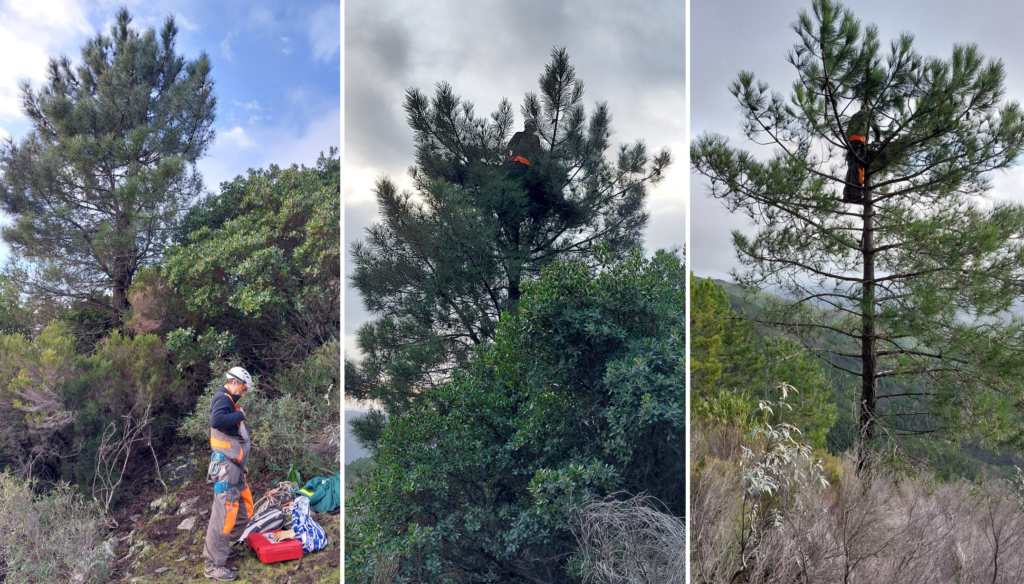
All these works are of crucial importance to increase the safety of the nests, thereby contributing to breeding success, maintaining or expanding Cinereous Vulture breeding areas, and promoting connectivity between colonies. Work now continues with the monitoring of the new breeding season, which has already begun.
The LIFE Aegypius Return partners thank all the people and entities that collaborate in the construction and maintenance of nest platforms, from legal and administrative work to fieldwork.
The partners also express their condolences for all the fatalities and stand in solidarity with all the people and institutions affected by the extreme weather events of this winter in Portugal and Spain.
About the LIFE Aegypius Return project

The LIFE Aegypius Return project is co-funded by the European Union’s LIFE programme. Its success depends on the involvement of all the relevant stakeholders and the collaboration of the partners: the Vulture Conservation Foundation (VCF), the coordinating beneficiary, and local partners Palombar – Conservation of Nature and Rural Heritage, Herdade da Contenda, the Portuguese Society for the Study of Birds, the League for the Protection of Nature, the Transhumance and Nature Association, Fundación Naturaleza y Hombre, the National Republican Guard y the National Association of Rural Owners of Game Management and Biodiversity.