
Vulture Rehabilitation Centre JBel Moussa in Morocco recently tagged two Critically Endangered White-Backed vultures in collaboration with VCF. The birds have already left Morocco, moving towards Spain. One of them recently crossed the Strait of Gibraltar and is now on the mainland, flying alarmingly close to a wind farm.
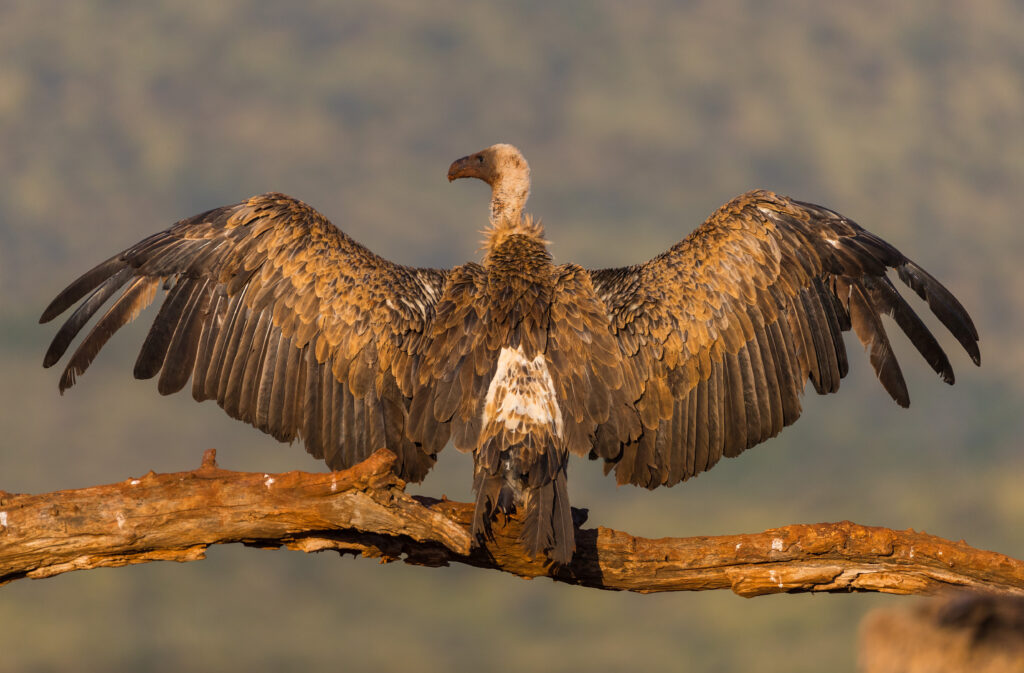
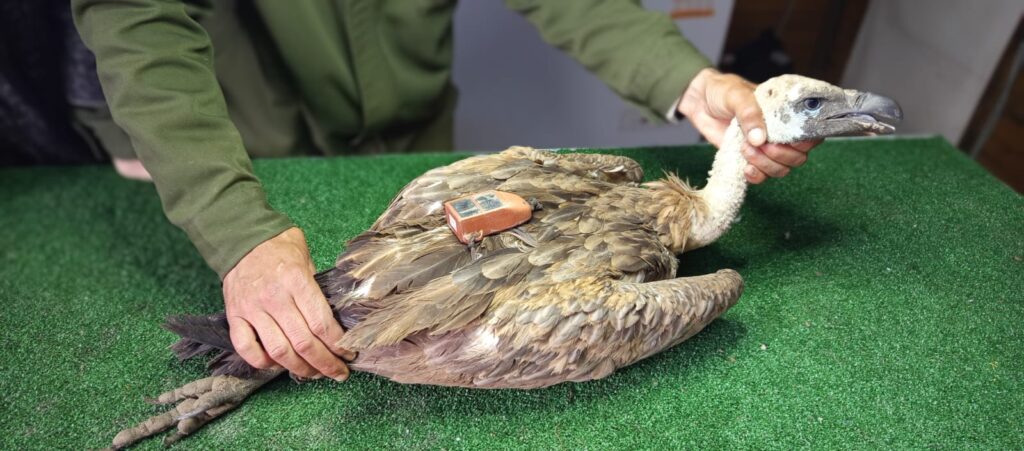
In the last week, the collaboration between the Vulture Conservation Foundation and the Vulture Rehabilitation Centre JBel Moussa reached another milestone. The Moroccan team tagged two Critically Endangered White-Backed vultures with GPS/GSM tags provided by the Vulture Conservation Foundation. Once released, the two birds followed the example of many Griffon and Rüppell’s vultures that migrate from Africa to Europe every year. One of them reached Spain in the past few days.
The endeavour these two vultures are undertaking holds great importance for the vulture conservation community. In fact, only a handful of White-Backed vultures have been tagged in Morocco, and even fewer have ventured as far as Spain. The GPS/GSM transmitter on their back will allow us to monitor them and collect precious data.
A rare visitor
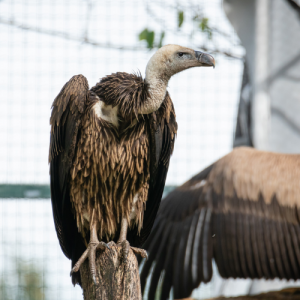
Several African bird species are becoming more frequent in North Africa and southern Europe, and the White-Backed vulture (Gyps africanus) is one of them. Although not a common sight in Morocco – let alone in southern Europe – records of this species in the region have increased in the last decade. The White-Backed vulture was observed for the first time in May 2014 near Tétouan, roosting together with Griffon (Gyps fulvus) y Rüppell’s Vultures (Gyps rueppelli). It took three years to get a second observation of a single specimen in Morocco, again accompanied by Griffon and Rüppell’s Vultures.
Ten years after the first observation, four White-backed Vultures were colour-ringed and equipped with GPS transmitters at the Jbel Moussa VRC, in collaboration with AMPOVIS (Association Marocaine de Protection des Oiseaux et de la Vie Sauvage), AMPR (Association Marocaine pour la Protection des Rapaces), and other partners. One of the tagged vultures braved the dangerous crossing of the Strait of Gibraltar. Even though it managed to get to Spain safely, it lost its life after only a few months.
Together for vultures, from Africa to Europe and beyond
The African White-Backed vulture is globally listed as Critically Endangered due to the decline of its breeding population. It shares its range, from the Sahel to Eastern and Southern Africa, with the Rüppell’s vulture. Unlike Rüppell’s vulture, which is becoming increasingly common in North Africa and Europe, the African White-Backed vulture is still a rare sight in those areas.
Across its range, this species is subject to several threats, which drove its numbers in a rapid 63-89% decline over three generations. The first and most important threat to the species is intentional and unintentional poisoning. The latest incident took the lives of 10 individuals less than a month ago in South Africa. Habitat loss, decline in wild ungulate populations, collisions, and poaching for belief-based practices are also taking their toll on the species.
Monitoring the movements of individuals of this Critically Endangered species, especially if they follow Griffon y Rüppell’s vulture in their migration routes from Africa to Europe, is crucial for protecting it. Monitoring gives us information on habits, behaviour, and routes and can highlight threats, guiding conservation actions. In this case, one of the tagged White-Backed vultures is flying close to a wind farm, reminding the entire conservation community how crucial it is to work together with energy producers to create a safe environment for all birds. Thanks to the great partnerships established between VCF and JBel Moussa VRC, we will continue to follow these vultures on their journey and work together to protect all vulture species on both sides of the Strait of Gibraltar.