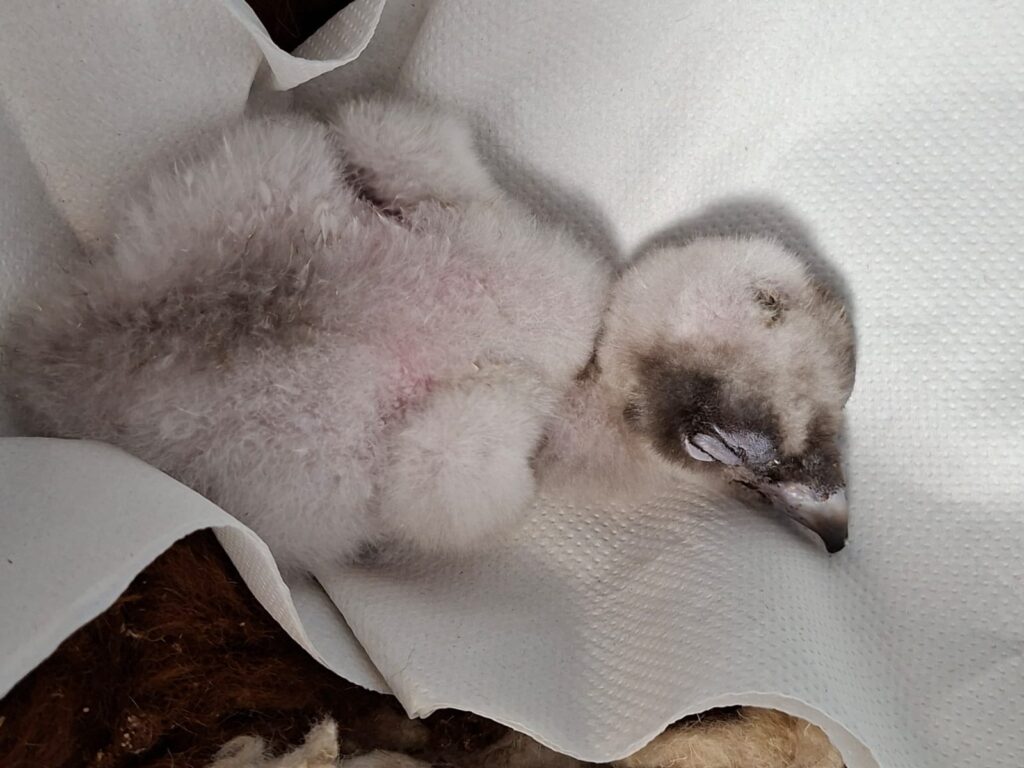
The final chick of this year’s breeding season hatched on 10 May, and it arrived later than any Bearded Vulture chick in the 50-year history of the international captive-breeding programme.
Named BG1323, the chick hatched at the Bearded Vulture Specialised Breeding Unit in Lleida, Spain. The unit is run by the Vulture Conservation Foundation (VCF) under an agreement with the Government of Catalonia, based at the Centre de Fauna de Vallcalent. It plays an important role in reintroduction efforts because it specialises in artificial incubation, and takes in pairs from other centres that are struggling to breed and need extra support.
With BG1323’s arrival, this year’s hatching season is now complete. It’s been another successful year for the Bearded Vulture Captive Breeding Programme (Bearded Vulture EEP): 28 chicks survived, and many have already been released into the wild across Europe.
A slow start for its parents
The story behind BG1323 starts well before it hatched. Its parents, BG551 Aïnat and BG580 Perea, bred together for the first time in 2025, already late in the season. But, at the end of that season, Aïnat developed a claw infection and had to be separated from Perea for treatment.
When the pair was reunited, things didn’t pick back up where they left off. Perea no longer accepted the male, and the two had to rebuild their bond from scratch. For months, she wouldn’t let him near the nest. It wasn’t until late January that they began allopreening (mutual grooming) again, by which point chicks elsewhere in the network had already started hatching.
Courtship resumed in February, and the pair laid their first egg around 12 March. Perea immediately buried it under nesting material, and it went unnoticed for a week. Once found, it was moved to an incubator, but development stopped after three weeks.
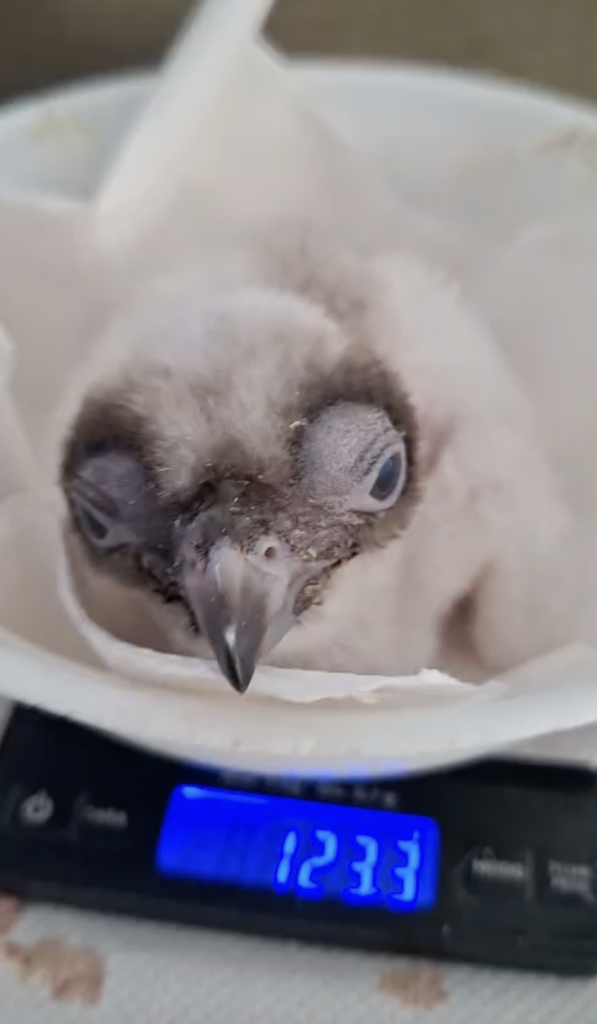
A second egg followed on 19 March. This one was taken for artificial incubation straight away and developed normally. When BG1323 hatched on 10 May, it was long after most centres had wrapped up the hatching period. The hatchling weighed 121 grams but was strong from the start and adapted well to hand-rearing in its first days.
A father learning on the job
BG1323 matters a lot to the breeding programme. Its father, Aïnat, is a founder bird from the Pyrenees, with only one more descendant.
Normally, a chick with genetics this valuable would go to experienced foster parents so that it can be naturally raised. But by May, almost every other pair in the network had finished breeding for the year. The only adults still incubating eggs were BG1323’s own parents. So the team decided to take a chance and give the chick back to them.
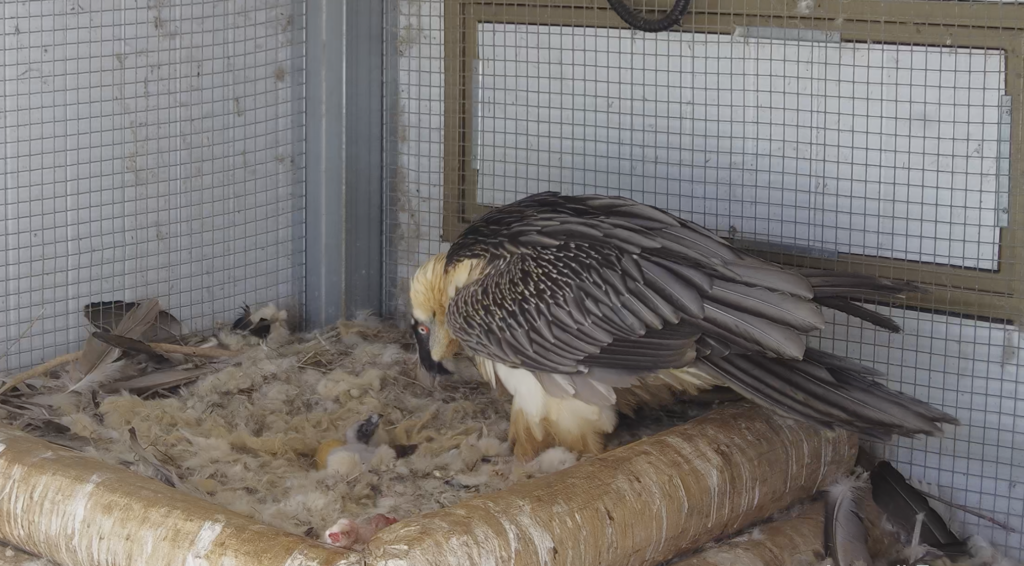
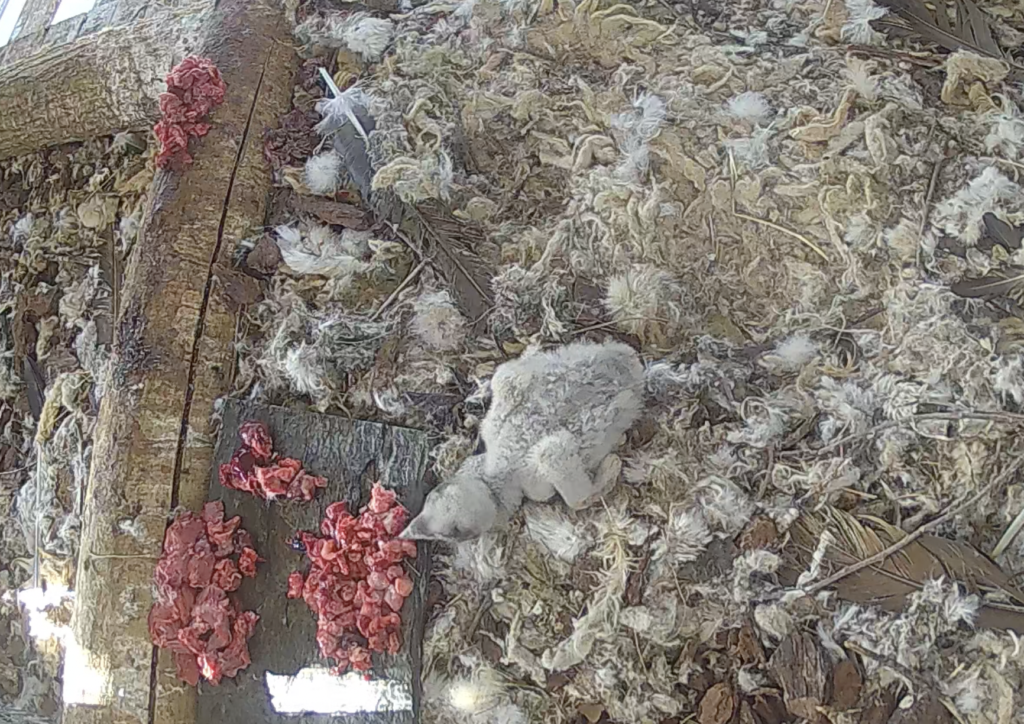
The male, Aïnat, finally approached the chick and started brooding it after hesitating for 45 minutes. Perea, the female, showed no interest and had to be removed from the aviary, leaving Aïnat to raise a chick alone for the first time.
The timing made things harder than usual. Bearded Vultures normally raise chicks in winter, when it’s cooler. Aïnat instead found himself caring for a young chick well into spring, with summer heat on the way.
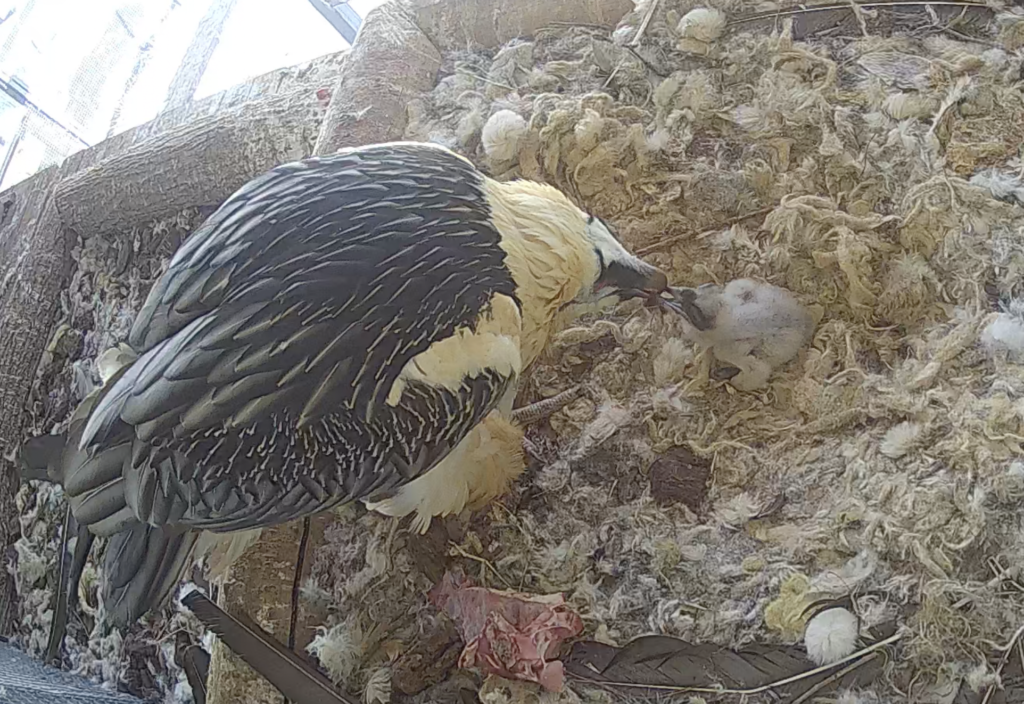
At first, he focused on brooding the chick and keeping it safe while figuring out how to feed it. Over the following days, both father and chick adapted well. BG1323 started feeding itself unusually early, which took some of the pressure off its inexperienced dad. Our keepers still had to step in with extra food when needed, but Aïnat has handled it better than expected.
What happens to BG1323 next
Unlike most of this year’s chicks, BG1323 won’t be released. It will stay in the captive-breeding network. As only the second surviving offspring of a founder bird, its genetics are too valuable to lose. It’s also developing late, meaning it won’t fledge until after this year’s release window has closed across Europe.
So instead, BG1323 will remain in the programme and, eventually, may go on to help produce future generations of vultures destined for release.
The season in numbers
During the 2025/26 breeding season, 44 breeding pairs laid 69 eggs. Out of those, 48 were fertile, with 32 chicks hatching and 28 surviving.
This year, captive-bred Bearded Vultures are being released in:
- Andalusia (Spain) – 6 chicks, including one from FCQ Aragón
- Grand Causses (Massif Central, France) – 4 chicks
- Baronnies (Pre-Alps, France) – 2 chicks
- Maestrazgo (Spain) – 2 chicks
- Bulgaria – 3 chicks
- Swiss Alps – 2 chicks
- Berchtesgaden (Bavarian Alps) – 2 chicks
Together, these releases should help strengthen existing populations and bring the species back to parts of its former range.
BG1323 might not be part of this year’s release group, but its story is a good reminder that conservation work takes patience. Between a delayed breeding season, a buried egg, and a first-time father raising a chick solo, this one’s already overcome plenty.