The new year began with heartbreak in Bulgaria.
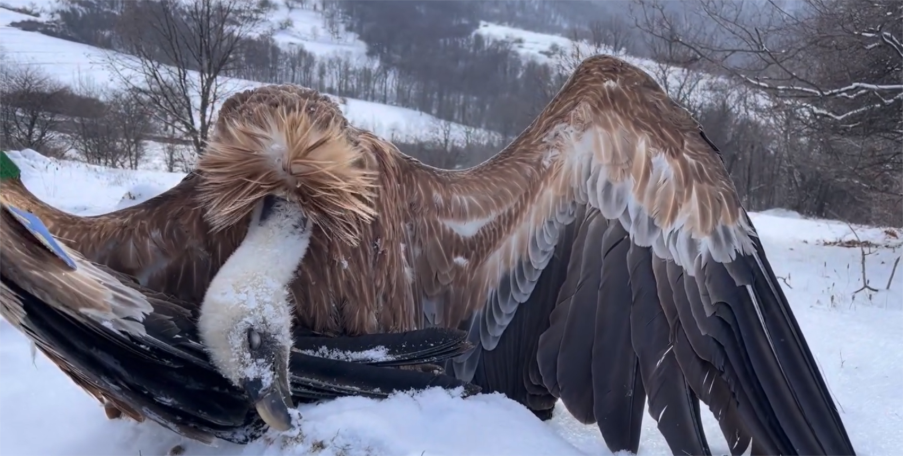
Instead of following the movements of the vultures they had monitored and cared for over many years, conservation teams found themselves collecting bodies of dead vultures. The birds they had cared for with hope and dedication, including Cinererous Vultures translocated from Spain and released in the reintroduction project in the Stara Planina mountain, lay before them, standing like statues in the winter landscape—frozen, covered in snow, and lifeless.
The incident took place in Kotel and claimed the lives of at least six Cinereous Vultures (Aegypius monachus) and one Griffon Vulture (Gyps fulvus). All these birds were part of Bulgaria’s long-term vulture restoration programmes Bearded Vulture LIFE and its predecessor Vultures back to LIFE.
This mortality event deals a great blow to vulture conservation efforts in the country. National authorities and enforcement agencies were quick on the scene and are now doing an investigation to identify cause and motives for these deaths. The main suspicion is that this may be another case of illegal wildlife poisoning.
When the signals went silent
On January 10, FWFF and Green Balkans teams noticed something was wrong. GPS transmitters fitted to two Cinereous Vultures in the Kotel area began sending abnormal data, the kind that immediately raises alarm for field teams who follow these birds every day.
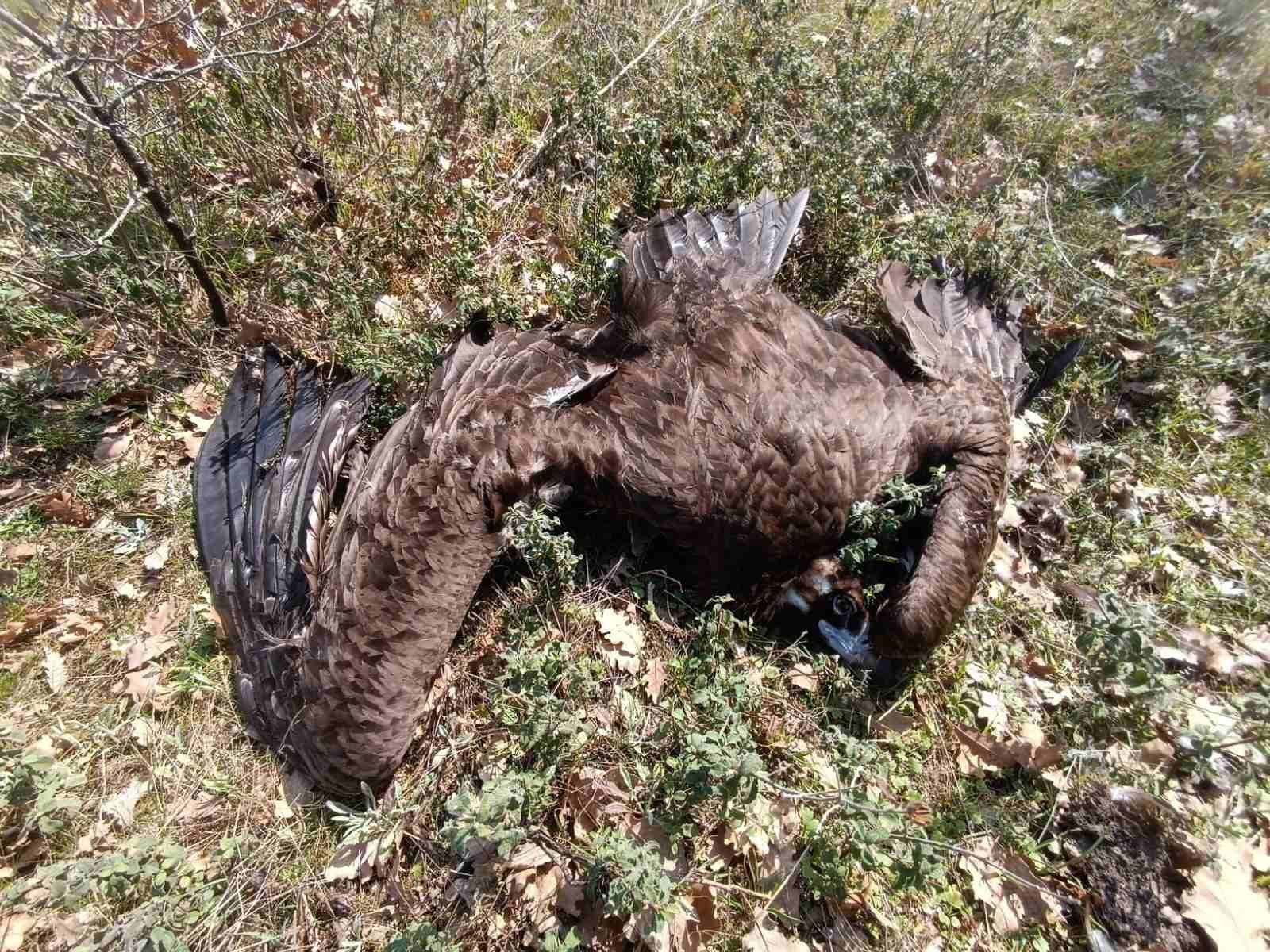
Teams from Green Balkans’ Wildlife Rescue Centre responded without delay. When they reached the site on January 11, their fears were confirmed: two Cinereous Vultures laying dead in the winter landscape.
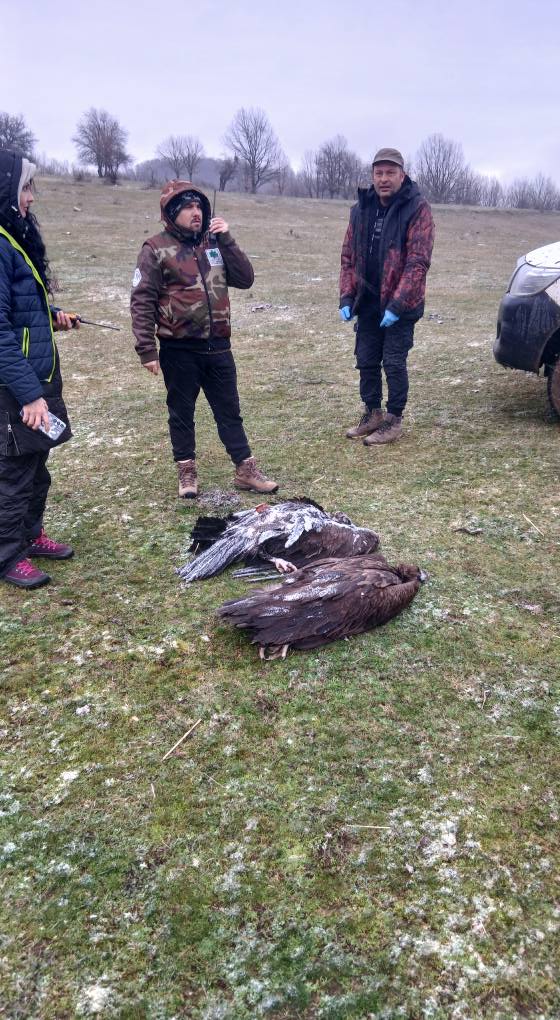
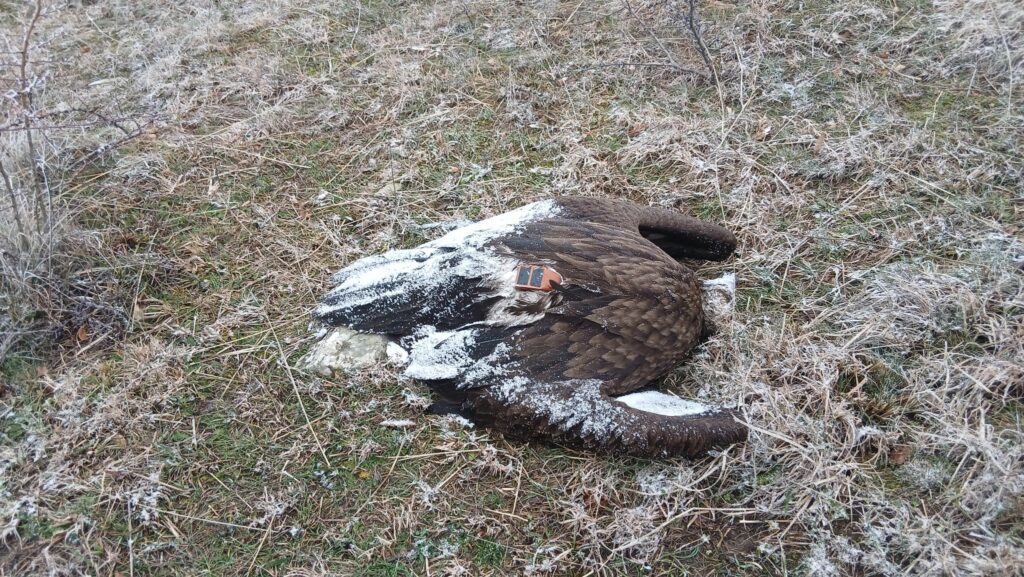
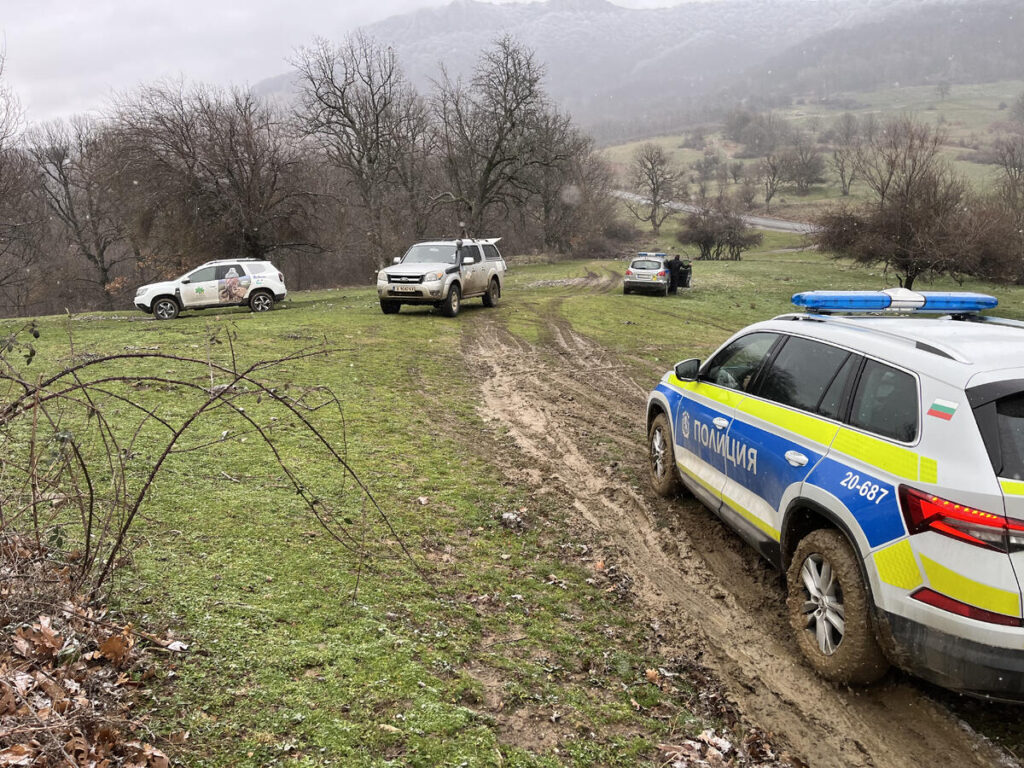
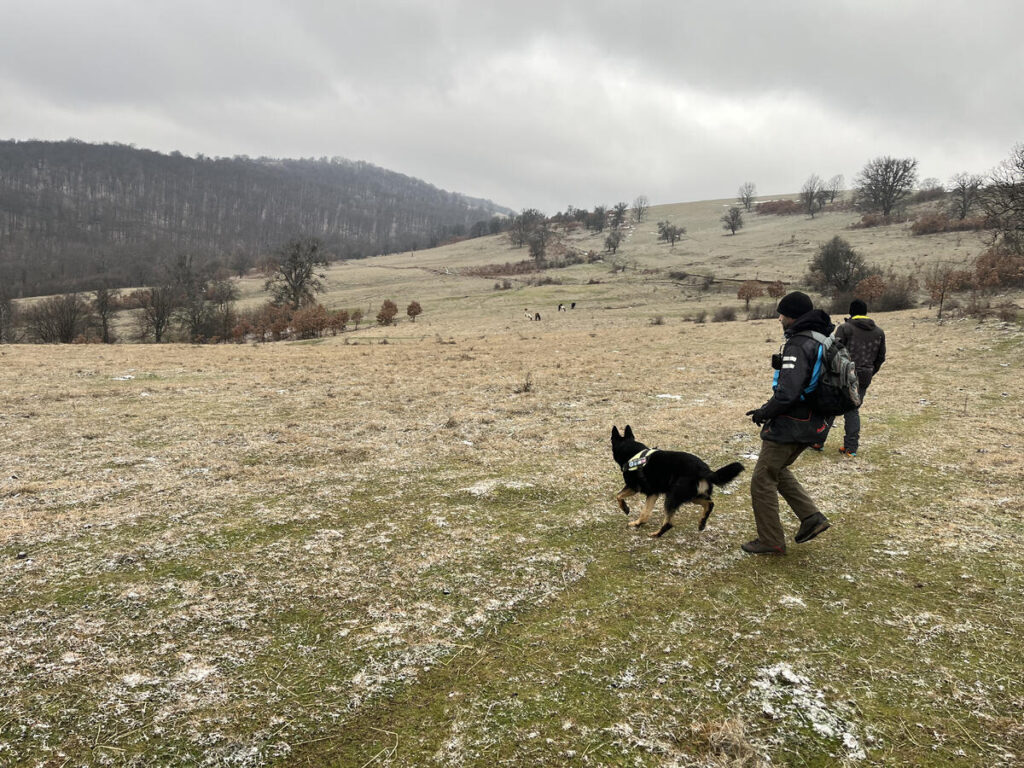
A report was immediately filed with the Kotel Police Department, and specialists from the “Crimes against the Environment, Wildlife and Animals” sector of the General Directorate of National Police arrived to secure the site. As evidence was collected and the investigation formally began, the scale of the crime started to unfold.
Probable cause of death: poisoned baits
During the search, what look like were potential poison baits were discovered—parts of sheep and horse carcasses deliberately placed in the area. Such baits are a known method in wildlife poisoning cases, designed to kill indiscriminately and silently.
As the investigation continues, more victims were found. Two additional Cinereous Vultures and one Griffon Vulture were discovered dead nearby, bringing the confirmed death toll to five.
Farewell to Igor, Resni, Eneva, and Musala
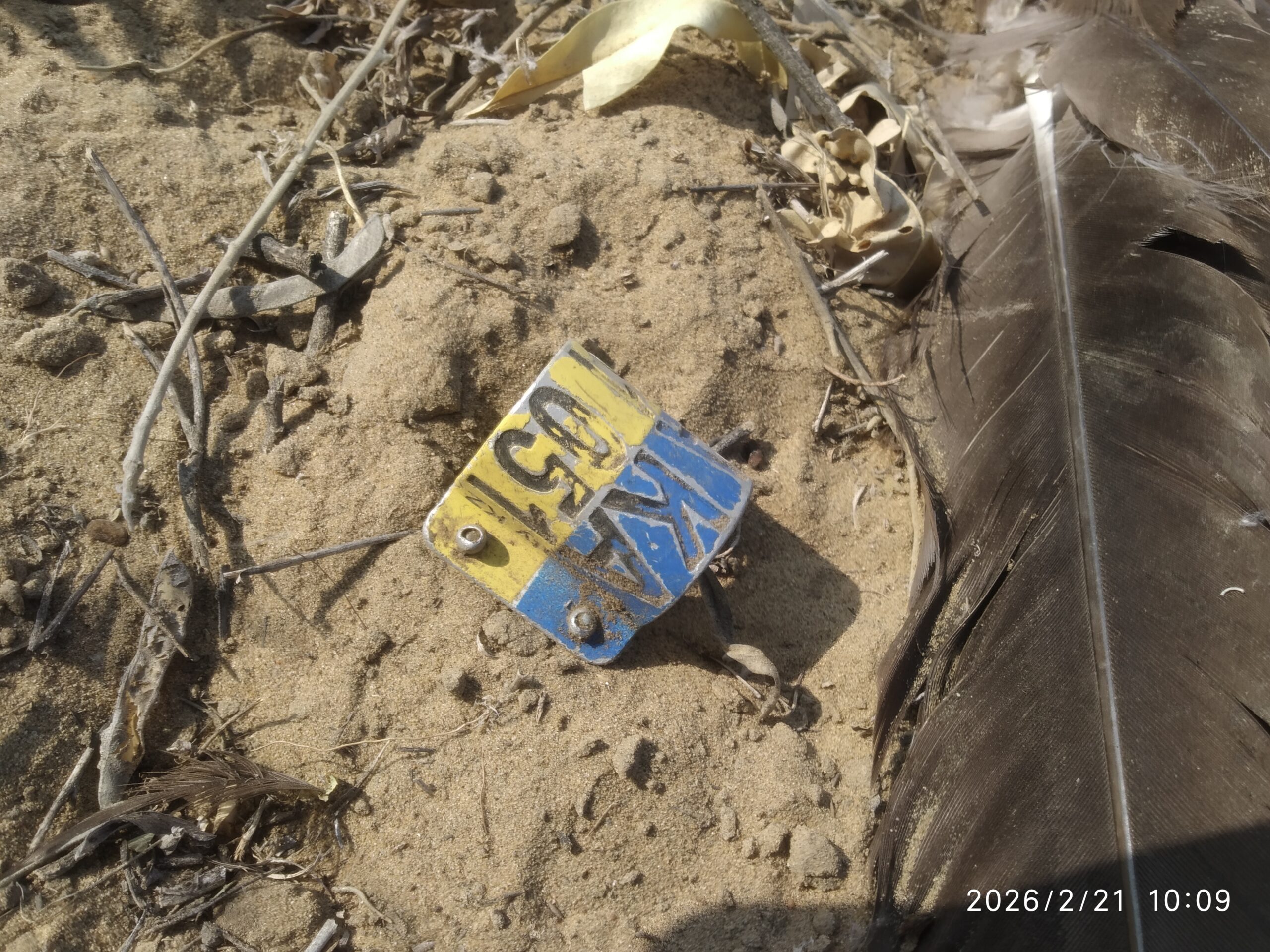
Those dead Cinereous Vultures were identified as Igor, Resni, Eneva, and Musala. Among them, Eneva was one of the first Cinereous Vultures hatched in the wild in Bulgaria after nearly fifty years of national extinction – a true symbol of hope for the species’ return. Igor and Eneva, translocated from Spain and reintroduced, had formed a breeding pair, and conservationists had been eagerly awaiting their first nesting. Those hopes were now shattered.
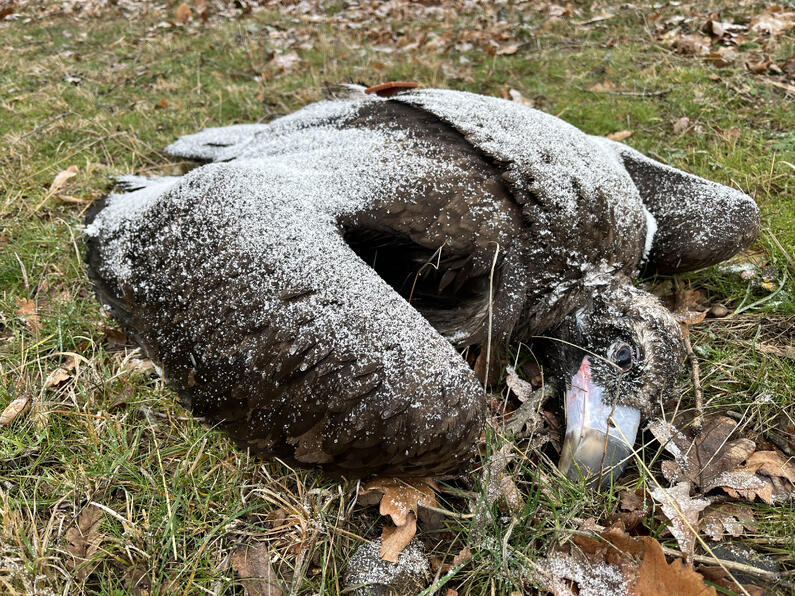
Some of the birds had been donated from Spain, while the Griffon Vulture came from Allwetterzoo Münster, Germany. One bird was named by a donor who funded her transmitter, and another honored Miroslav Enev, whose team had built dozens of nests to support the return of the species. Each of these birds carried a story and decades of dedication.
The loss becomes complete: Simona and Svetlin
Just days later, on January 14, the final, most painful confirmation came. Two more Cinereous Vultures—Simona and Svetlin—were found dead beneath their nesting tree. The sight of the lifeless body of Svetlin in front of the nest was a heartbreak no team member can forget.
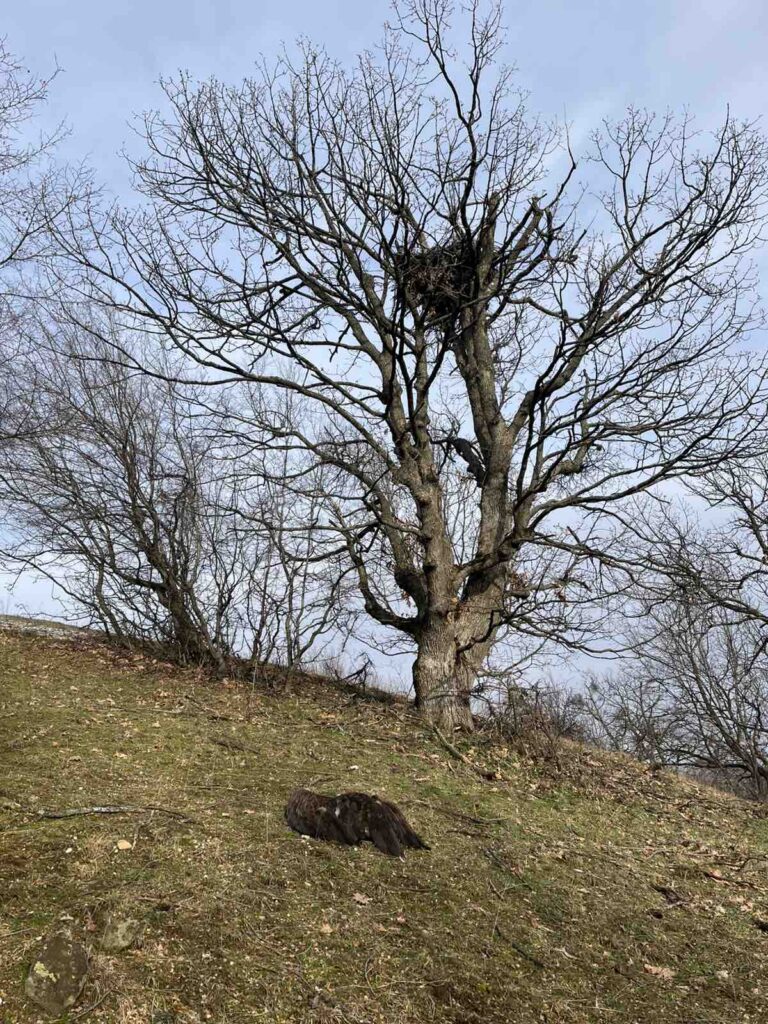
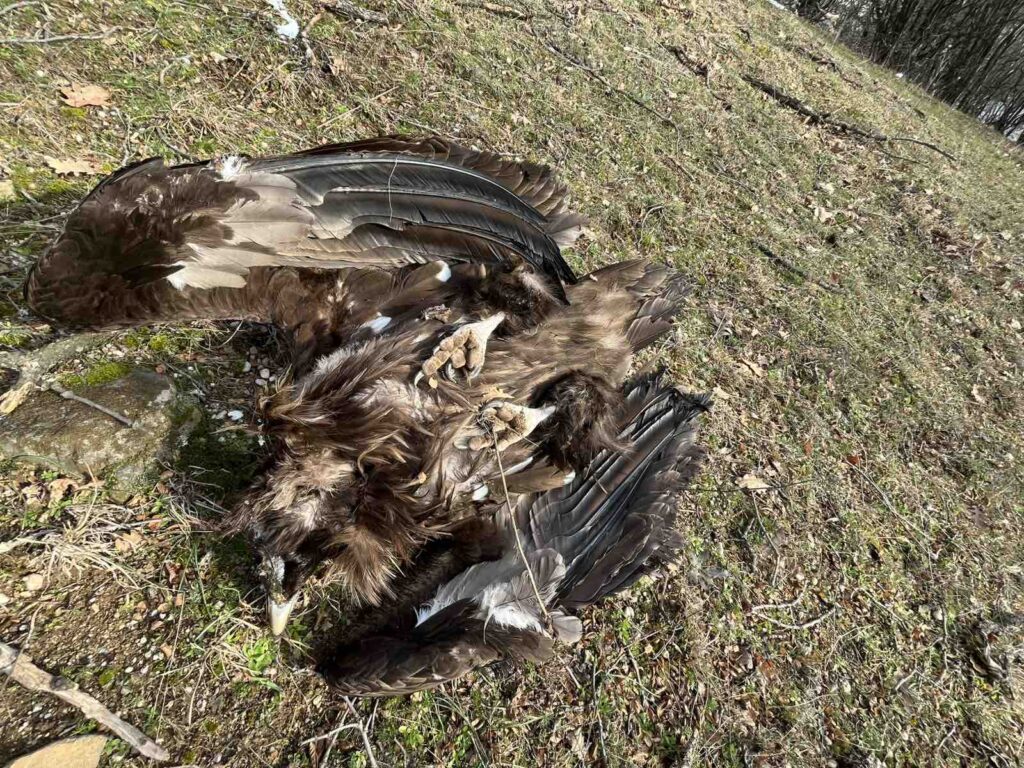
Simona and Svetlin were far more than names in a database. They were a bonded pair, among the brightest hopes for the upcoming breeding season. Svetlin had been raised with care at Ostrava Zoo, Czech Republic, and released in Bulgaria as a symbol of hope. Simona, a wild cinereous vulture from the colony at Dadia National Park, Greece, joined him after his early dispersal across borders.
The two settled in Kotel, constantly together, displaying courtship and the first signs of nesting. They represented the promise of new life for the species—hope that was cruelly cut short. Simona was found first, then Svetlin beneath their nest, ending the dream they carried for the future.
Investigating a silent crime
A criminal investigation has been formally initiated. All carcasses were transported to Stara Zagora, where autopsies are being conducted by experts from Trakia University to determine the exact cause of death and identify the toxic substances involved.
As with many poisoning cases, conservationists fear that the confirmed victims may not represent the full scale of the incident. Poison often kills unseen, and animals that die in remote or rugged terrain are frequently never found.
“These birds were equipped with transmitters, and it is very likely that there are additional victims we will never find,” said Emilian Stoynov from the Fund for Wild Flora and Fauna, which has worked for nearly 30 years to restore the species in the region.

A crime repeated
This was not the first time poison struck at Kotel. In 2022, four Cinereous Vultures were killed by poison in the same area under similar circumstances, at which time the perpetrator remained unpunished.
“The repetition of this crime poses a serious threat to a population that is still in a very fragile recovery phase.” Stoynov added.
It is essential that a complete and comprehensive investigation is carried out, so that all elements are uncovered. If, as it is likely, the event is confirmed as illegal wildlife poisoning, then the suspects should be clearly identified and taken to justice.
Ivelin Ivanov, Head of the Cinereous Vulture Restoration Project at Green Balkans emphasised that every possible effort will be made to ensure that this case results in an effective sentence, rather than remaining unresolved.
Taking these wildlife crimes to justice, and making sure that any culprits are taken to the courts and condemned are essential to dissipate the current widespread perception of impunity, that favours the repetition of these crimes.
Recovery on the edge
Thanks to decades of coordinated conservation work, the Cinereous Vulture finally returned to Bulgaria in 2021 as a breeding species. Today, approximately 18 breeding pairs are established across the country, following the reintroduction of over 140 birds in several different sites.
The Sliven–Kotel region supports 6–7 breeding pairs, which in 2025 raised a record three chicks. Additional breeding pairs are present in the Vratsa region, with new nesting evidence emerging from the Eastern Rhodopes and Sakar Mountains. The loss of six adult birds represents not only immediate mortality, but the disappearance of future breeding potential that this still-fragile population cannot afford to lose.
Poison knows no boundaries
The suspected poisoned baits also killed jackals in the same event, a reminder that poison does not target a single species. It spreads through the food chain, threatening wildlife, domestic animals, and ultimately human health.
The use of poison in nature is a criminal offence under Bulgarian law. “This time, rare birds have suffered—birds whose return to Bulgaria was supported by a large international conservation community,” said Ivelin Ivanov. “But sooner or later, these poisons will also affect people.”
A call for zero tolerance
We are calling on citizens, institutions, and the international community to keep this case visible and to take a firm, united stance against the use of poison in nature.
Decades of conservation progress can be erased by a single illegal act. Preventing further losses requires enforcement, accountability, and public intolerance toward wildlife crime.
Only through sustained collective action can Bulgaria’s skies remain a place of recovery, rather than a repeated scene of loss.
Our Bulgarian partners have also initiated a petition (in Bulgarian) appealing the Bulgarian government to stop these cases from happening and demanding to treat serious environmental crimes as serious crimes with real sanctions.
This devastating incident shows why projects like Balkan Detox LIFE y Wildlife Crime Academy are so crucial. Crimes against wildlife cannot continue to go unpunished. Only when wildlife poisoning is treated like any other serious crime can we hope to stop it from happening again.

The “Bearded Vulture LIFE” project is a comprehensive initiative, aiming to restore the Bearded Vulture and Cinereous Vulture across Bulgaria and the Balkans. With a budget of €5.17 million, co-funded by the European Union’s LIFE Programme, the project commenced in August 2023 and is expected to continue until 2030. Building upon the achievements of its predecessor, “Vultures Back to Life,” it is coordinated by Green Balkans, with five more partner organizations within Bulgaria, including the Fund for Wild Flora and Fauna, Foundation EkoObshtnost, EVN – Elektropradelenie Yug EAD, Severozapadno Darzhavno Predpriyatie – Vratsa, and “Sinite kamani” Nature Park Directorate. Furthermore, the project benefits from international collaboration, including the Vulture Conservation Foundation (VCF), responsible for the translocation and safeguarding of captive-bred birds secured for release. Additionally, the partner Milvus group is responsible for executing conservation efforts in Romania.