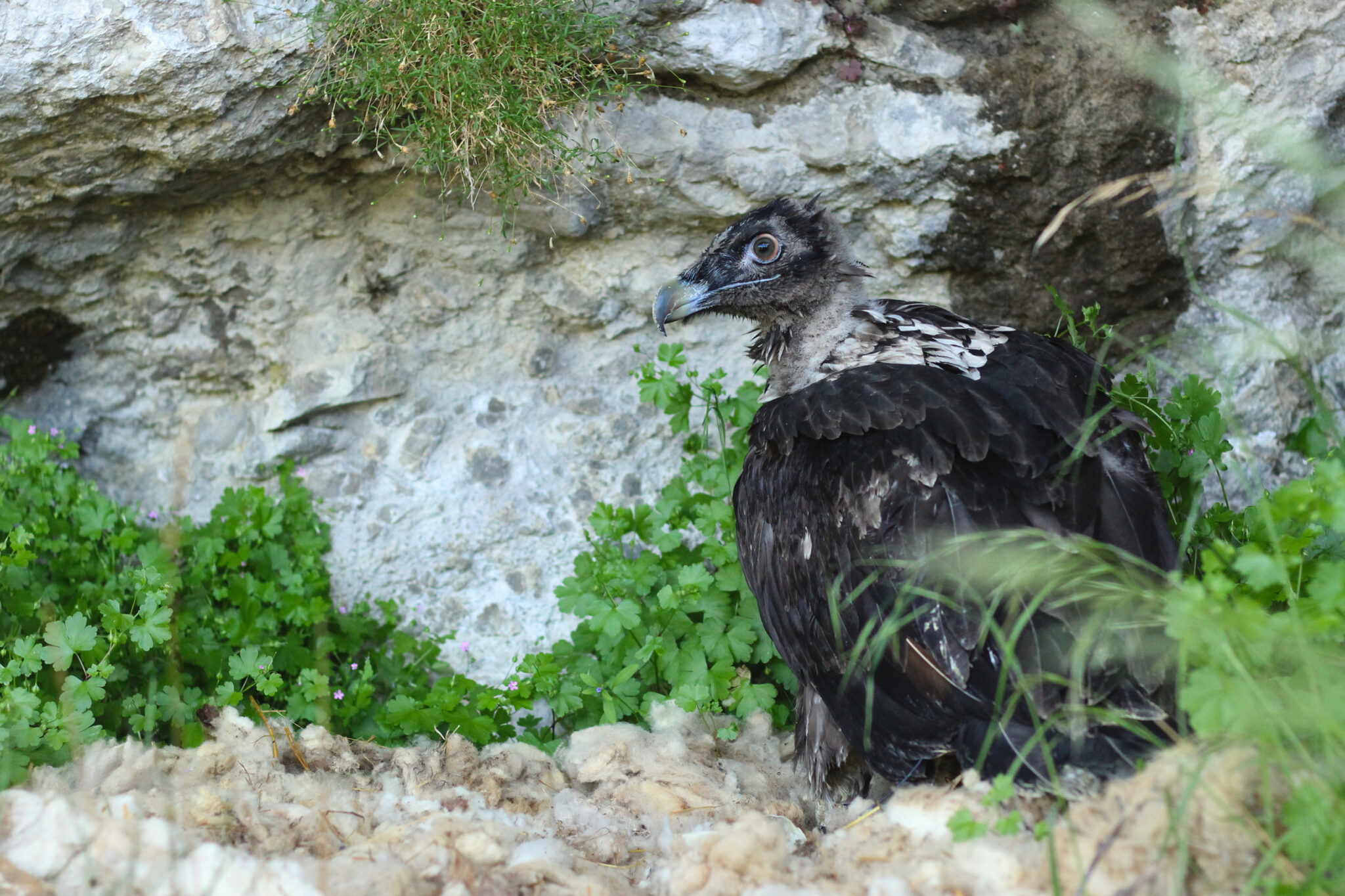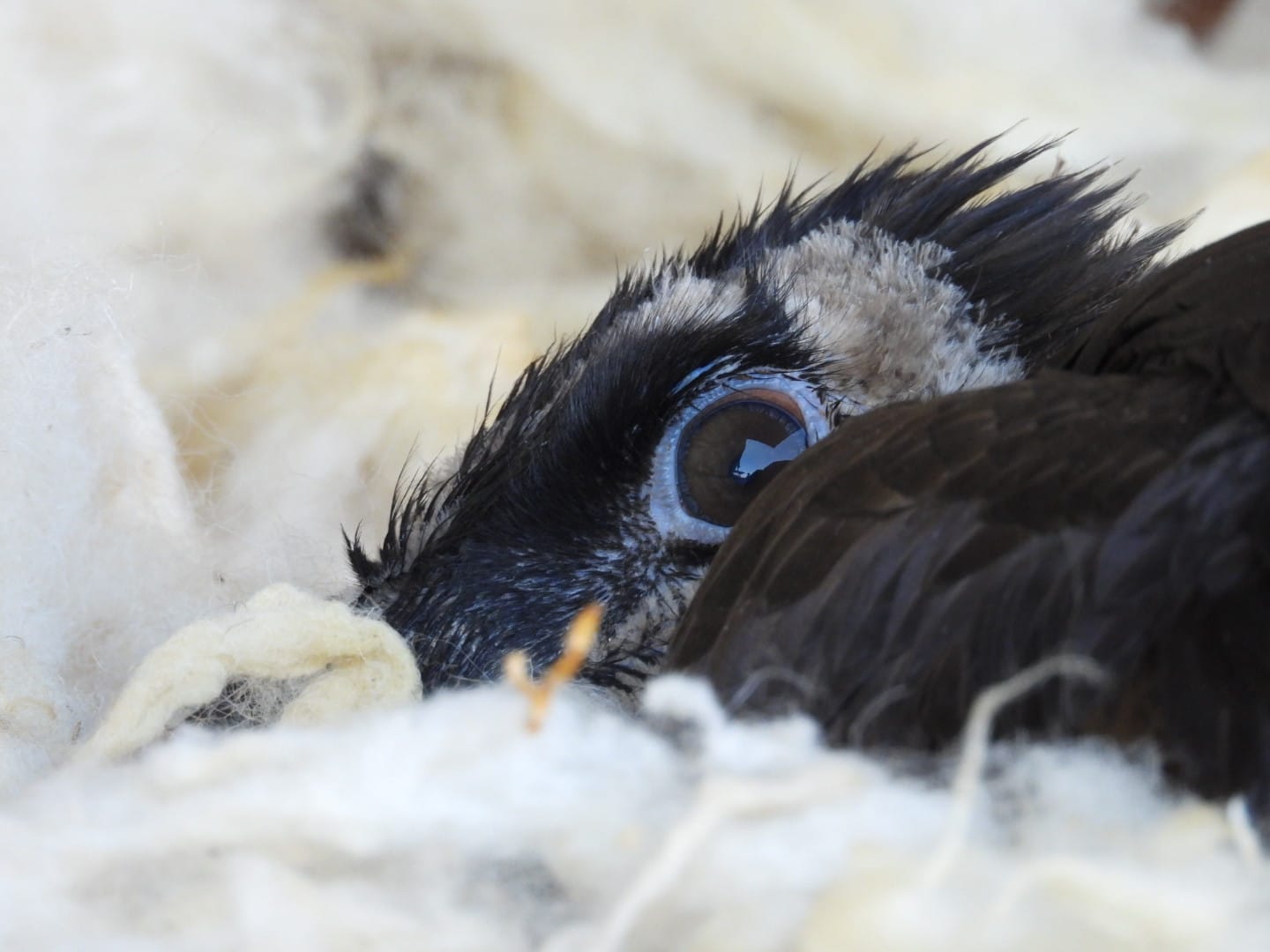
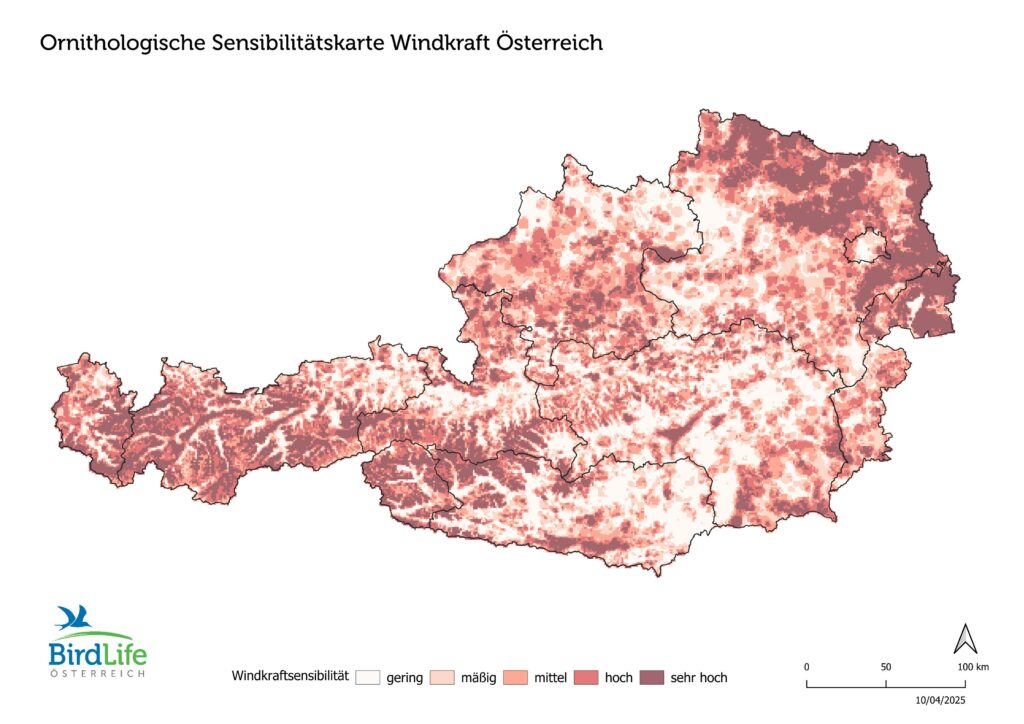
GPS-tracking data from the International Bearded Vulture Monitoring (IBM) network has contributed to an important new tool designed to reduce conflicts between renewable energy development and biodiversity conservation. BirdLife Austria has recently published Austria’s first national ornithological sensitivity map for wind energy planning, integrating movement data from several threatened and disturbance-sensitive bird species – including the Bearded Vulture (Gypeatus Barbatus).
The aim of these new maps is to support Austria in meeting the requirements of the EU’s Renewable Energy Directive (RED III), which calls for the rapid expansion of renewable energies while safeguarding biodiversity. As part of this process, Austria must designate so-called “acceleration areas” for renewable energy projects by February 2026. BirdLife Austria’s sensitivity analysis provides a crucial evidence base to ensure that wind energy development avoids areas of high conservation importance from the outset.
How IBM data supported the sensitivity maps
To assess the spatial sensitivity of Bearded Vultures to wind energy, BirdLife Austria used GPS data provided by the IBM from its local partners, among other sources. Movement data from tracked individuals were analysed using a Dynamic Brownian Bridge Movement Model, allowing researchers to calculate each bird’s utilisation distribution (UD) – essentially a probability-based map of where the birds spend most of their time.
Because the Bearded Vulture is one of Austria’s most sensitive bird species in relation to wind energy development, it received the highest species sensitivity factor in the national map. These combined inputs contributed to the final multi-species sensitivity assessment, which highlights areas where wind energy infrastructure would pose a high risk to vulnerable bird populations.

Identifying sensitive areas – and preventing future conflicts
The published national map reveals several regions where wind energy development could severely impact threatened bird species such as the Eastern Imperial Eagle (Aquila heliaca), Red Kite (Milvus milvus) and Saker Falcon (Falco cherrug) in eastern Austria as well as Bearded Vultures (Gypeatus Barbatus), Eurasian Dotterel (Eudromias morinellus) and Capercaillie (Tetrao urogallus) in the Alpine region.
In these zones, BirdLife Austria recommends that wind turbines should only be approved following comprehensive environmental impact assessments, and that they should not be designated as acceleration areas under RED III. This approach supports both climate and biodiversity objectives by guiding renewable energy infrastructure away from ecologically sensitive regions.
We congratulate BirdLife Austria and all partners involved in this effort and look forward to continued collaboration to ensure that renewable energy expansion and biodiversity conservation progress hand-in-hand.
See the interactive sensitivity map: https://www.birdlife.at/vogelschutz/naturschutzpolitik/erneuerbare-energien/

A International Bearded Vulture Monitoring Network (IBM) is a unique international collaboration between national & natural parks and non-governmental organisations, coordinated by the Vulture Conservation Foundation (VCF), to monitor the population of the Bearded Vulture in Europe.
The IBM-network collects, shares and makes available Bearded Vulture data to everyone working for the species’ conservation. It also uses this data and discusses conservation strategies and priorities for this species worldwide. There are currently 23 partners and associated organisations part of the IBM-network.