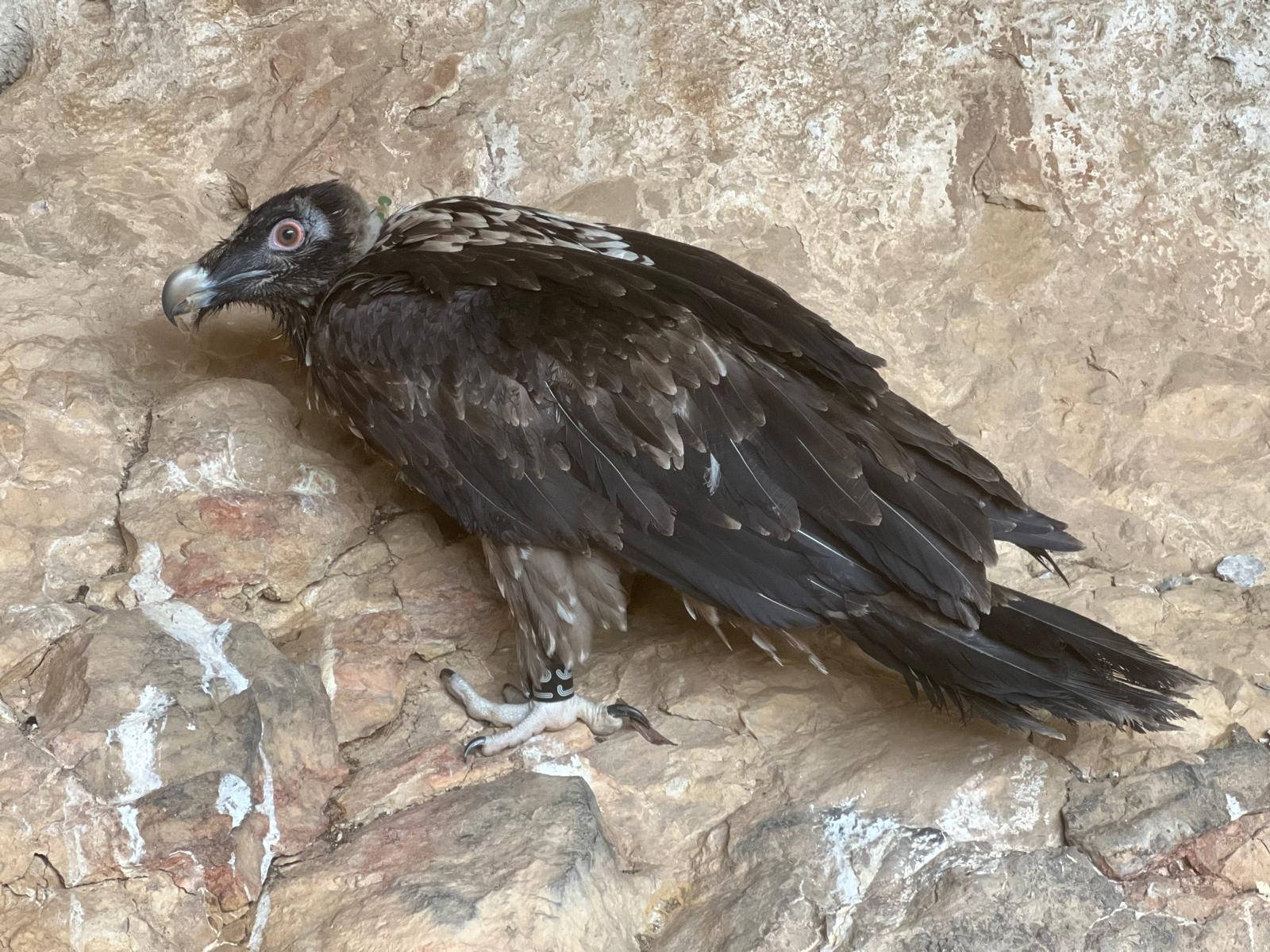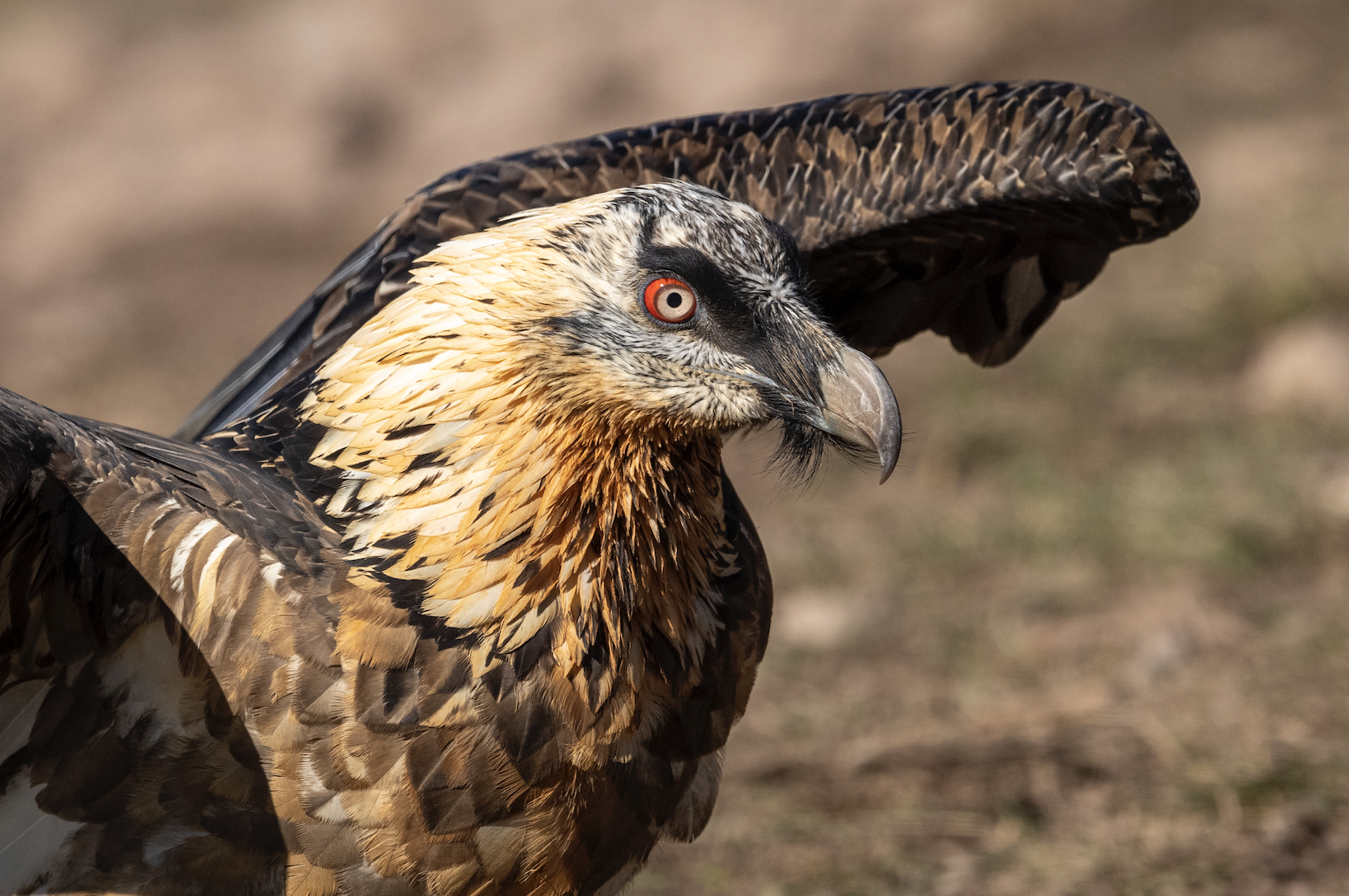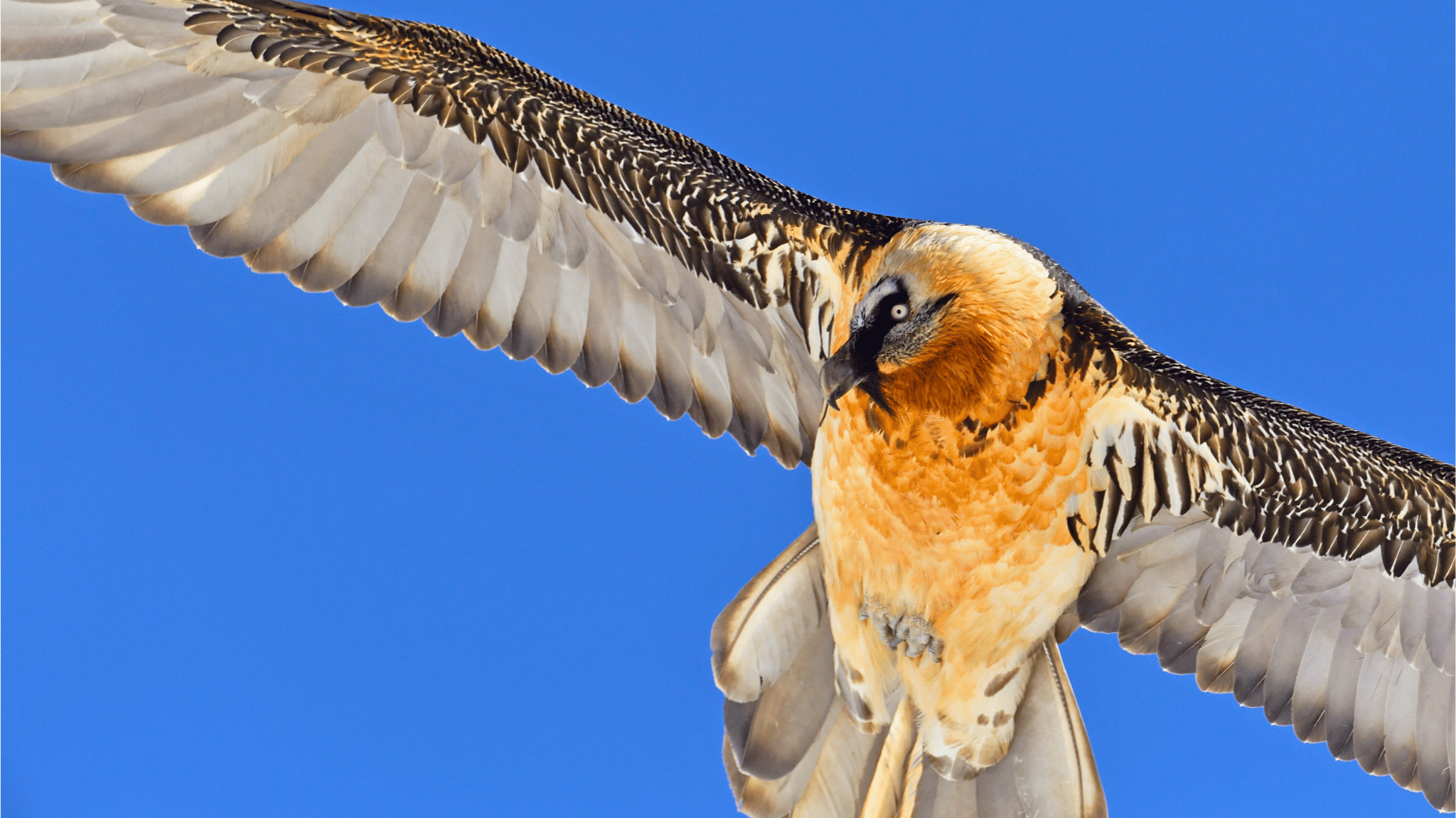
As early as October, when temperatures begin to drop, the first signs of the Bearded Vulture (Gypaetus barbatus) breeding season start to appear. Nest building is among the earliest and most important stages, laying the foundation for the entire breeding cycle.
While in the wild the birds take care of every step themselves, in captive breeding centres a little support from staff is necessary to help create the right conditions. In this article, we take a closer look at how this crucial phase unfolds in a specialised captive breeding centre in Vallcalent — one of the most important breeding centres within the Bearded Vulture EEP network.
Nest building as a breeding stimulus
At the start of the season, staff provide wool and sticks to all established breeding pairs, as well as to birds that are in the process of pairing. The availability of nesting material acts as a behavioural stimulus, encouraging cooperation and strengthening bonds between birds.
When two birds are placed together in an aviary for the first time, a nest is prepared for them in advance. Based on several years of experience, this approach is recommended for all captive breeding centres, as it supports the expression of natural breeding behaviour from the very beginning.
Minimising disturbance during a sensitive period
Throughout the breeding season, nesting material is provided several times a week. Wool and sticks are placed on the ground of the aviaries through the same hatch used for feeding, allowing staff to avoid entering the aviaries during this particularly sensitive period.
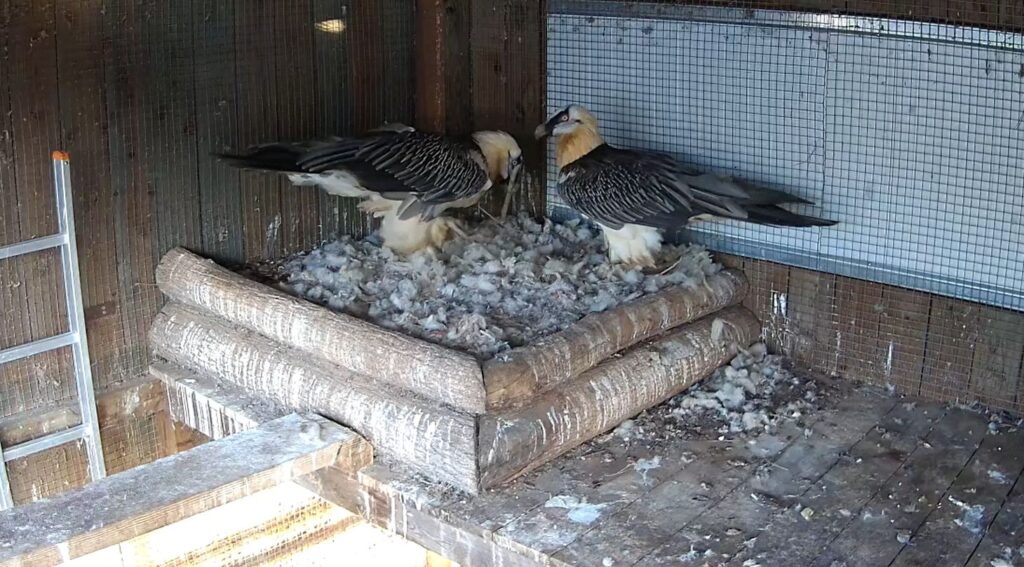
The birds then collect the materials themselves, carefully transporting each piece to the nest. They take time to decide where each element belongs, frequently rearranging the structure until it meets their preferences.
In the video, you’ll get a closer look at nest-building behaviour at Vallcalent, showing how pairs such as Secundino & Torla and Urrobi & Greca prepare their nests for the breeding season.
A personalised nest
Nest building is a thoughtful and sometimes surprisingly creative process. Bearded Vultures occasionally add grass, introducing a touch of colour to the nest. While wool and sticks are the primary materials used both in captivity and in the wild, Bearded Vulture nests can include a wide variety of objects. In natural environments, researchers have even documented human-made items incorporated into nests.
Once the basic structure is complete, the birds dig a bowl in the centre of the nest using their legs. This bowl plays a vital role in keeping the eggs stable and preventing them from rolling — a simple but essential detail that can make the difference between success and failure.
Cooperation, preferences and disagreements
Both male and female Bearded Vultures participate in nest building. Interestingly, birds do not need to be a bonded pair to engage in this behaviour. Single birds, or birds sharing an aviary without an established mating relationship, often begin building nests when autumn arrives.
In some cases, birds in the process of pairing may create two separate bowls within the same nesting area — sometimes even taking nesting material from one another. Bearded Vultures clearly develop strong personal preferences when it comes to nest design. Members of the same pair may disagree on where a particular stick or pile of wool should go, spending hours undoing and redoing each other’s work.
At times, both birds climb into the nest simultaneously and appear to “argue” over the decoration of their future chick’s home — a behaviour that is as engaging to observe as it is revealing of their complex social dynamics.
A critical foundation for the breeding season
By late November and early December, the first clutches of the season had already been laid. If all goes well, the first chicks are expected to hatch towards the end of January.
As incubation continues and hatching approaches, the focus will soon shift to chick rearing — the next chapter in the life cycle of this remarkable species.
Bearded Vulture EEP
The Bearded Vulture EEP, coordinated by the Vulture Conservation Foundation (VCF) on behalf of EAZA, continues to focus on enhancing the genetic diversity and stability of the European population. With a network comprising over 40 institutions, the EEP supports captive breeding that underpins reintroduction projects across Europe.
With the 2025–2026 season, we take another meaningful step toward securing a thriving future for Europe’s Bearded Vultures. We look forward to sharing the inspiring story of these hatchlings as they grow, take flight, and help restore the species to the wild.
Vallcalent Specialized Breeding Unit
Vallcalent Bearded Vulture Breeding Unit located in Lleida, Spain has been operating since 2005 through a partnership between the Vulture Conservation Foundation (VCF) and the Catalan Government. Home to 33 birds, Vallcalent plays a vital role in producing genetically important chicks, rehabilitating injured vultures, and providing foster care for birds that can’t breed naturally.