GPS tracking data are a cornerstone of conservation protocols all over the world. They follow individuals’ movements and allow for deeper insights into species’ behaviour, ecology, and threats. A recent article published on BioScience explores the possibility to leverage animal tracking to detect wildlife crime.

A useful tool in grim scenarios
Wildlife crime is one of the most significant threats to biodiversity, human well-being and security. Improving detection of these crimes is one of the five critical objectives identified by the International Consortium on Combating Wildlife Crime (IC- CWC2022).
Tracking scavengers’ movements can point authorities to otherwise hidden crimes. Tagged individuals are easily detected if poached and can help detect the poaching of their conspecifics. In addition, scavenger ability to locate carcasses, and ecological interactions among species, could potentially improve detection of poached individuals of both tagged and untagged species.
Vultures as poaching incidents sentinels
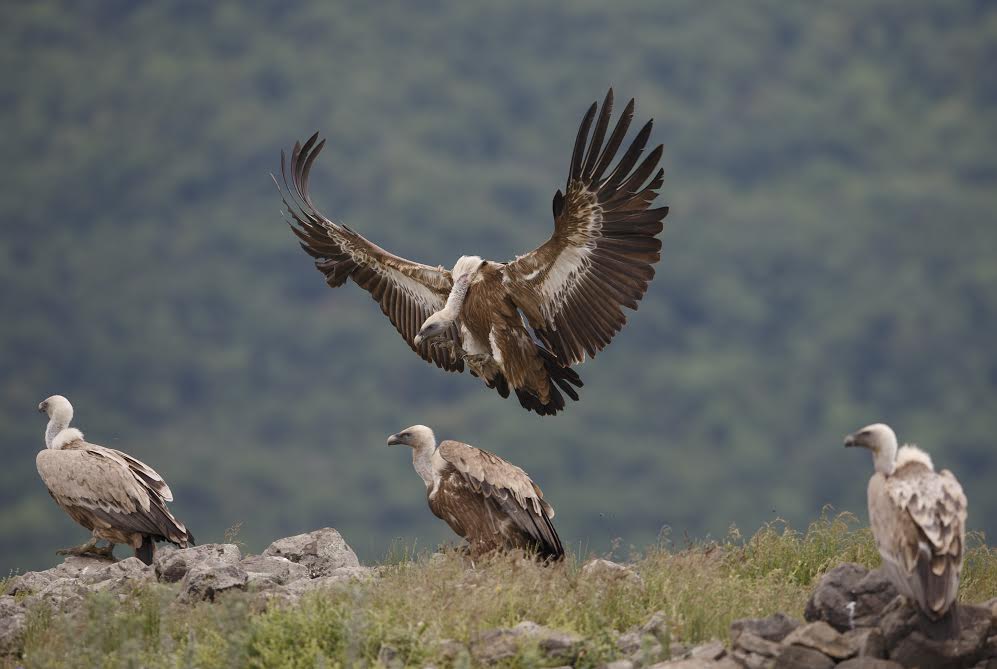
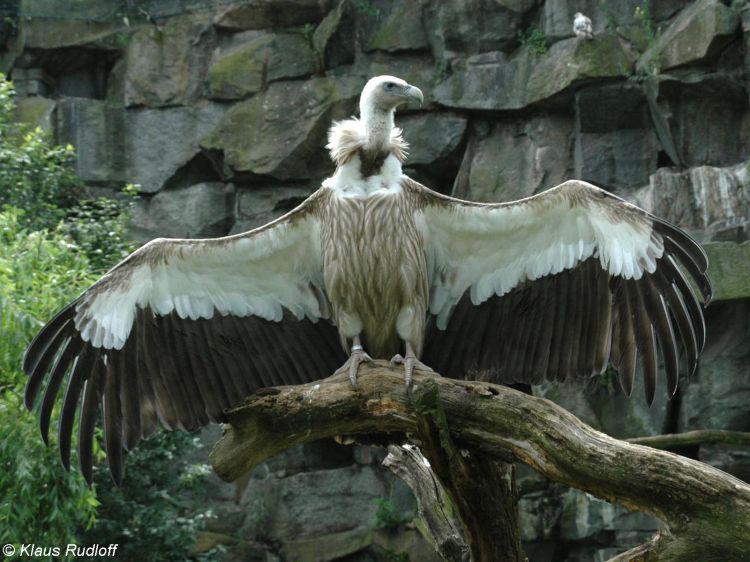
Vultures easily locate carrion over vast areas, which makes them the powerful, cost-effective sentinels that help detect wildlife crime. Unfortunately, what makes them great scouts also exposes them to a greater risk of becoming poisoning victims.
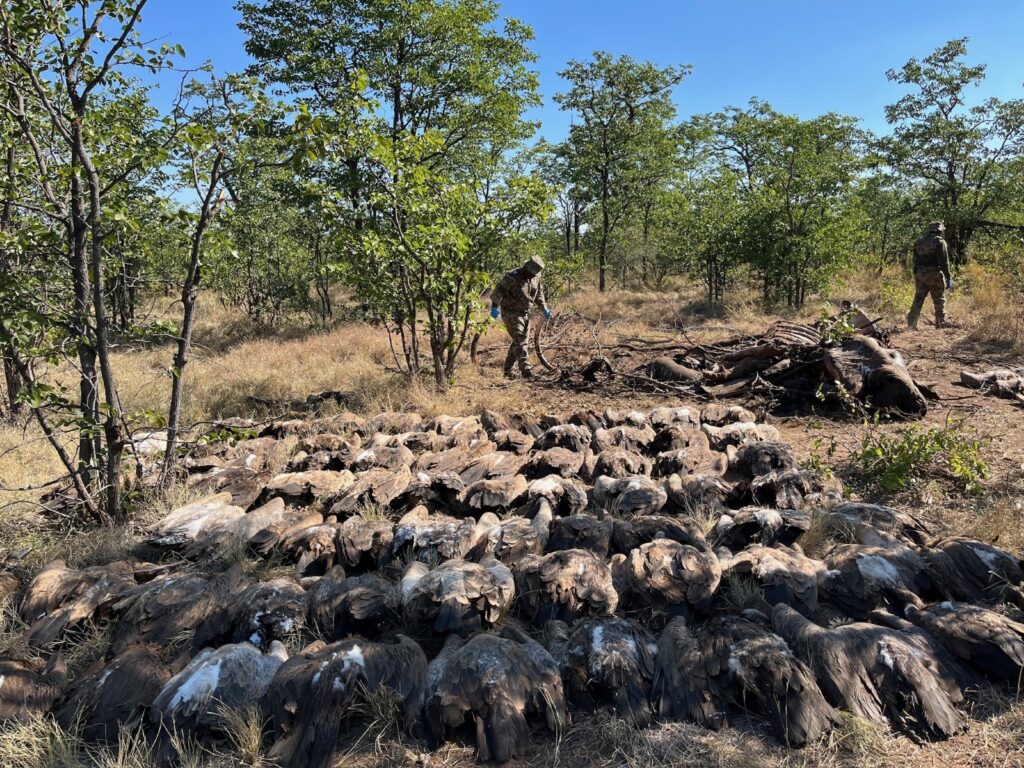
Wildlife crime is present all over the world, and vultures and other scavengers are frequently involved. In Europe, for example, vultures are often unintentional victims of illegal predator control actions. On the other hand, in Africa, vultures are sometimes intentionally poisoned by poachers to prevent them from alerting the authorities. This illegal persecution has been referred to as sentinel poisoning.
Remote tracking benefits
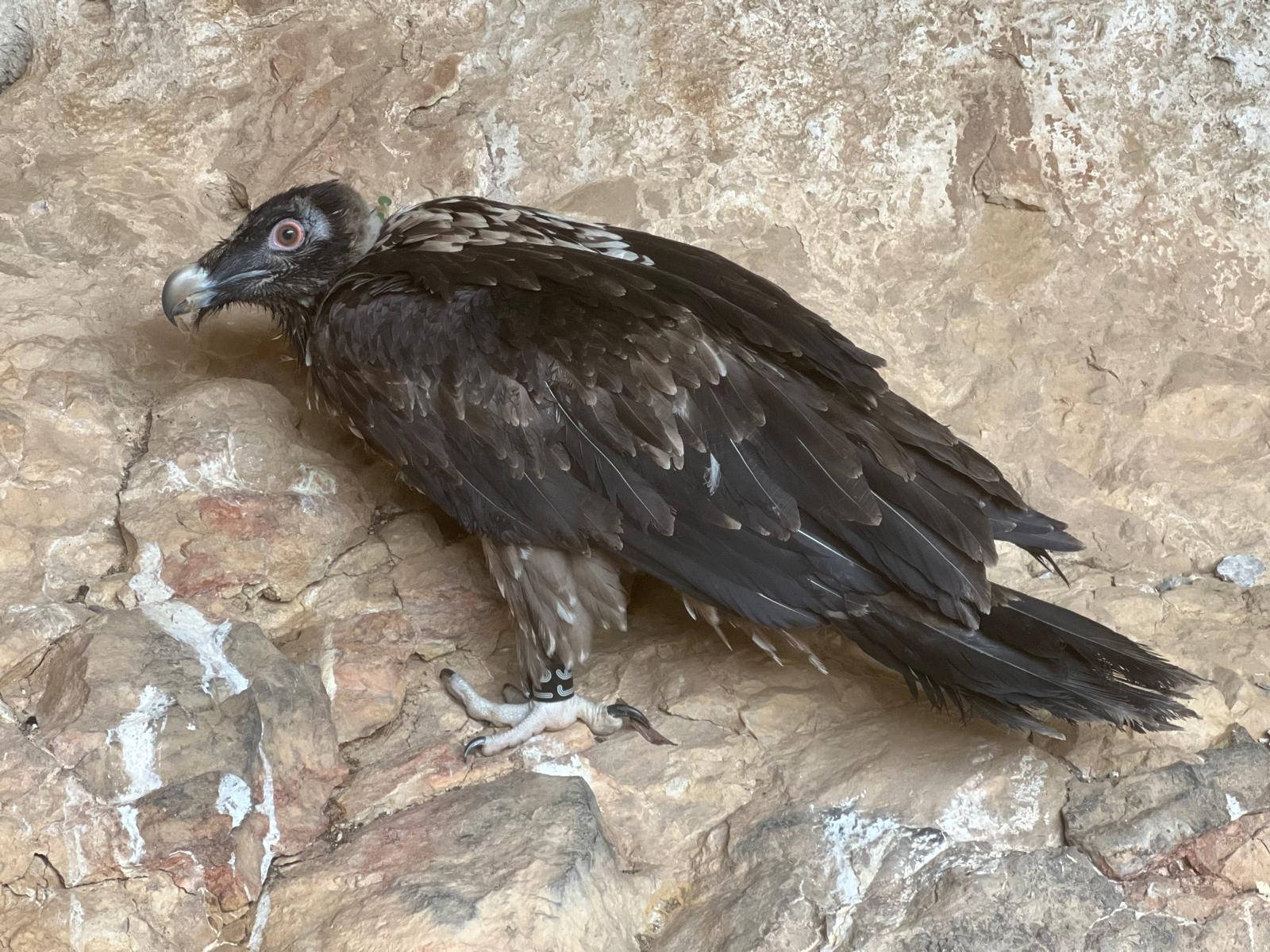
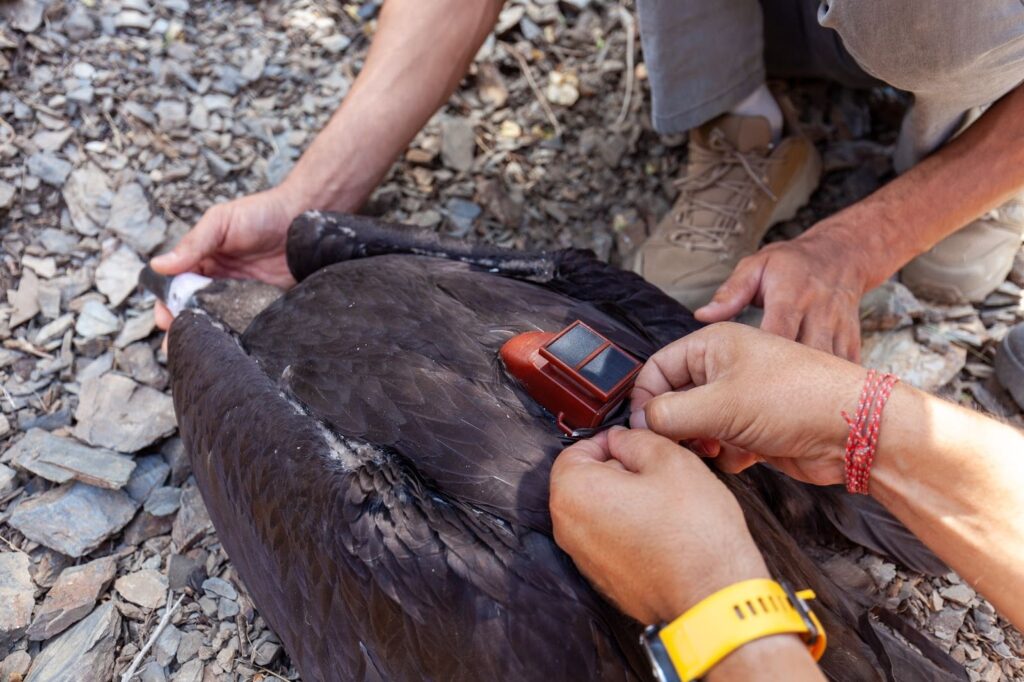
The use of GPS tags allows scientists to collect far more data than the mere position of an individual. It records behaviours and interactions – such as routine movements from feeding to roosting sites, speed and altitude of each flight, and migration routes – allowing for deeper insight into the ecology of the species.
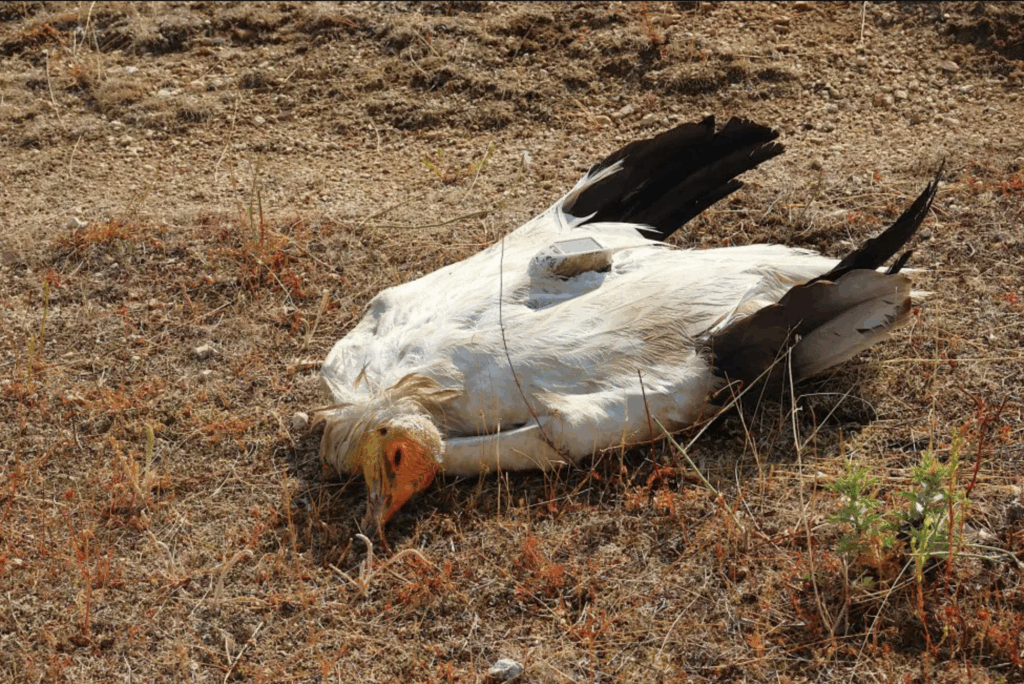
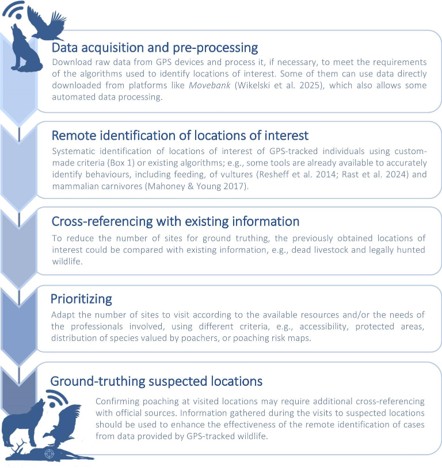
The data recording scavengers feeding events can be used to track poaching and poisoning incidents. Although it is impossible to visit each feeding site, a carefully curated protocol makes it possible to scale up the research and detect poaching events from GPS tracking data, boosting the detectability of crimes that would otherwise remain unseen. The 2025 study compiled multiple cases across Portugal, Spain, Bulgaria, and the Czech Republic, where feeding sites identified from GPS data led investigators to poached wildlife. Those cases show how scavengers can reveal crimes that do not always directly harm the tracked bird but do harm other species and the environment.
Extending Established Initiatives
The study closely follows the concept underpinning the Eye in the Sky programme, led by the Endangered Wildlife Trust, the North Carolina Zoological Society, and Contemplate Wild, which leverages GPS tracking data from vultures to detect poisoning events and illegal killing of large mammals in Africa.
By analysing vulture movements in near real time, the system identifies unusual activity like rapid clustering of birds or sudden immobility. Rangers swiftly investigate sites, confirm incidents, remove any poisoned carcasses, and respond before further wildlife is affected. Vultures thus act as an effective early-warning system, helping to detect and mitigate illegal activities across vast African landscapes that would otherwise be difficult to monitor.
How we are fighting against wildlife crime
One of the pillars of our work is creating a safe environment for vulture species to thrive. Each vulture released in a partner restocking or reintroduction project is equipped with a GPS tracker. We follow every story across Europe and beyond, and use this data to study vultures’ behaviour and the threats they face. Thanks to these data, we improve conservation actions and protocols, giving each species the best chance to thrive in nature. Moreover, together with our partners we are implementing exactly the early warning systems based on vulture tracking suggested in the article.
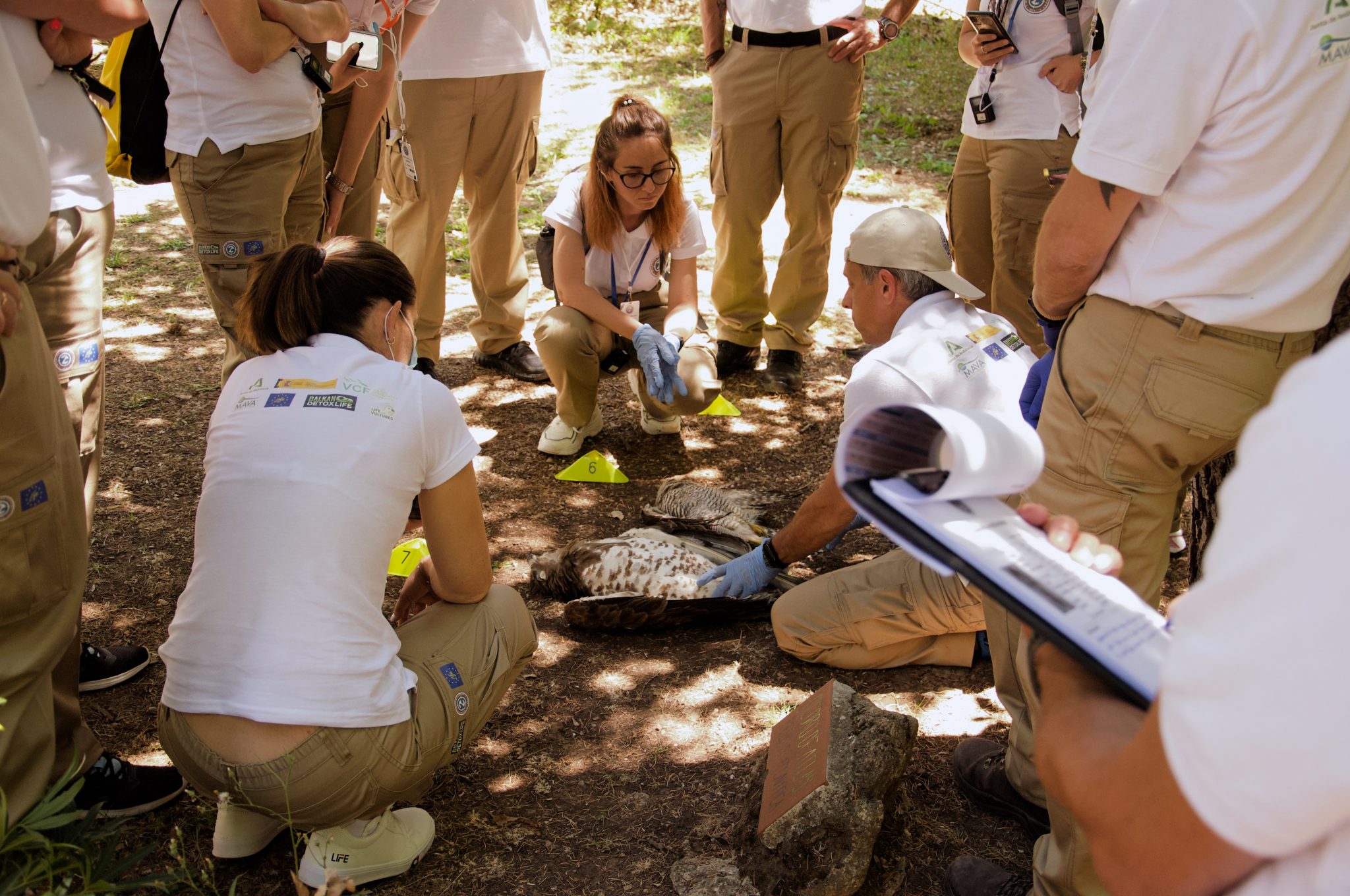
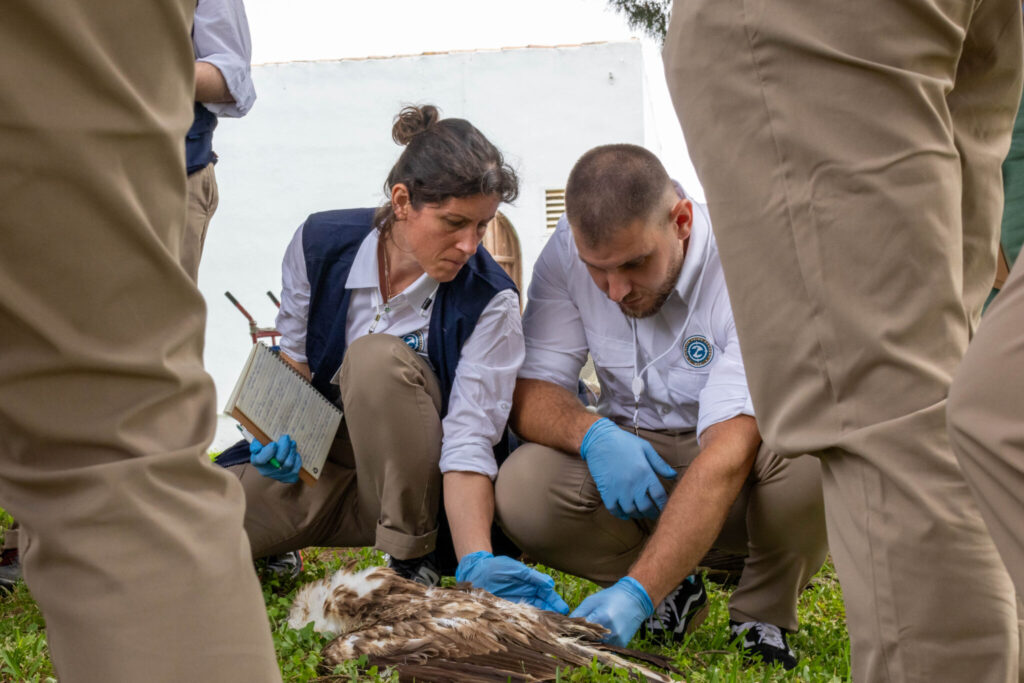
We actively fight against wildlife crime by training police, inspectors, prosecutors, and veterinarians across Europe through our WildLIFE Crime Academy. The Academy draws from successful wildlife crime reduction measures implemented by Spain’s Junta de Andalucía and shares best practices with a holistic approach. In addition, it promotes international collaboration, since wildlife crime transcends borders. It facilitates intelligence-sharing, harmonized investigative protocols, and improved prosecution of wildlife criminals across multiple regions. Through the Academy, we are creating a Europe-wide network of professionals ready to act.
Source: Patricia Mateo-Tomás, María Fernández-García, Jorge Rodríguez-Pérez, João Pedro Valente e Santos, Iván Gutiérrez, Javier de la Puente, Volen Arkumarev, Aldin Selimovic, Šárka Frýbová, Miroslav Kutal, Cláudio Bicho, Emilio J García, José Vicente López-Bao, Leveraging animal tracking to combat wildlife crime: GPS-tagged vultures and wolves as sentinels of other species’ poaching, BioScience, Volume 75, Issue 12, December 2025, Pages 1058–1065, https://doi.org/10.1093/biosci/biaf136