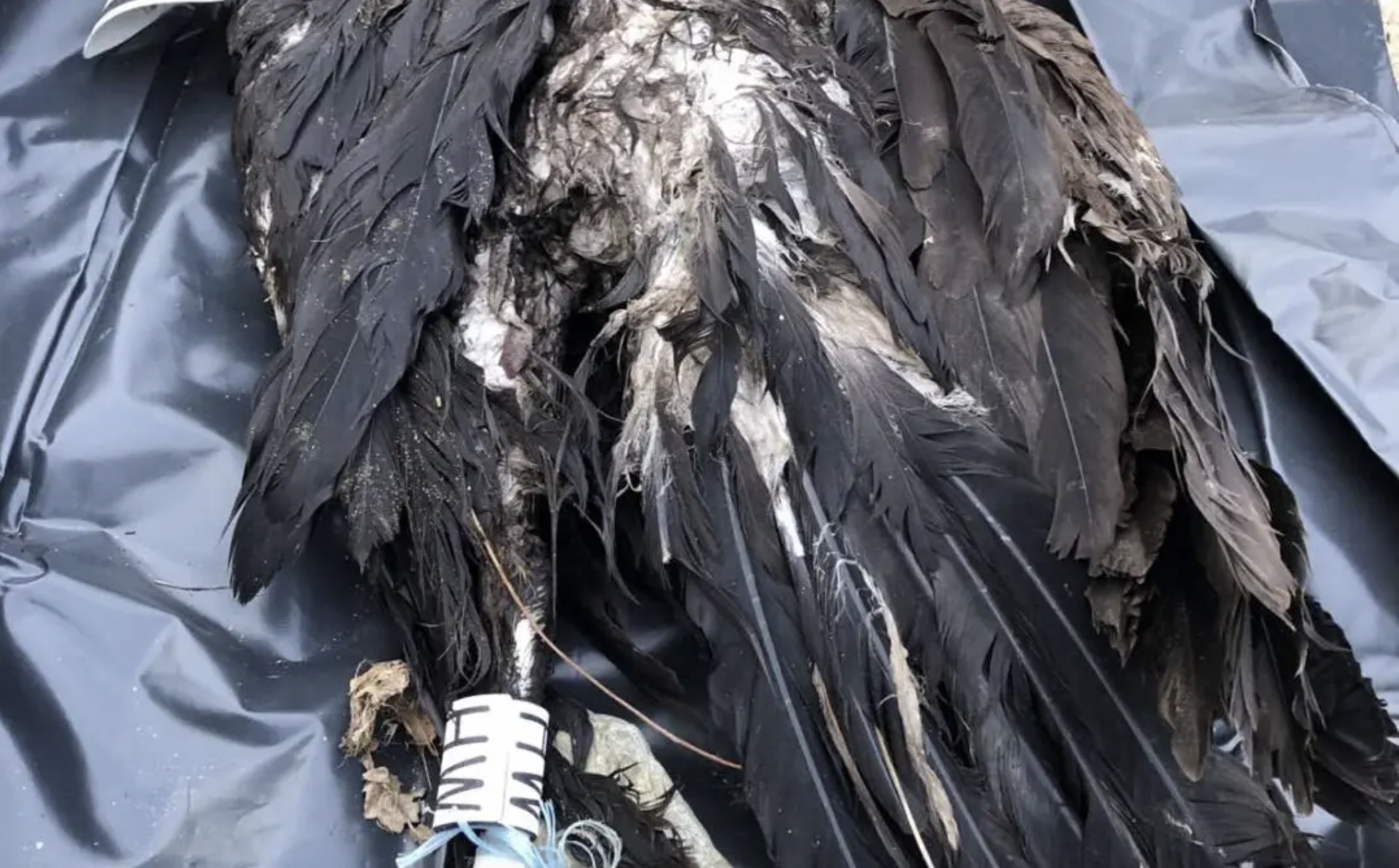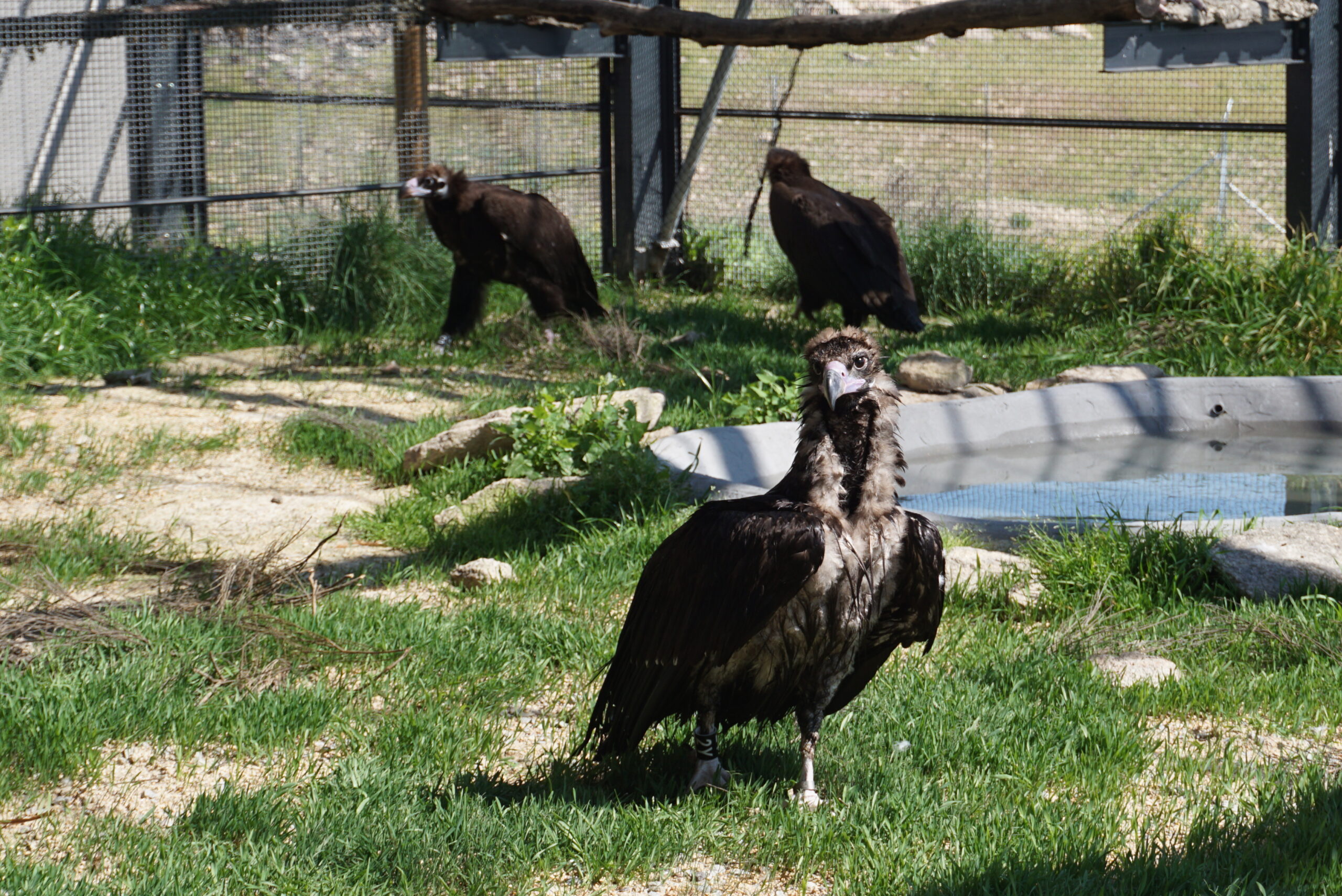
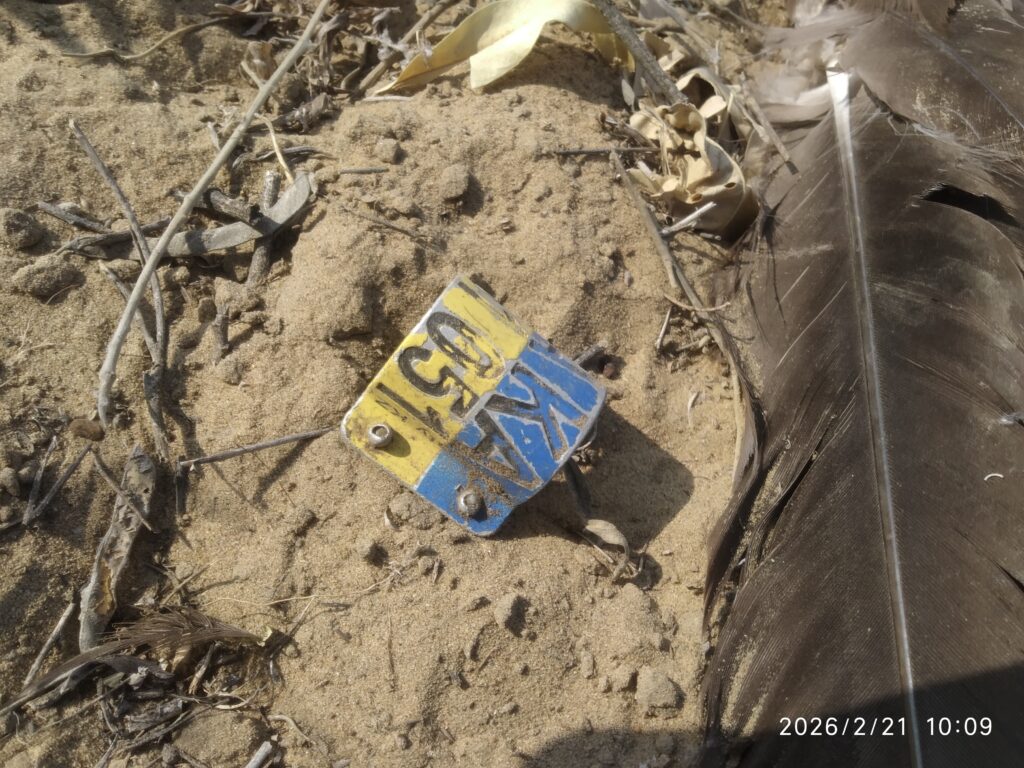
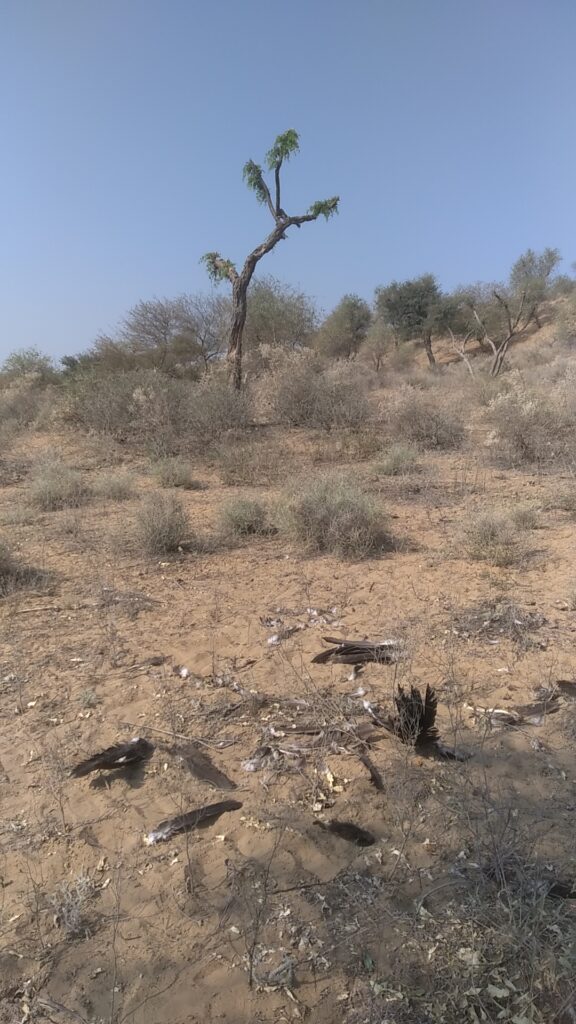
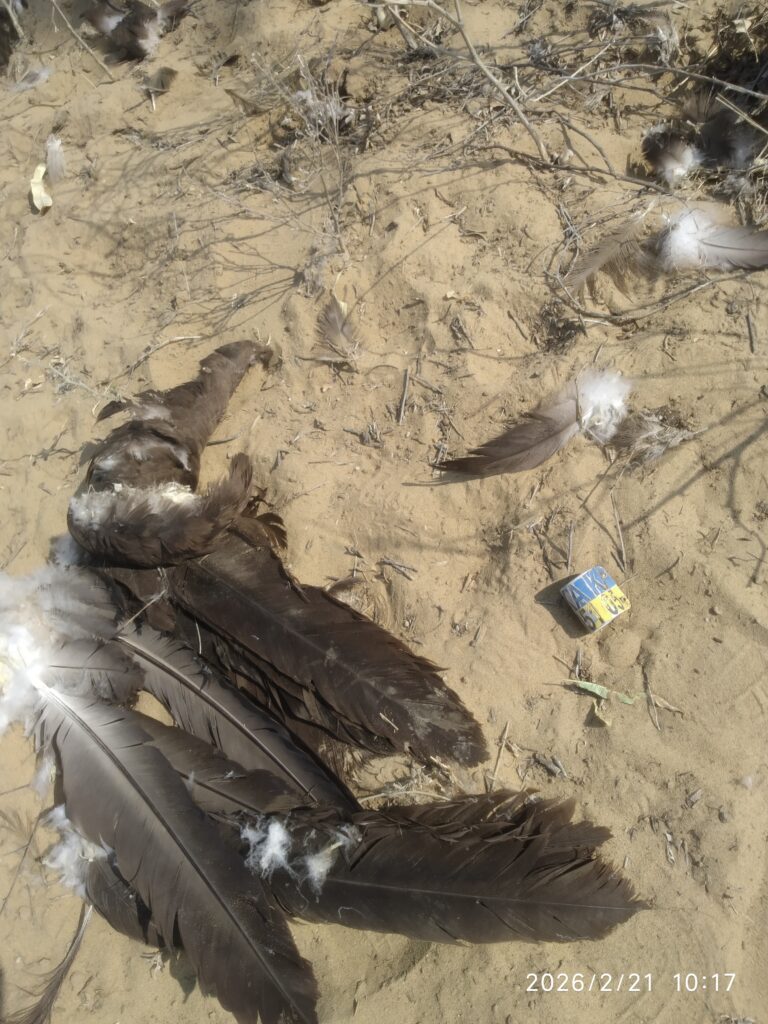
In February 2026, conservationists received the news they had been dreading. Asu, the first Cinereous Vulture ever fitted with a GPS tracker in Kazakhstan, was found dead in Rajasthan, India. She had most likely been poisoned by veterinary drugs present in a livestock carcass she fed on.
She was not yet two years old.
A bird worth following

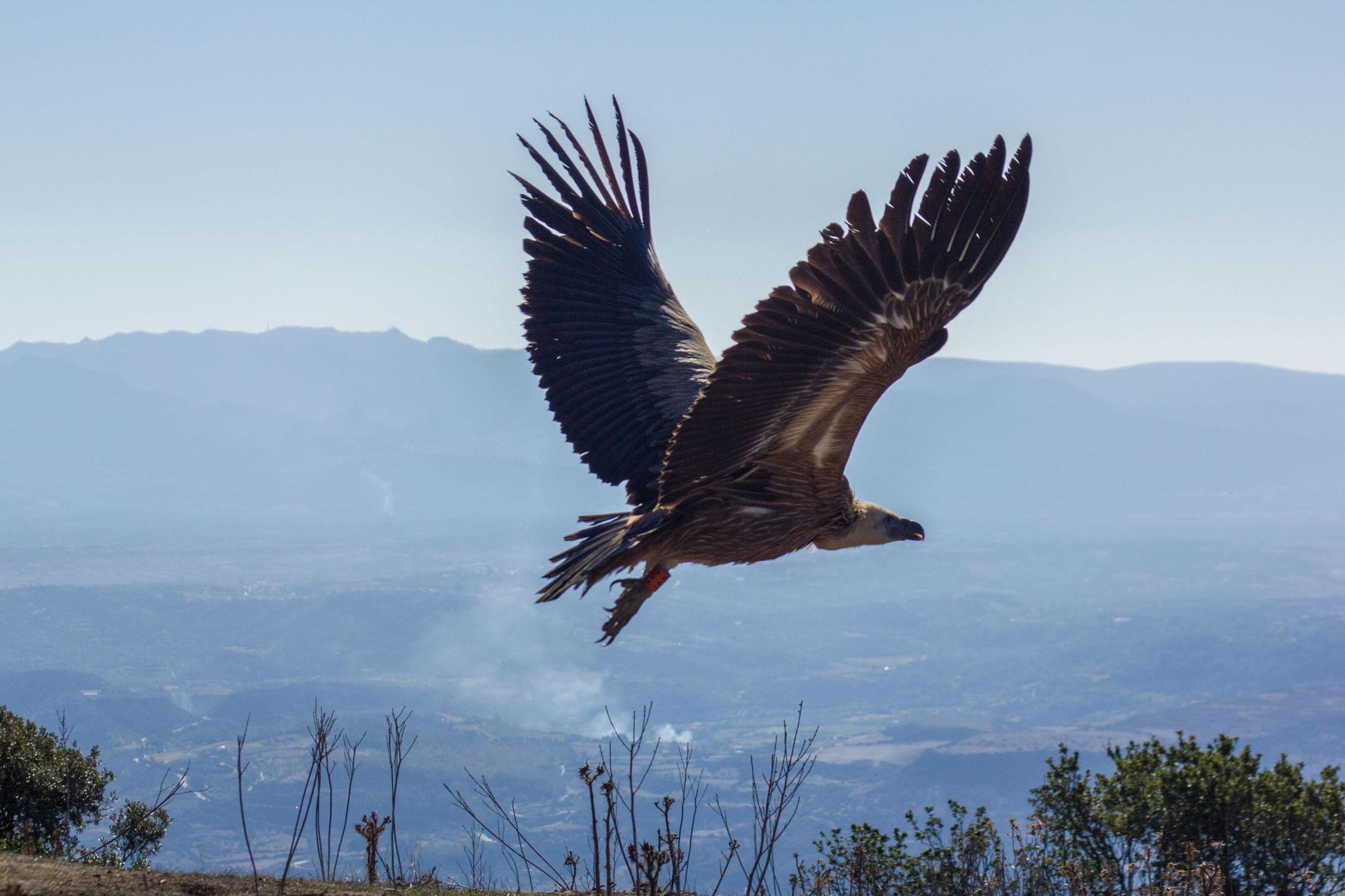
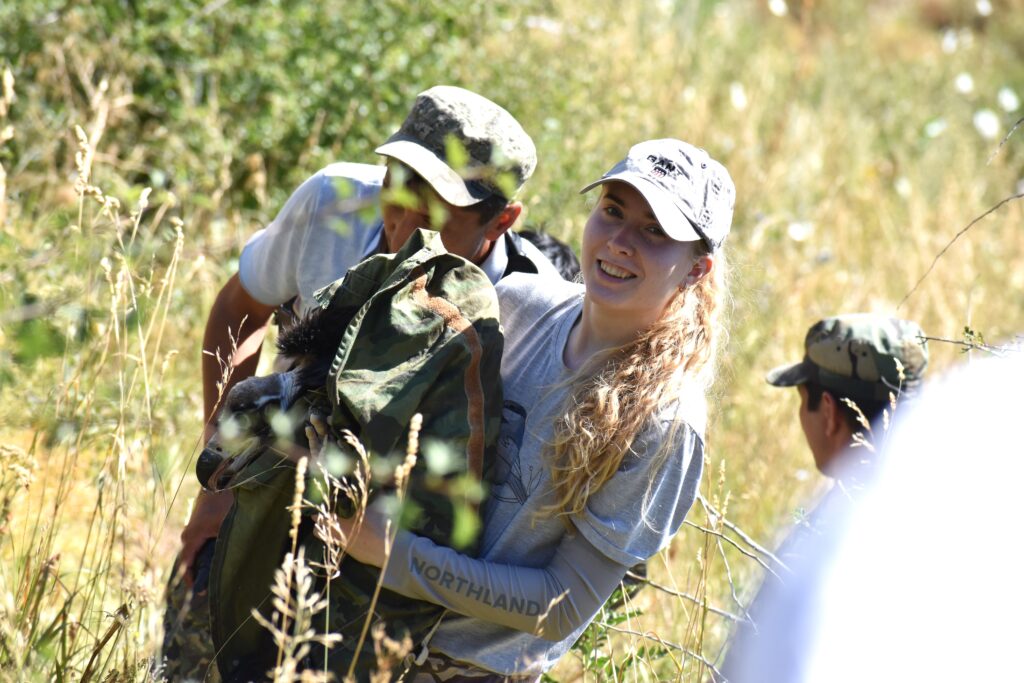
In July 2024, for the first time, three juvenile Cinereous Vultures were tagged in Karatau Mountains within the Syrdarya-Turkestan State Regional Natural Park in Kazakhstan. Around the same time, two Cinereous Vultures were also equipped with GPS transmitters in Uzbekistan. Asu and the other tagged birds represented something genuinely new: the first GPS tracking data ever collected on Cinereous Vultures in Central Asia.
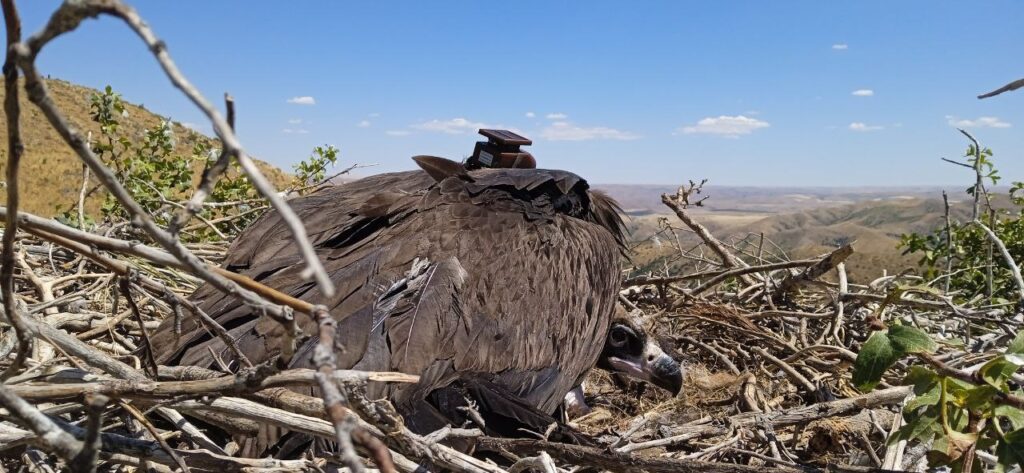
That autumn, Asu made her first migration south to Rajasthan in India. She returned to Kazakhstan in spring 2025, spent the summer there, and headed back to India in the autumn. In early February 2026, her tracker stopped moving. A colleague in India, Dau Lal Bohra, travelled to the coordinates and sadly found her remains.
A familiar and devastating cause
Preliminary findings point to acute poisoning from veterinary painkillers, most likely nimesulide or diclofenac, residues left in the body of a livestock animal she had scavenged.
This is not a new problem. Diclofenac, an anti-inflammatory drug widely administered to cattle, was identified in the early 2000s as the main driver behind catastrophic vulture population collapses across South Asia, with some species declining by over 95%. India banned veterinary diclofenac in 2006, but related drugs with similar effects on birds remain in use, and enforcement is inconsistent. For a vulture, there is no way to tell a safe carcass from a contaminated one.
The work continues
Unfortunately, Asu is one of the many vultures whose story has been cut short by toxic food along the migration route. However, her contribution to conservation work goes on. The data she generated, her routes, her timing, and the wintering grounds she used remain part of the scientific record and continue to inform the project going forward.
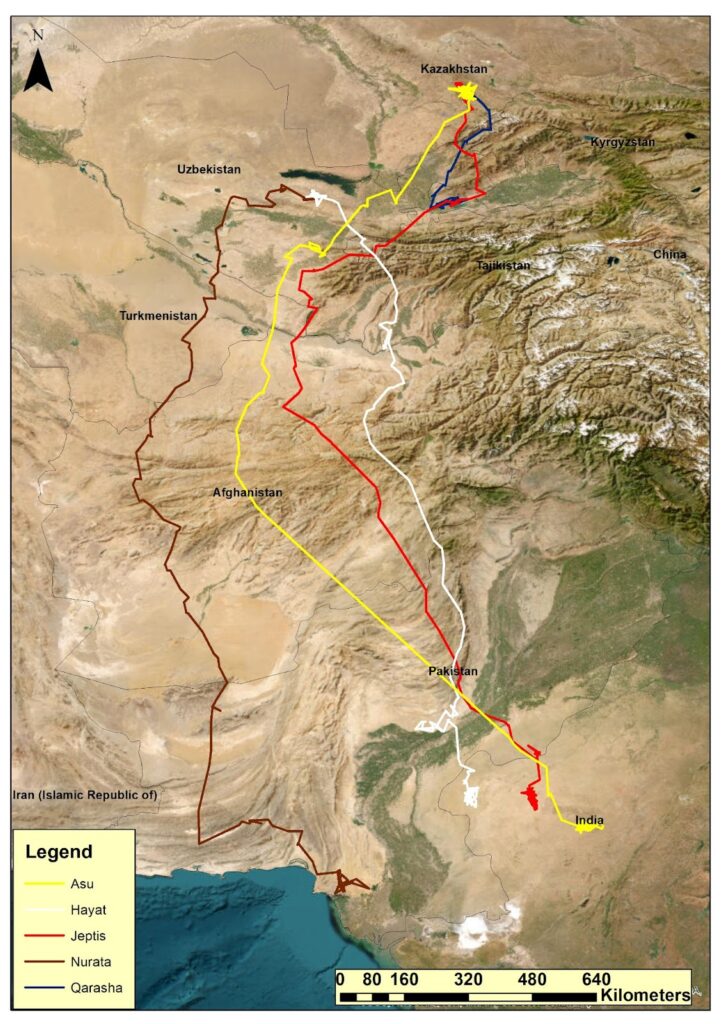
Including Asu, nine birds have been tagged across Kazakhstan and Uzbekistan under this project. In 2025, four more juvenile vultures were tagged and named Ystyq, Sholpan, Hazrat and Ukhum. Their trackers are active, continuing to build the picture of how Central Asian Cinereous Vultures move across the region.
The GPS tracking of Cinereous Vultures in Central Asia is a collaboration between the Central Asian Vultures project, the Biodiversity Research and Conservation Center (Kazakhstan), the Vulture Conservation Foundation and partner organizations in Uzbekistan and Tajikistan.