A projeto LIFE Aegypius Return spin-off project has been approved to link scientific research with community impact in Southern Portugal
What if studying what lives inside a vulture’s oral-faecal route could help protect both wildlife and people? The new project, “NECROBIOME – Microbiome of the Cinereous Vulture to Support Integrated Ecosystem Management in Baixo Alentejo,” connects cutting-edge scientific research with tangible benefits for local communities and landscapes.
Grounded in the One Health approach, which recognizes that animal, human, and environmental health are deeply connected, the project will explore new thematic areas and lay the foundation for future initiatives.

Vulture’s role in the ecosystems
Imagine a natural clean-up crew that has been recycling nutrients and removing carcasses from habitats for millions of years. That’s what vultures do; however, many questions remain about how exactly they’ve been helping prevent disease spread.
While we know they reduce harmful microbes by efficiently removing carcasses from the ecosystems, we still don’t fully understand how this process works and how vultures naturally handle the microorganisms they encounter, some of which highly pathogenic, while feeding.
What is the microbiome and why is it central to this project?
A microbiome is the community of microorganisms – bacteria, fungi, and viruses – that live together in a specific environment like soil, the gut, or skin. Think of it as a tiny ecosystem within an ecosystem. Microbiomes can become highly specialized when shaped by internal or external factors – host-related traits, behavioral patterns, evolution, and environmental conditions.
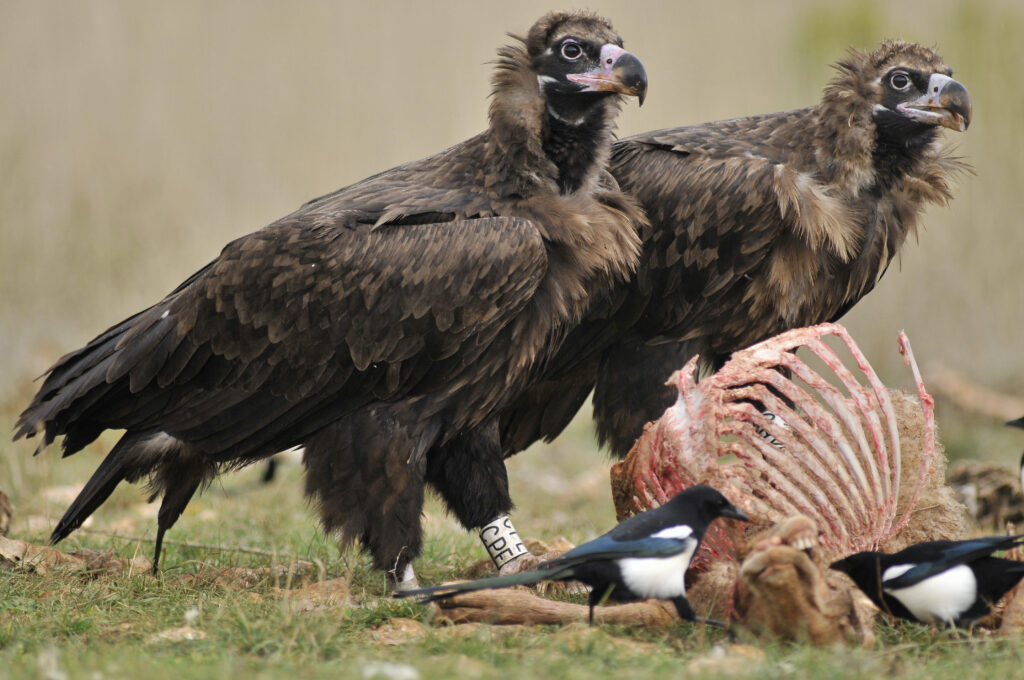
Vultures are the perfect candidates to have specialized microbiomes: their highly acidic stomachs, robust immune system, and scavenger diet foster a unique microbiome that allows them to eat decomposing meat without getting sick.
The NECROBIOME project will analyze Cinereous Vultures’ oral cavities and cloacal microbiomes along with samples from carcasses and surrounding soils. By understanding what happens to bacteria inside a vulture’s gastrointestinal system, we can better appreciate how these birds contribute to disease regulation and nutrient upcycling in nature.
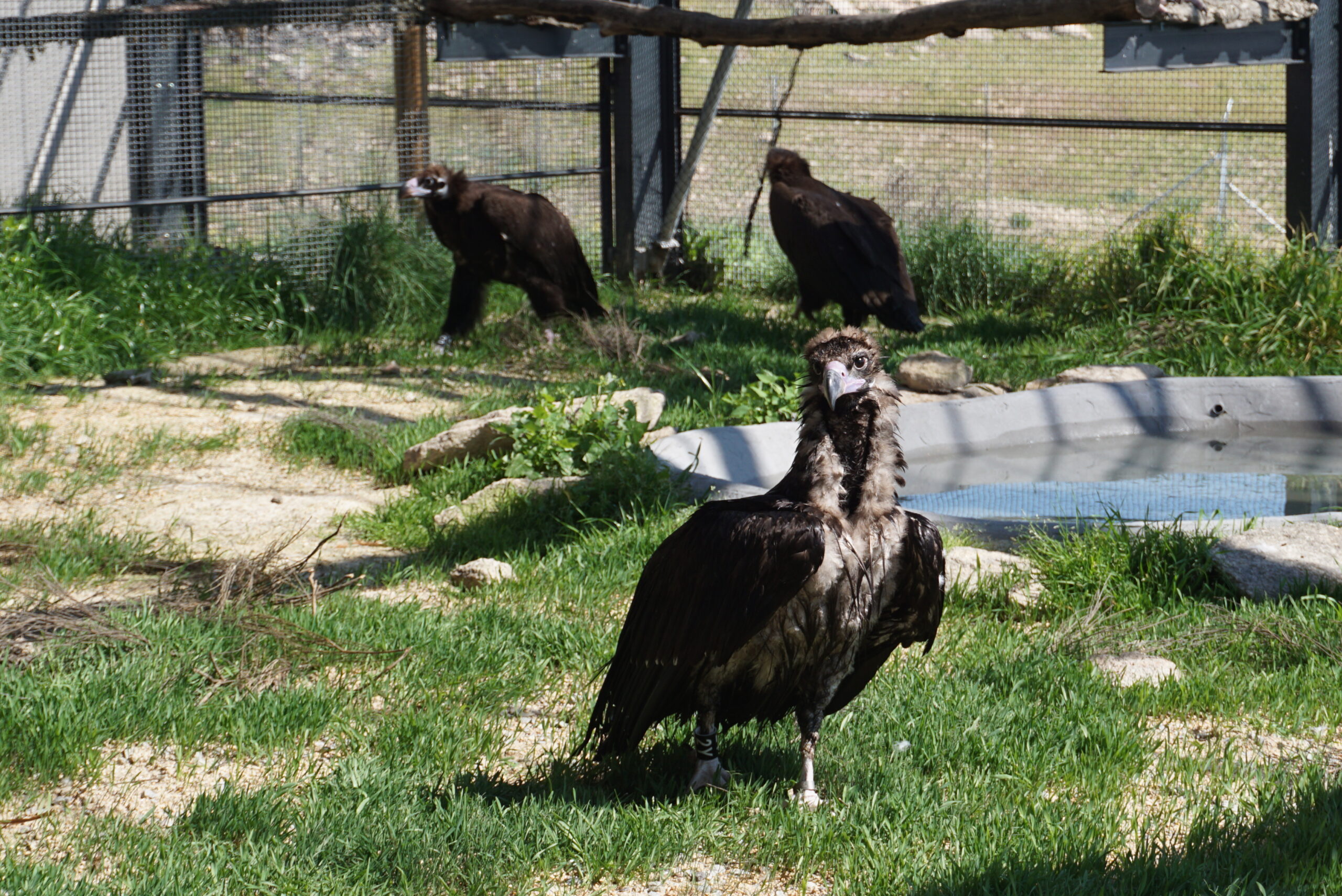
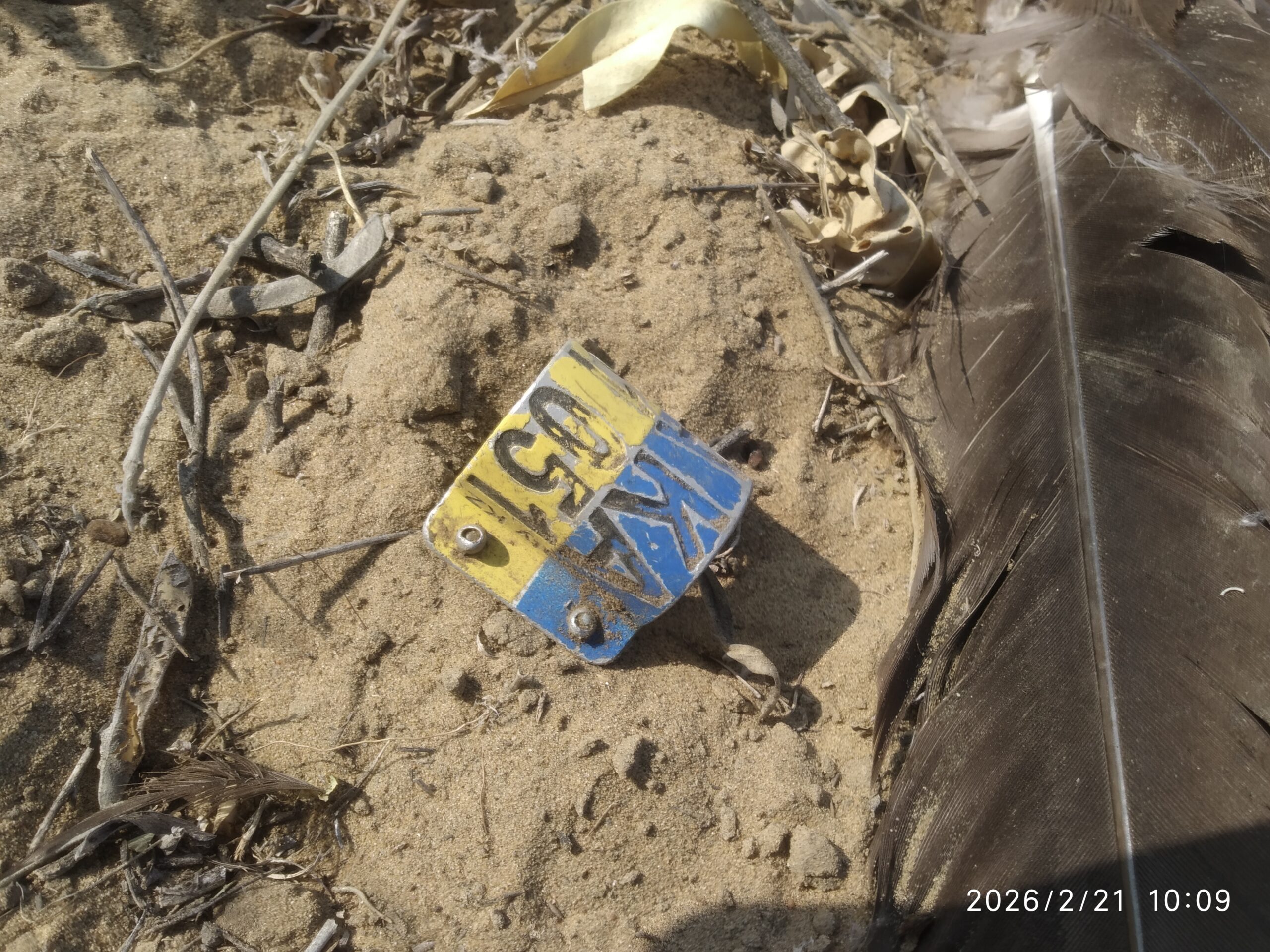
NECROBIOME will study more than 60 samples collected mostly from Cinereous Vulture chicks during tagging operations under the LIFE Aegypius Return project. Following the journey of microbes – from what enters a vulture body, to what happens inside, to what eventually comes out – the project seeks to uncover the biological machinery that allows vultures to survive, and thrive.
Vultures and the One Health approach
A One Health approach is a collaborative, multisectoral approach that recognizes how human, animal, and ecosystem health are interconnected. This approach promotes coordinated action across disciplines to address shared health challenges that emerge at these interfaces, such as antibiotic resistance (AMR), food safety, and emerging infectious diseases.
When one system is destabilized, it can create ripple effects across the others. History has shown us this pattern repeatedly. For example, malaria infections increased after the collapse of amphibian populations in Central America; or, closer to our subject, rabies cases surged in India when vulture populations collapsed. Also, the recent detection of antibiotic resistance genes in bacteria isolated from vultures demonstrates how human activity already affects wildlife health.
In Portugal, supplementary feeding sites are essential for Cinereous Vulture populations, as natural food sources alone are not sufficient. This means conservation initiatives will continue providing supplementary feeding with animal by-products such as livestock carcasses and game remains from hunting operations, at least in the short term. By better understanding vultures’ feeding strategies and intrinsic biological mechanisms, including if and how they neutralize potential pathogens, we can more effectively protect both vultures and public health, while supporting the optimization of how we provide supplementary food.
When vultures thrive, ecosystems stay healthier, and so do we. Vultures are therefore a key species to study from an integrated perspective. NECROBIOME brings the One Health approach to life, integrating science, environment, and community knowledge to develop sustainable conservation strategies.
Herdade da Contenda as a strategic partner
NECROBIOME will work closely with Herdade da Contenda, also a LIFE Aegypius Return partner. Located in Baixo Alentejo, in southeastern Portugal, this estate hosts one of only five Cinereous Vulture breeding colonies in the country, which is monitored by the estate staff with a strong support from the NGO League for the Protection of Nature (LPN). Both organizations also manage a supplementary Feeding Station for Scavenger Birds and two recently approved Farm Feeding Stations, supporting vultures foraging and feeding.
As part of a Special Protection Area (SPA, under the Birds Directive), Herdade da Contenda allows NECROBIOME to study vultures in a wild but safe environment, essentially creating a life-sized natural laboratory.
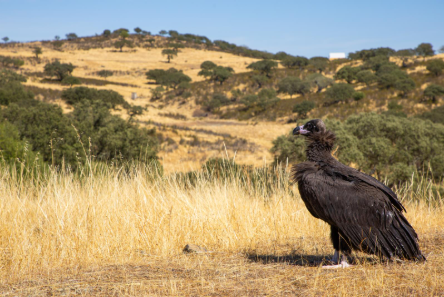
Herdade da Contenda, and the wider Baixo Alentejo region, is also a hotspot for human–livestock–wildlife interface interactions. It is a typical rural landscape where extensive livestock farming, hunting, and wildlife conservation coexist. The area is predominantly composed of dehesa-like systems, oak and pine woodlands with scattered trees and grassland, that support local traditional farming, forestry, and grazing. From a One Health perspective, this makes the region ideal for testing approaches and best practices that benefit people, animals, and nature.
From science to society: empowering communities with knowledge
Science only matters if it reaches the people who need it. NECROBIOME would not be a successful initiative without a strong plan to create real social and economic impacts in local communities. Resilient and thriving territories depend on engagement at the community level, and this initiative is putting that into practice.
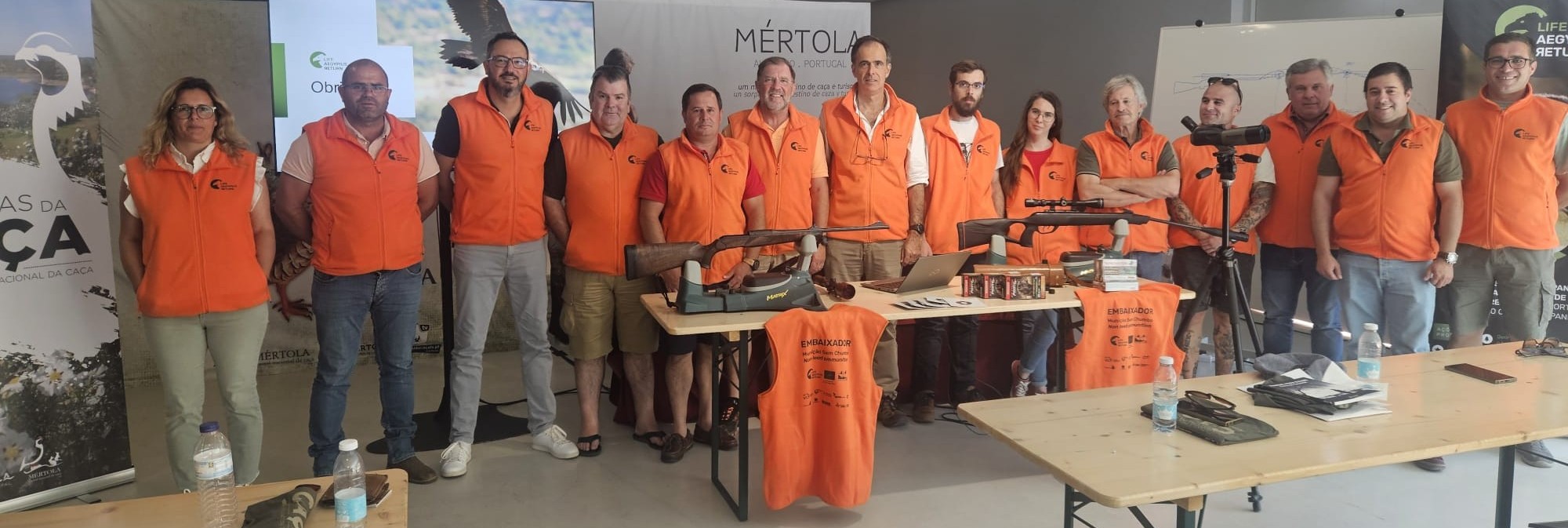
The project will promote integrated Public and Animal Health by developing training programs for Community Animal Health Workers (CAHWs), following the model recognized by the World Organisation for Animal Health (WOAH). Key community members – such as local farmers, hunters, property managers or other local stakeholders that engage with livestock/game species daily – will be trained in the fundamental principles of animal health, individual protection, and the One Health approach. These trained individuals can play a critical role in disease early warning systems, flagging sick animals or suspicious outbreak events, maintaining animal health, and supporting the implementation of broader One Health strategies.
The project will also work closely with local staff to produce a Manual of Good Practices for occupational health and safety, empowering safer working conditions within the context of traditional agrosilvopastoral practices.
NECROBIOME tackles challenges on multiple fronts, turning research into action. By democratizing knowledge, it empowers local communities and stakeholders to safeguard habitats for both people and wildlife. At the same time, it will help to shape the policies and regulations of tomorrow, ensuring that humans, wildlife, and nature can thrive together.
Funding and collaboration
NECROBIOME is funded by Fundação “la Caixa” under the “Promove. O futuro do interior 2025” programme. The project brings together an interdisciplinary team: coordinated by the Vulture Conservation Foundation (VCF), the Faculty of Sciences of the University of Porto (FCUP), and Herdade da Contenda.
With a budget of €192,000, the LIFE Aegypius Return spin-off project started in November 2025 and will run until October 2028, with findings expected to inform both biodiversity conservation strategies and Public Health policy across European landscapes.
The project will also fund a full-time PhD student – the first hosted within the VCF team – ensuring scientific publication and wide dissemination of the knowledge produced.
About LIFE Aegypius Return
O projeto LIFE Aegypius Return é cofinanciado pelo European Union’s LIFE programmeO seu sucesso depende do envolvimento de todos os stakeholders relevantes, e da colaboração dos parceiros: a stakeholders and the collaboration of the partners: the Vulture Conservation Foundation (VCF)beneficiário coordenador, e os parceiros locais Palombar – Conservation of Nature and Rural Heritage, Herdade da Contenda, the Portuguese Society for the Study of Birds, the League for the Protection of Nature, the Transhumance and Nature Association, the Nature e Humanity Foundation, the National Republican Guard e the National Association of Rural Owners of Game Management and Biodiversity.