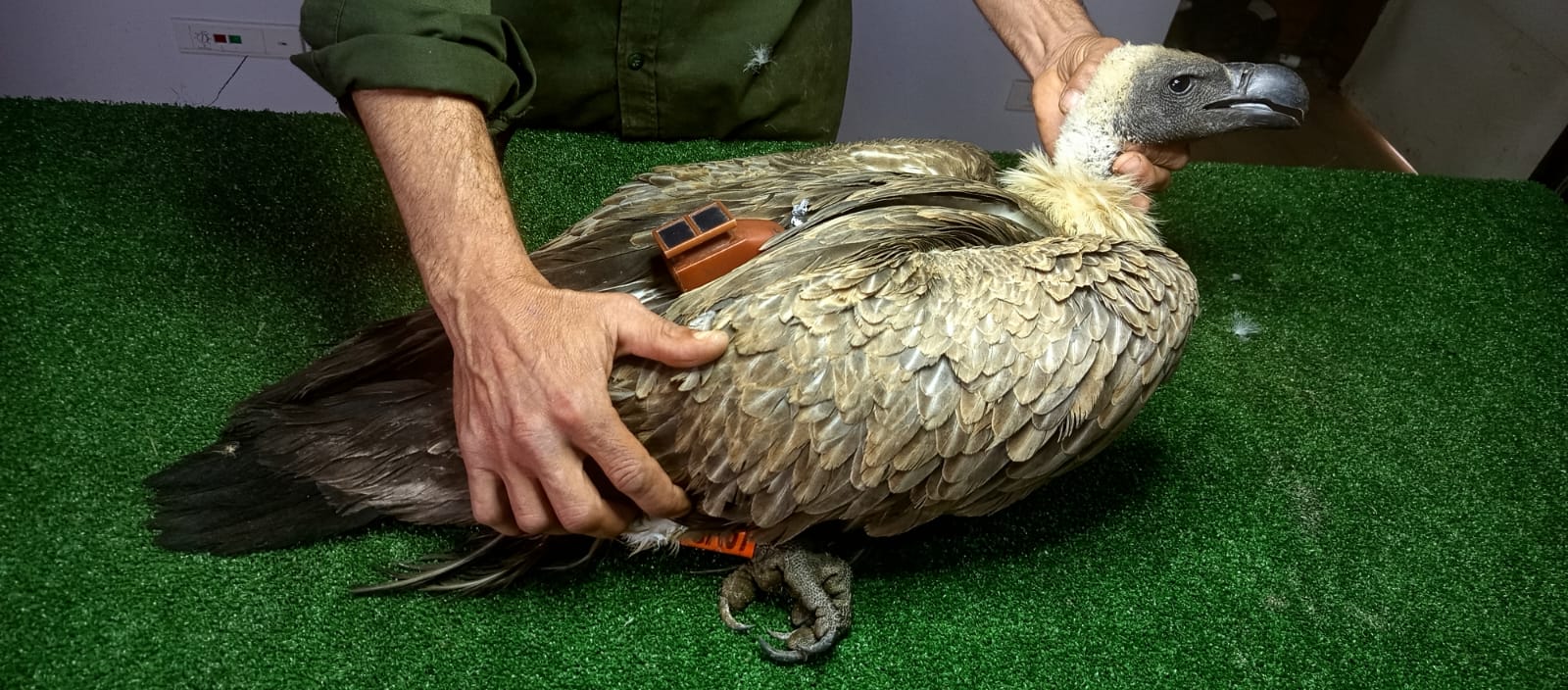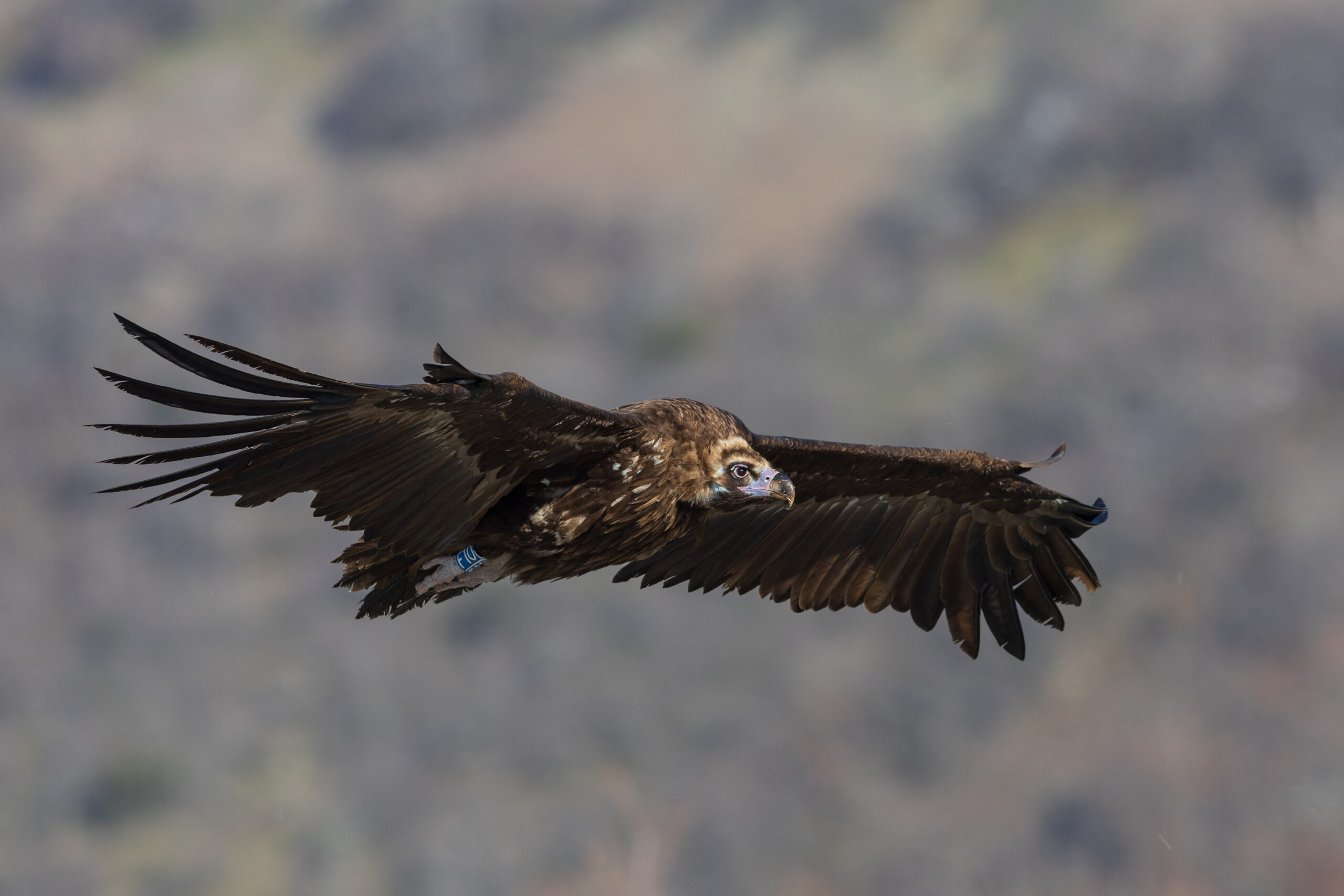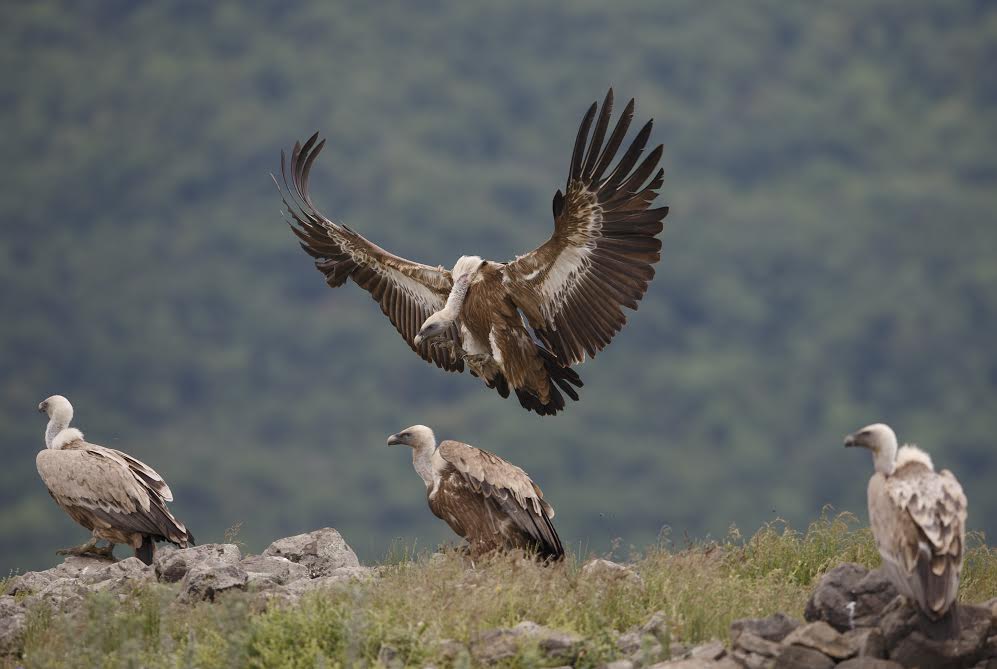
Over the past several years, ornithologist and vulture specialist Lusine Aghajanyan has been systematically tagging and monitoring vultures in Armenia. In the past two years, she has been working in NABU (German Nature Protection Union – Armenian branch) in partnership with the Vulture Conservation Foundation to closely monitor selected individuals via GPS transmitter. The analysis of Cinereous Vultures’ movements shows migration routes that stretch from Armenia all the way to the Arabian Peninsula.
The Cinereous Vulture in Armenia
A Cinereous Vulture (Aegypius Monachus) is one of the largest raptors in the world, and a top scavenger. In Armenia, it favours open Juniperus woodlands, which provide both nesting and roosting sites. Unfortunately, this habitat is often subject to wildfires that destroy hectares of woodlands every few years.
The Cinereous Vulture is classified as Endangered in the Red Book of Armenia, with an estimated 50 breeding pairs nationwide. Habitat loss, disturbance, poisoning, illegal trade, and poaching threaten this already endangered species, though their impacts have not been estimated due to the absence of focused studies.
A landmark discovery: new breeding colony in Vayots Dzor
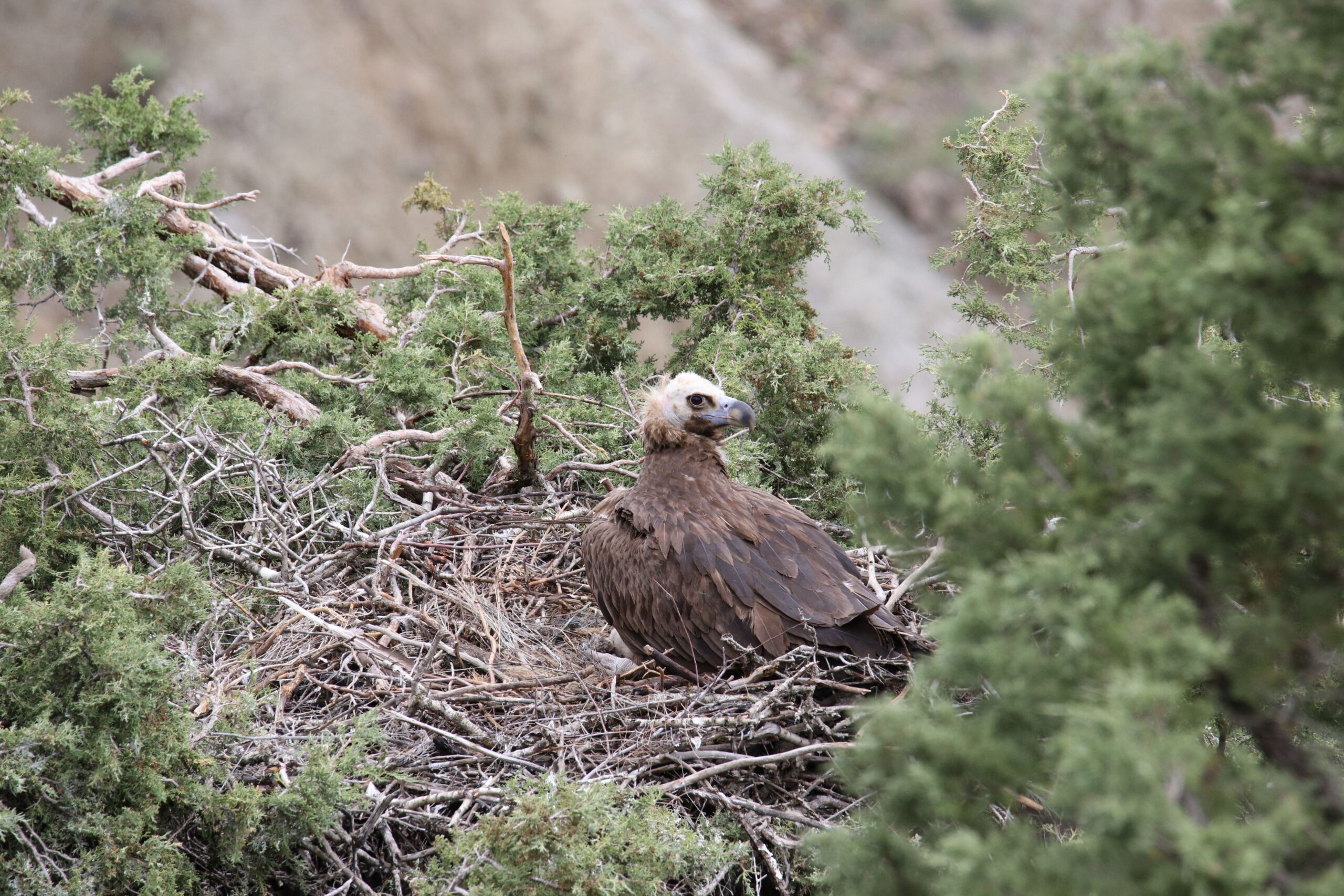
In the spring of 2024, Lusine Aghajanyan and her colleague Emin Karapetyan made a discovery that would reshape what ornithologists knew about the Cinereous Vulture in Armenia. They found five nests in the Arpa River valley in Vayots Dzor Province (south-east Armenia). All nests contained either nestlings or eggs, and in two of them, adult vultures were observed. The dimension of the colony suggests that it had been established for 7-10 years. Local testimonies confirmed the hypothesis, reporting that large, dark vultures had been seen in the area for years.
All five monitored pairs bred successfully that year, and all chicks fledged. The discovery, formally documented in Aghajanyan’s paper published in Vulture News (Vol. 87), marks a significant moment for Armenian ornithology.
Lusine Aghajanyan’s conservation efforts
Lusine Aghajanyan has been at the forefront of vulture conservation in Armenia since 2018, working within the framework of NABU. She initiated a Birds of Prey research and conservation project, focused on the four vulture species found in Armenia and two eagle species, conducting nesting area surveys across most of the country. In addition, she has been voluntarily contributing to the Central Asian Vultures Project, which studies nesting areas and tags vultures in Central Asia, Kyrgyzstan, and Uzbekistan.
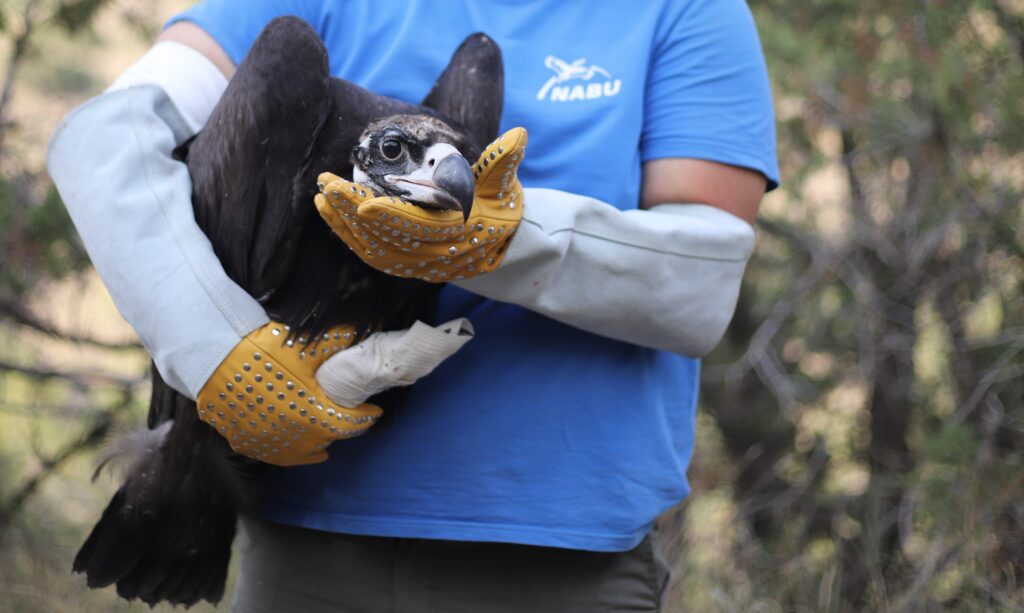
Over the years, she established a vulture caretakers’ network: a community-based monitoring system in which locals from villages throughout Armenia monitor vultures and report concerns. Since 2021, she has tagged a total of 16 vultures: 7 Egyptian Vultures, 3 Bearded Vultures, and 6 Cinereous Vultures.
The start of a fertile collaboration
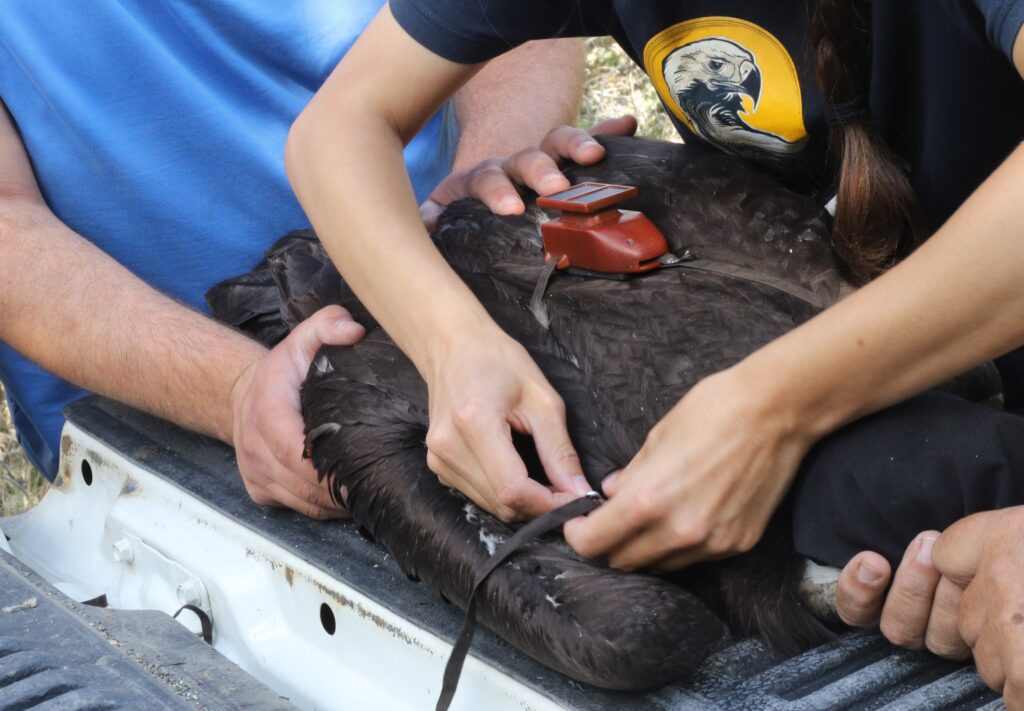
At the International Bearded Vulture Conference 2024, Lusine Aghajanyan presented the vulture conservation work underway in Armenia. The scope and rigour of the work inspired the VCF team and led to a formal partnership between VCF and the NABU Armenian Branch. The VCF provided her with three GPS transmitters: two for Bearded or Cinereous Vultures, and one for an Egyptian Vulture.
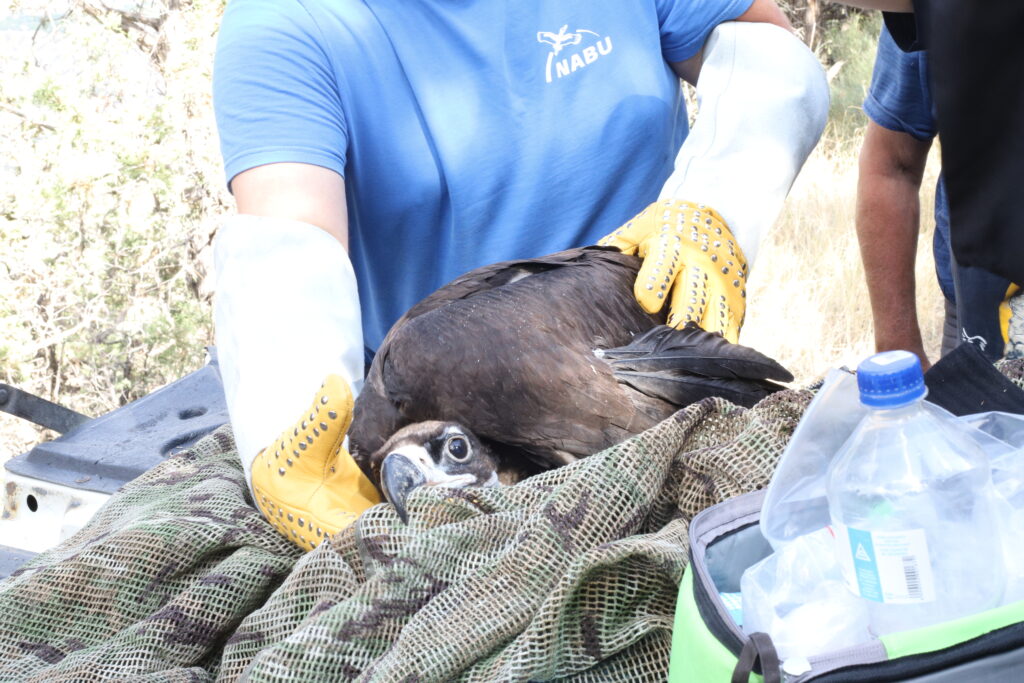
The following year, four Cinereous Vultures were tagged at the Vayots Dzor colony, two of them fitted with VCF transmitters. One bird was named Ishkhan after the ranger of the protected area where it hatched. The other was named Arpa after the Arpa River that flows below the nesting cliffs. By mid-November 2025, both birds had embarked on their first migration.
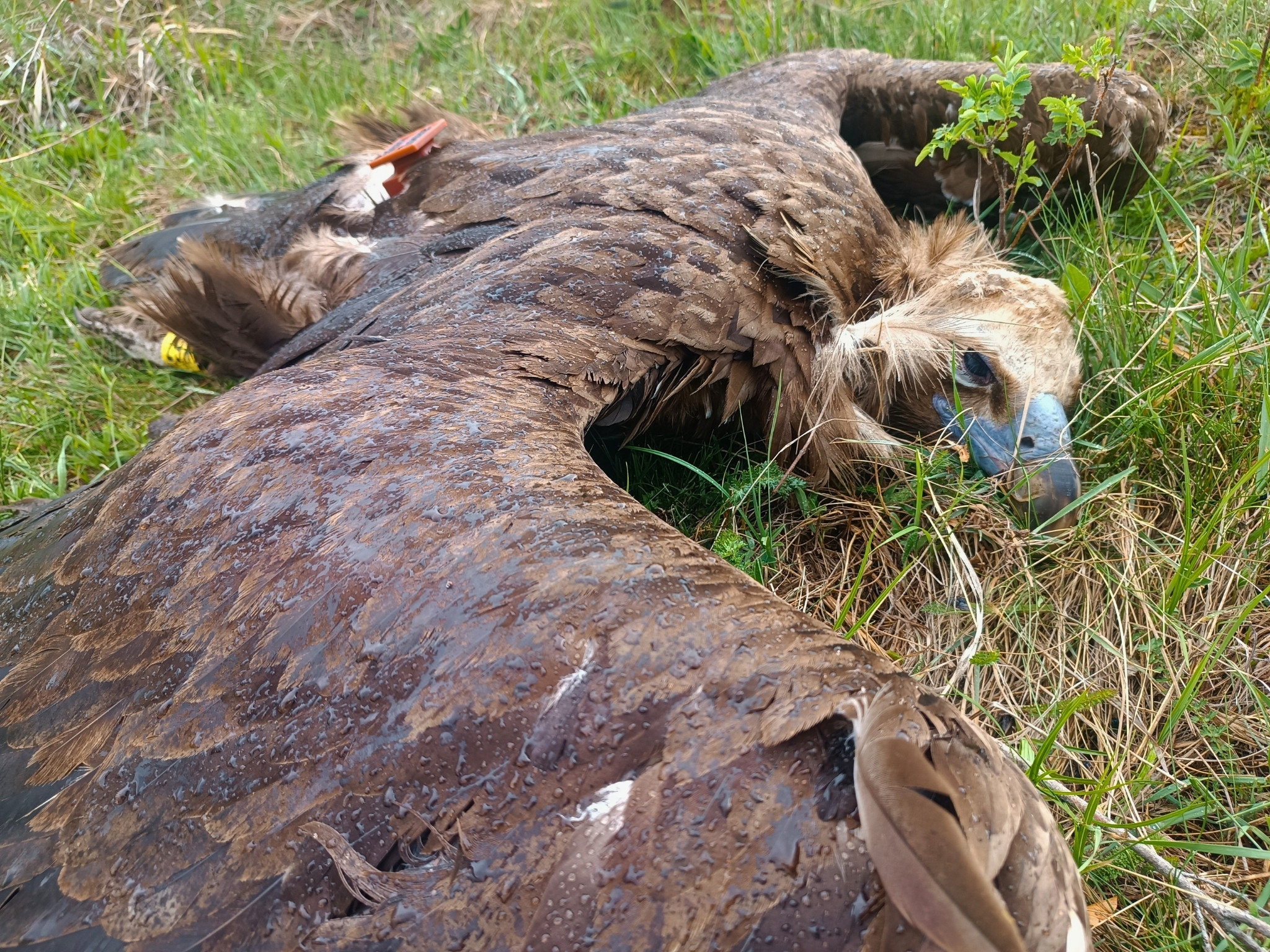
The most recent monitoring localizes Arpa in Saudi Arabia, where it is moving together with four other tagged Cinereous Vultures. Signals from Ishkhan suggest that the bird most likely died in central Saudi Arabia – the remote location in the central Saudi desert from where this bird transmitted for the last time has prevented confirmation of the cause of death. Its loss reminds us of the constant threats vultures face and underlines the importance of continued monitoring and international cooperation to protect these important scavengers across the globe.
A window to the future
The data collected from the tagged birds in Armenia will contribute to a deeper understanding of Cinereous Vulture movements across the Caucasus, the Middle East, and Central Asia. At the same time, Aghajanyan’s work in Vayots Dzor has opened new questions on unmonitored Cinereous Vulture colonies across Armenia. The next chapter of this story could bring a systematic country-wide survey, which could unveil some crucial information about Cinereous Vulture distribution. The partnership with VCF will provide a critical framework through which this work can be sustained and expanded.