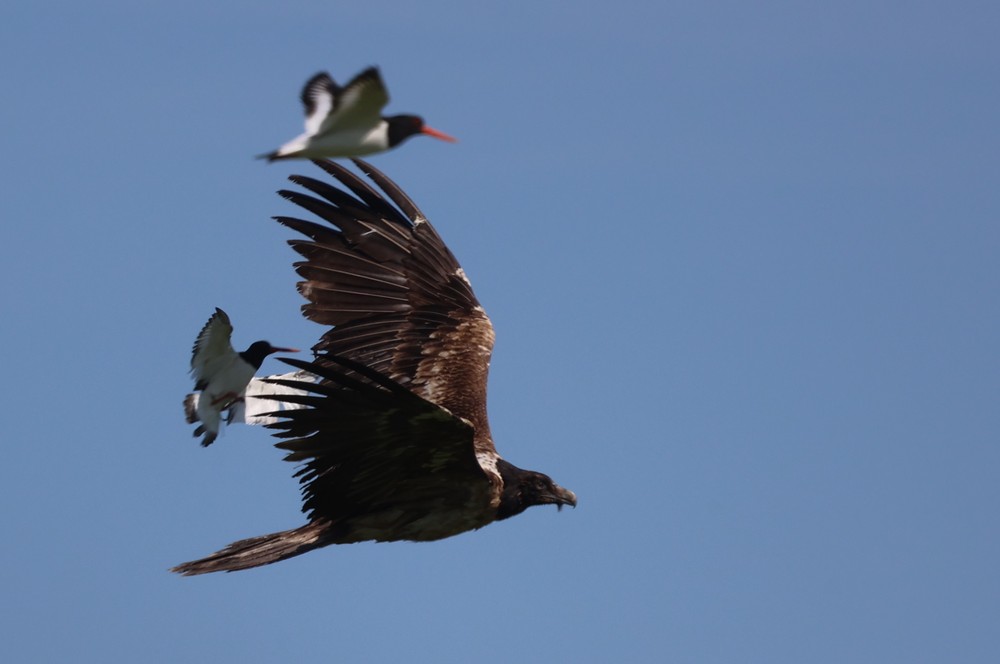
Two young Bearded Vultures have arrived at Roc du Salidou, becoming the latest birds released as part of the effort to restore the species in the southern Massif Central as part of the LIFE Gyp’Act project.
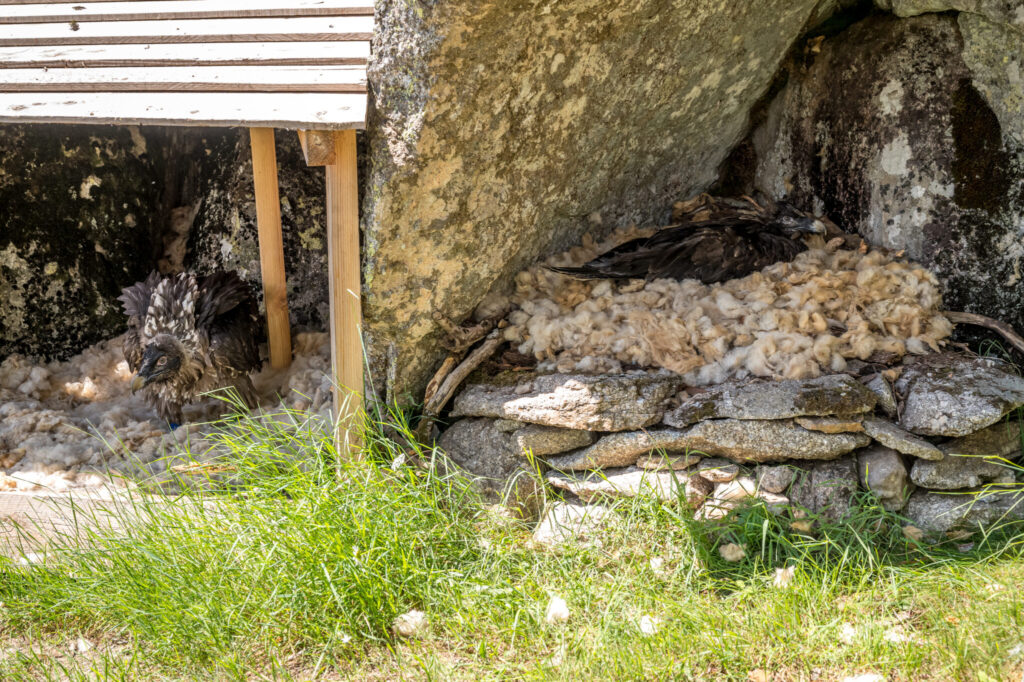
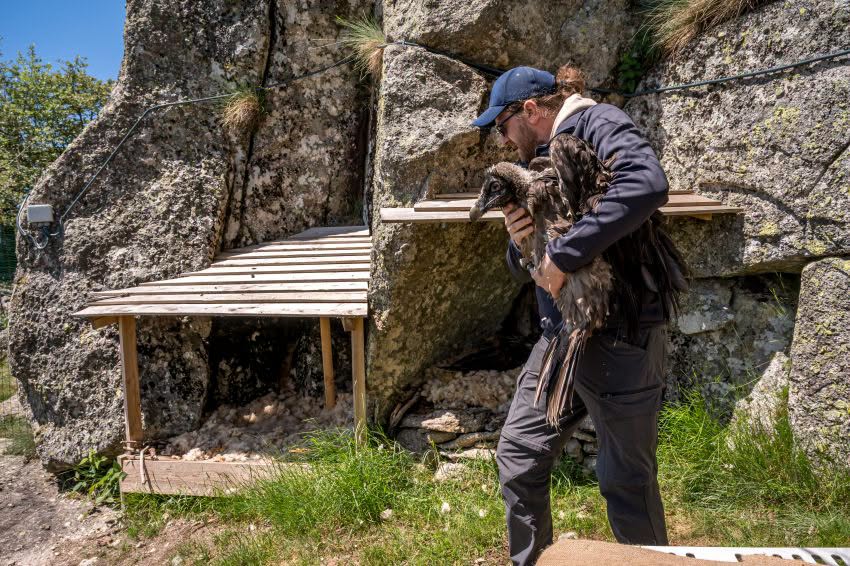
On 9 June 2026, Ventus and Ventalon were placed on the hacking site in the Aigoual massif, where they will spend the coming weeks growing stronger and becoming familiar with their surroundings before taking their first flights.
Their release follows the first operation carried out at the new Cévennes site earlier this spring.
Two young vultures from the captive-breeding network
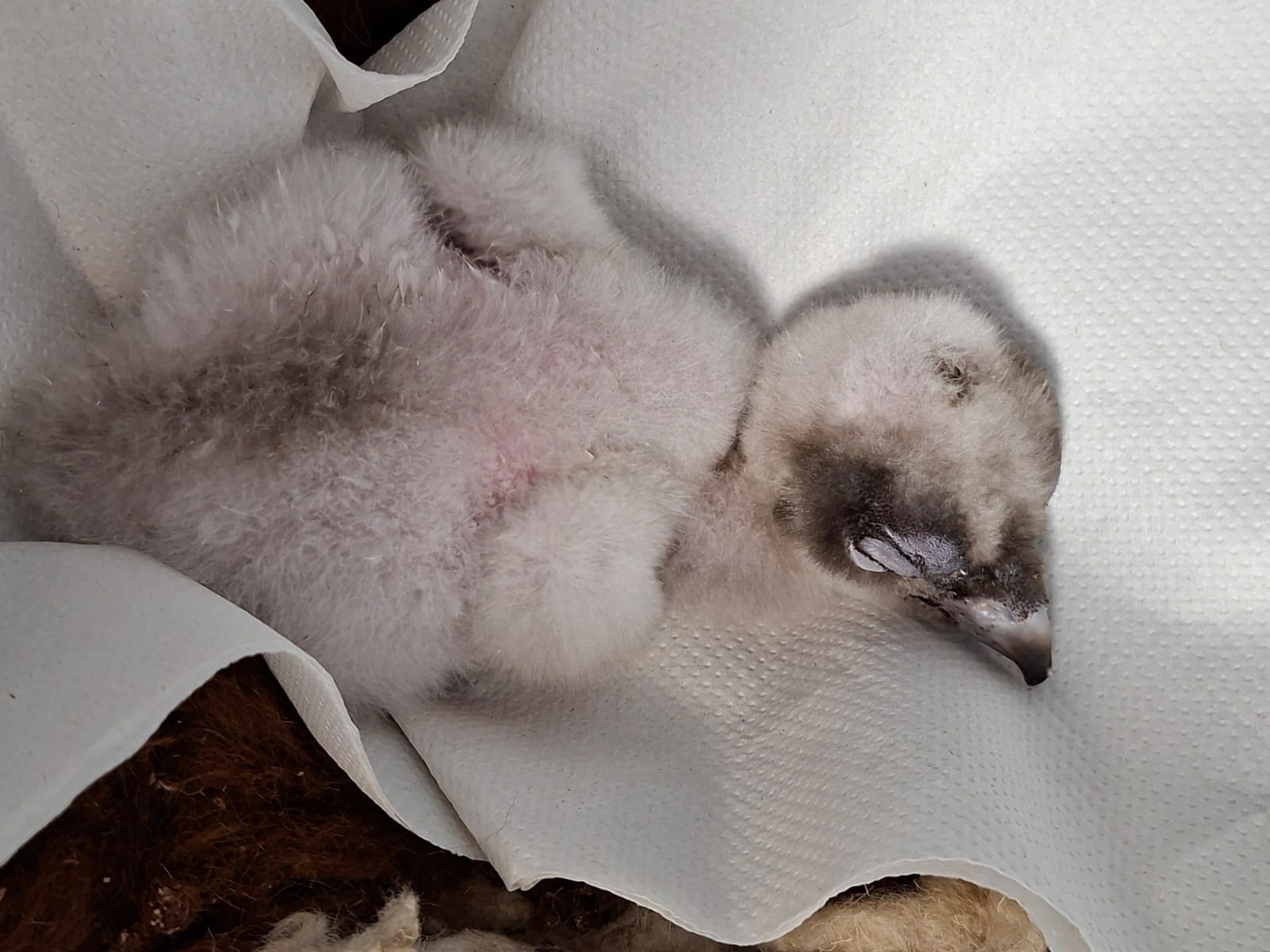
Ventus hatched on 13 March 2026 at Pairi Daiza in Belgium. Ventalon hatched two days earlier, on 11 March, at Puy du Fou in France. Both birds were raised within the European captive-breeding network for the Bearded Vulture (Bearded Vulture EEP), coordinated by the Vulture Conservation Foundation (VCF), which provides young birds for conservation projects across Europe.
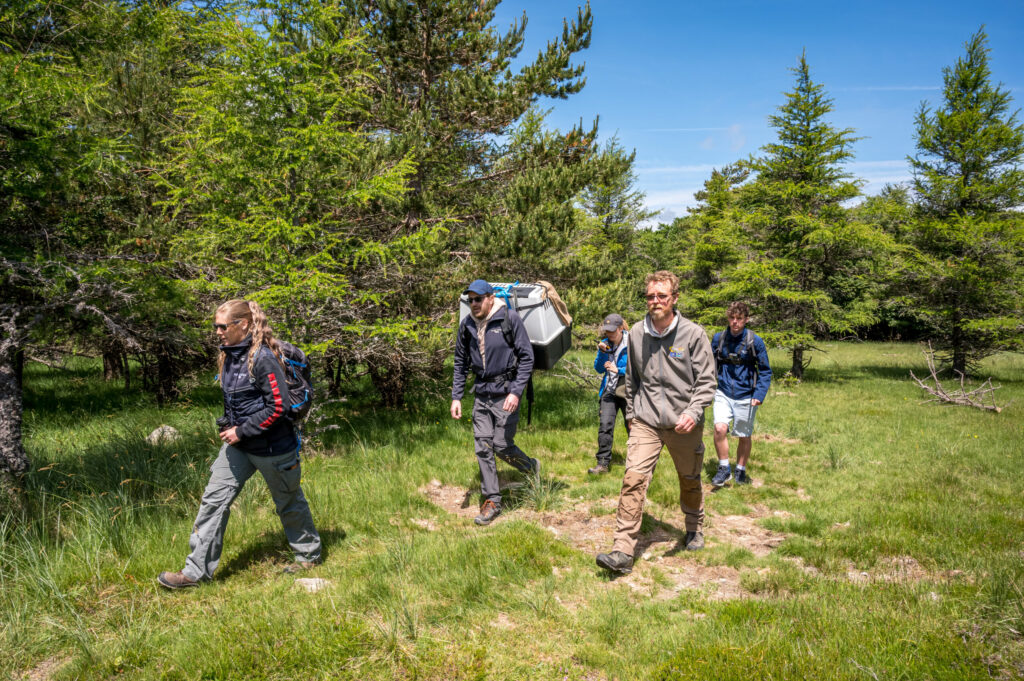
Staff from Pairi Daiza and Puy du Fou accompanied the birds on their journey to southern France, helping ensure a smooth transfer to their new home.
Once at Roc du Salidou, Ventus and Ventalon were carefully placed on the rocky ledge that would serve as their temporary nest. From there, they will be monitored daily as they continue to develop and prepare for life in the wild.
A growing population in the Massif Central
With the arrival of Ventus and Ventalon, 47 Bearded Vultures have now been released in the southern Massif Central since the start of the programme.
For more than a decade, conservationists have been working to bring the species back to a region where it had disappeared. The first releases took place in the Grands Causses in 2012, and the recent opening of the Cévennes site has expanded those efforts to a new part of the landscape.
The goal is not only to reintroduce the species in the area, but also to strengthen the links between the Bearded Vulture populations of the Alps and the Pyrenees.
The next few weeks
For now, the focus remains on Ventus and Ventalon.
Over the coming weeks, the two birds will stay on the release site, where food is provided without direct human contact. Until they are ready for their first flights, which will take a few weeks’ time, they will get acclimatised to their new home and surrounding environment.
Field teams will follow their progress closely, tracking their movements and behaviour as they take their first steps towards independence.
Their story is only just beginning, and we look forward to seeing where their journeys take them.
Restoring the Bearded Vulture Alpine and Pyrenean populations
To restore the Bearded Vulture metapopulation between the Alps and the Pyrenees, the LIFE Gyp’Act project plans to release 60 captive-bred juveniles in different locations across Southern France and the Pre-Alps. The LIFE Gyp’Act builds on the legacy of the LIFE GypConnect and ensures the continuity of the conservation measures implemented so that Bearded Vultures continue to flourish.

LIFE Gyp’Act is a 13M€ project, co-funded by the EU’s LIFE programme, that will run until 30 November 2028. Project partners are LPO – Ligue pour la Protection des Oiseaux as coordinator beneficiary, and the Vulture Conservation Foundation, Association Vautours en Baronnies, LPO Auvergne-Rhone-Alpes, LPO Occitanie, Sorbonne Université, ENEDIS, Centre National d’Informations Toxicologiques Vétérinaires, Parc National des Cévennes e Parc Naturel Régional du Vercors as associated beneficiaries.