

A new European conservation initiative, the LIFE Balkan GriffON, has...Read More
| Project period | 1 January 2026 to 31 December 2031 |
|---|---|
| Project area | Greece, North Macedonia |
| Target species | Griffon Vulture |
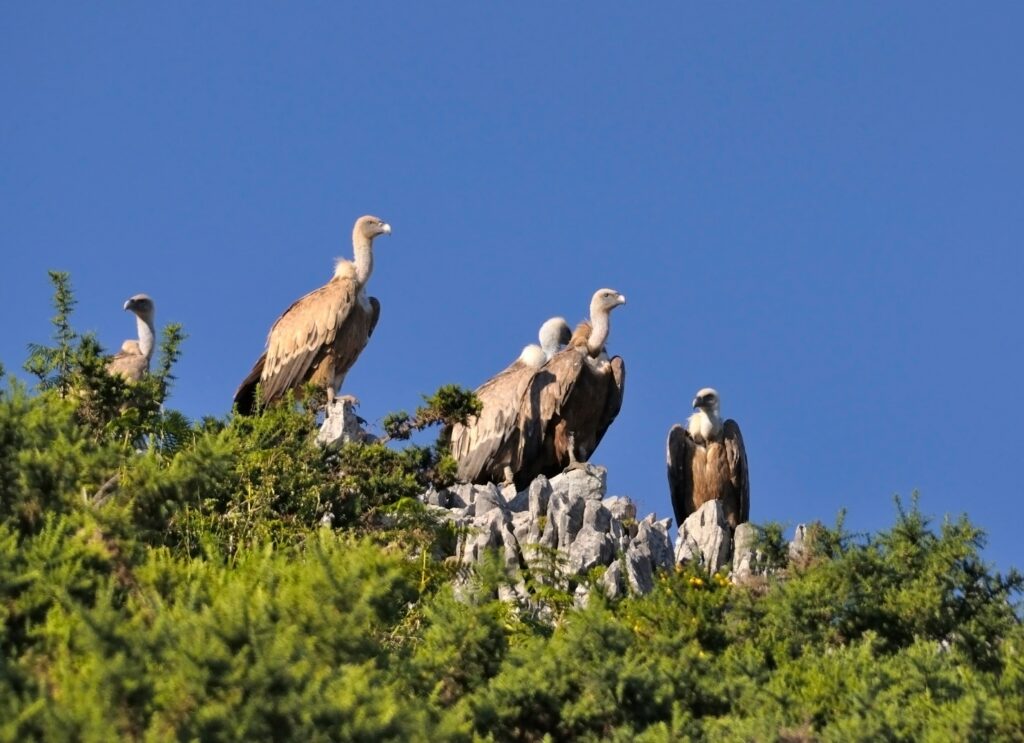
Co-funded by the LIFE Programme of the European Union, the LIFE Balkan GriffON will promote the long-term recovery and expansion of Griffon Vultures across their historical range in the Balkans and foster local and international cooperation.
The project actions expand beyond the two target countries, towards Albania, Serbia and Bulgaria aiming to support conservation actions in target countries and improve connectivity of the entire Balkan metapopulation. As an added value, the actions implemented by this project will directly benefit other vulture and raptor species in the area, namely Egyptian Vulture, Cinereous Vulture, Golden Eagle, Eastern Imperial Eagle and Lesser Kestrel.
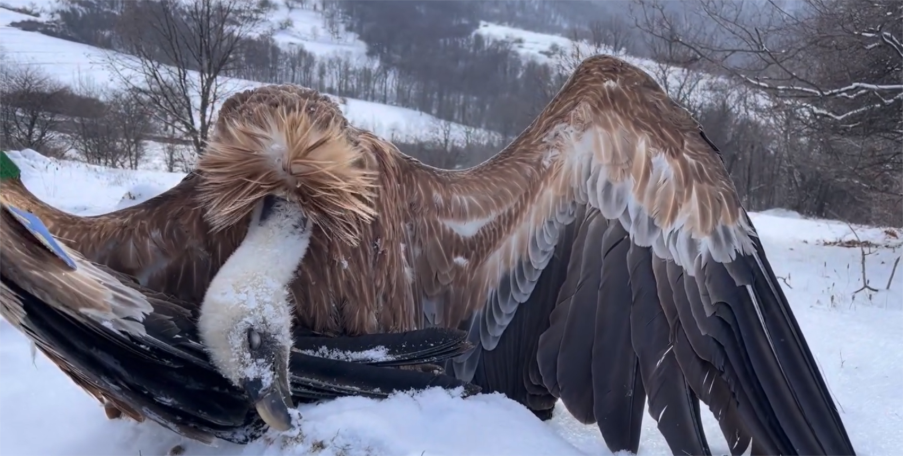
Wildlife poisoning, electrocution and collision with energy infrastructures are the main anthropogenic causes of death in vultures. The project addresses them in cooperation with relevant national governmental authorities and local stakeholders. 100 Griffon Vultures will be equipped with GPS transmitters to monitor them, identify potential threats and develop an early-warning system for poisoning events. To reduce human-wildlife conflict, which is the primary cause behind intentional poisoning, the project supports local communities with the introduction of preventive measures in key vulture areas.
In addition, the project will train wildlife recovery centres veterinarians and rehabilitators in vulture rehabilitation and improve the centres infrastructures to enable better veterinary care for injured birds in the Balkan Peninsula.
Lack of food availability is the second most dominant threat that negatively affects the Griffon Vulture populations in the Balkan Peninsula. The project aims to improve and expand the existing network of supplementary feeding programmes, while supporting the remaining traditional livestock breeders whose activities are needed to ensure natural feeding opportunities for vultures. Through the establishment of a strategic network of supplementary feeding stations, the project will improve connectivity of neighbouring populations of Griffon Vultures of the Balkan Peninsula.
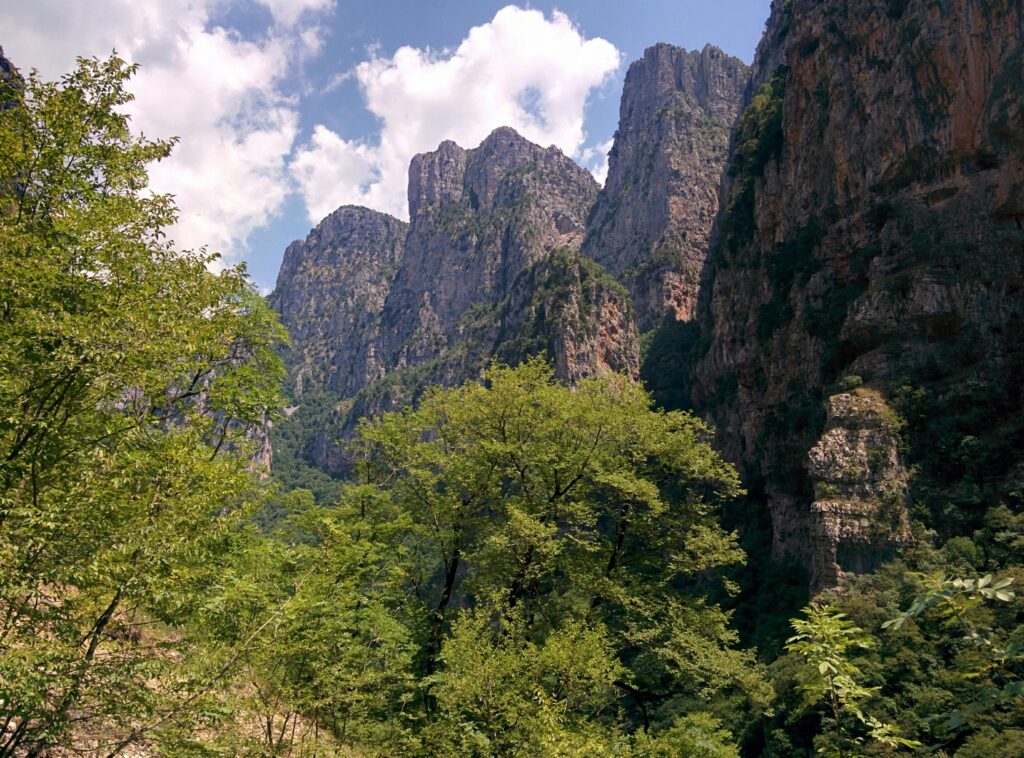
Mainland Greece and North Macedonia host isolated small Griffon Vultures populations. To achieve the main goal of establishing viable Griffon Vulture populations in these areas and restore the Balkan metapopulation, the project aims to translocate around 100 birds to Mt Tymfi and Vikos gorge within the North Pindos National Park in Greece, and Vitachevo plateau area, near Lake Tikvesh in North Macedonia. The first area hosted breeding Griffon Vultures colonies until the mid-80s, while the second one is one of the most important regions for birds of prey in the country.
Changing perception about vultures and educating local stakeholders about their threats, ecological requirements, and ecosystem services are key to ensuring the long-term conservation of the species. Local communities live alongside these species, and their collaboration is crucial to achieving positive results. The project will implement workshops, media campaigns, and educational programmes to promote vulture conservation and foster widespread support for vultures and the project’s actions.
LIFE Balkan GriffON (LIFE24-NAT-NL-LIFE Balkan GriffON/101215506) is a project co-financed by the EU’s LIFE Programme, aiming to restore the Griffon Vulture population in the Balkan Peninsula and create capacities for vulture conservation across the region. The Vulture Conservation Foundation leads this project, in partnership with Hellenic Ornithological Society (HOS), University of Crete (UoC) – Natural History Museum, Natural Environment & Climate Change Agency (NECCA), Macedonian Ecological Society (MES) and Fund for Wild Flora and Fauna (FWFF). The project duration is 6 years, from January 2026 to December 2021. The total budget is €4,230,502.95, with the European Union contributing €2,538,301.77.
The opinions expressed in the news are those of the author only and do not necessarily reflect those of the European Union or CINEA. Neither the European Union nor the grant provider can be held responsible for them.