The LIFE Aegypius Return project is pushing ahead with its ambitious goal: Consolidating and expanding the Cinereous Vulture population in Portugal and Western Spain. After the surge in activity and expansion seen in 2024, this year brought both exciting progress and some serious challenges. Wildfires, poisoning, illegal shooting and tensions in some areas tested the project’s ability to adapt, but the team stayed the course.
Despite it all, the efforts of conservation partners, local communities and national authorities paid off. In 2025, key actions were rolled out that are helping make Portugal a safer place for this rare and iconic bird.
Cinereous Vulture numbers are growing
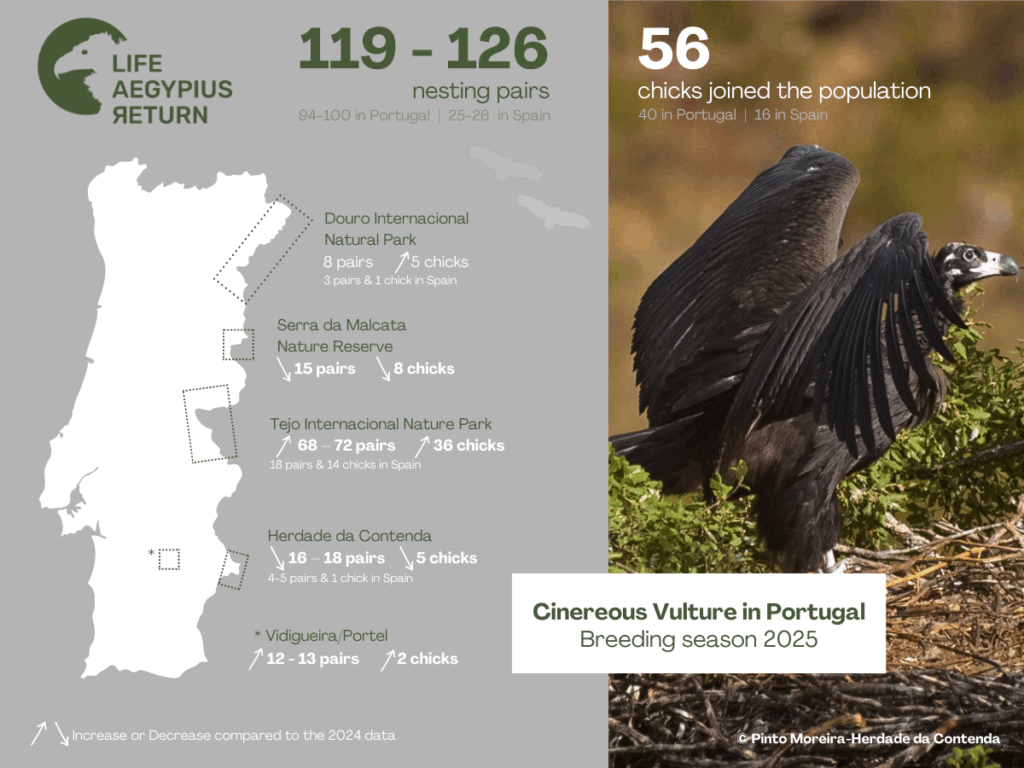
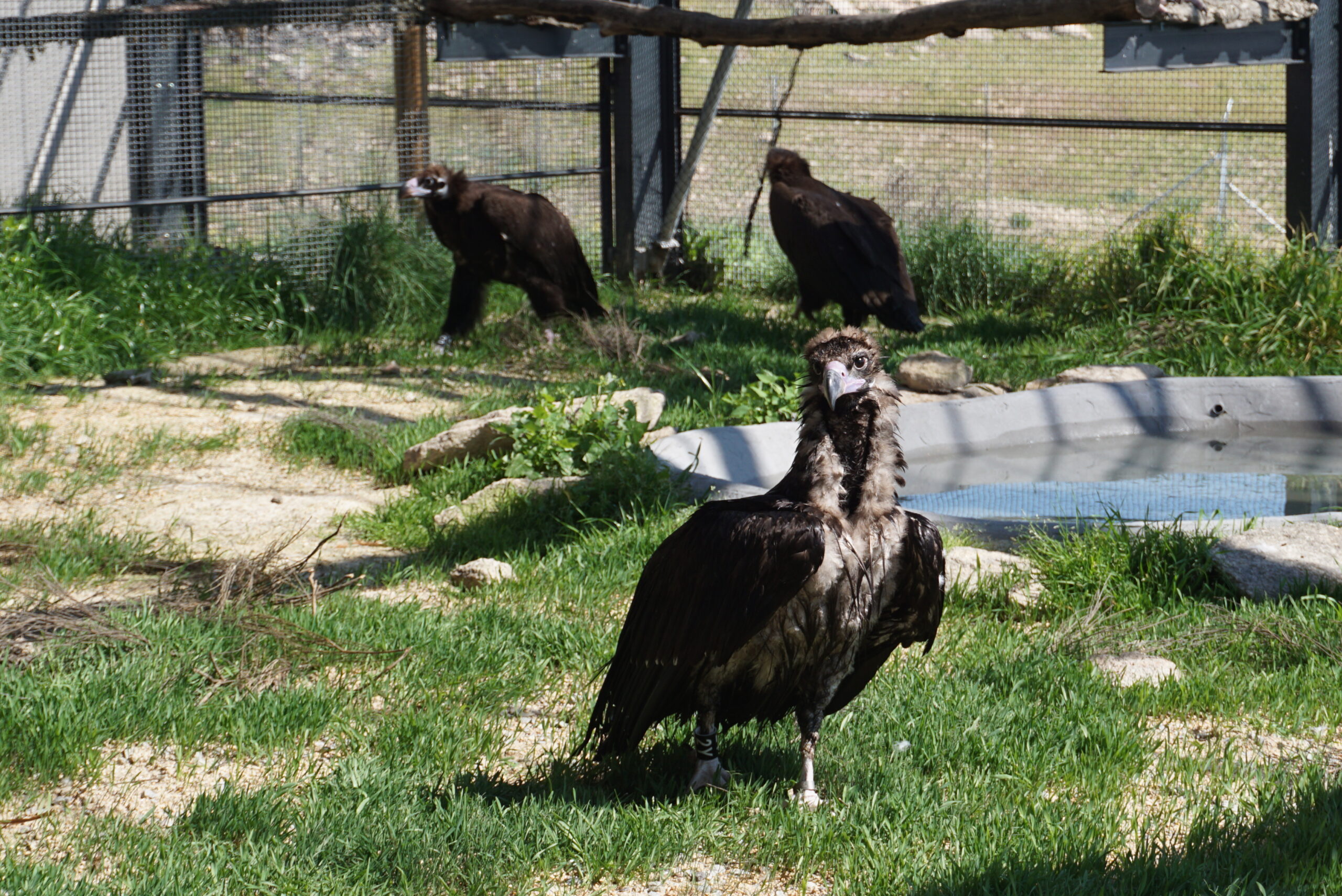
Monitoring results from 2025 brought good news: the Cinereous Vulture population in Portugal continues to grow. Between 119 and 126 nesting pairs (including some in Spanish territory) were documented, resulting in 56 fledged chicks, a strong outcome and well above numbers seen before the project began.
Breeding performance remains solid, too. Productivity reached 0.45 chicks per pair, and breeding success was 0.50. Both measures are lower than rates reported for well-established colonies elsewhere, but this is expected because most of these birds are relatively new pairs recolonising Portugal from Spain. Overall, the species appears to be settling in well.
Giving the population a boost
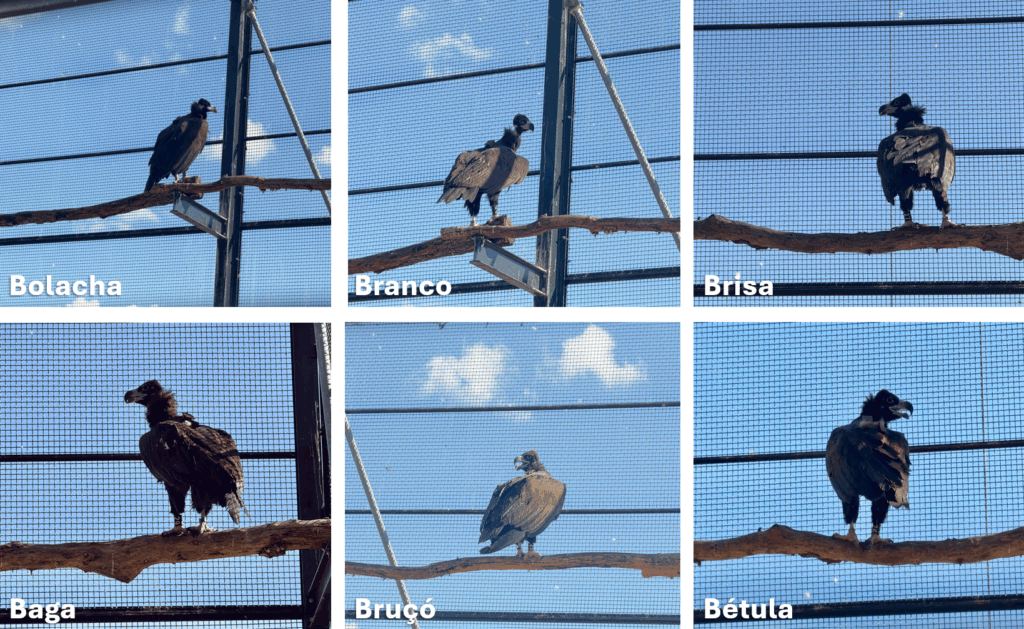
To help strengthen small colonies and improve genetic diversity, the team carried out soft releases of six Cinereous Vultures at the Douro this year, while two birds sadly died.
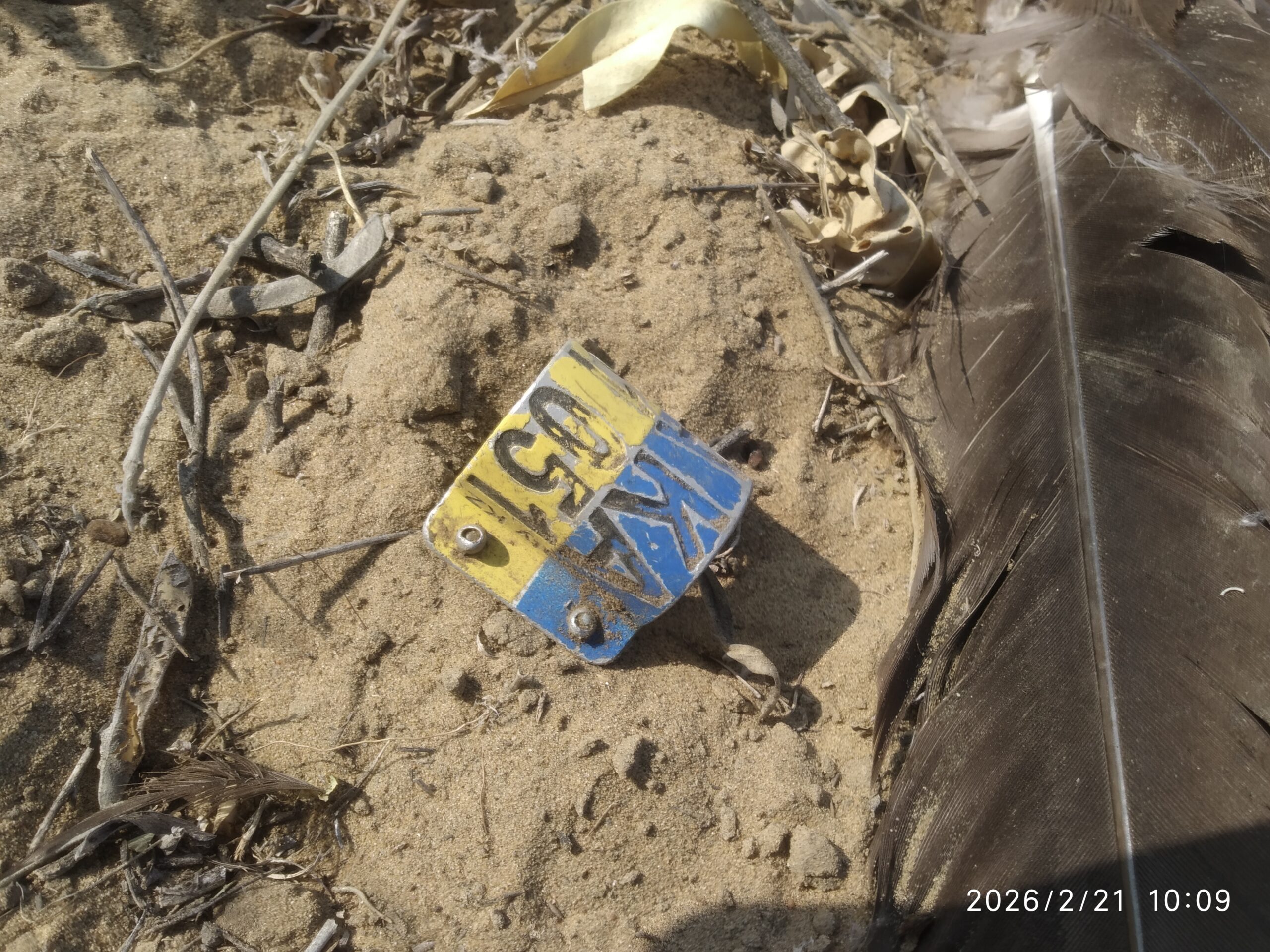
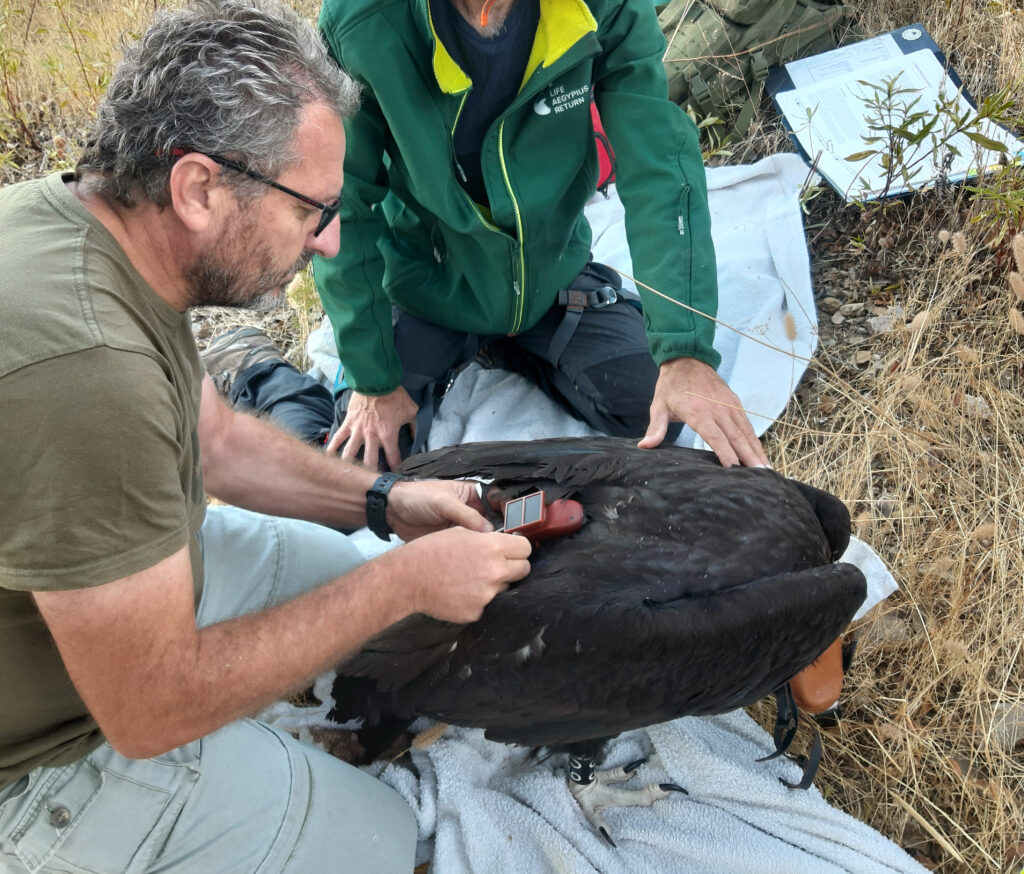
Tagging also hit a major milestone. By the end of 2025, 58 Cinereous Vultures were fitted with GPS transmitters, including wild chicks, released birds, rehabilitated individuals and one adult. These birds are giving researchers a better understanding of how vultures move, where they feed, what dangers they face, and how they cross into neighbouring regions. A full report on their movements and the impact of soft releases is expected soon.
Building a better home
Food availability is becoming a limiting factor as the vulture population grows. To tackle this, the project has set up fenced feeding stations managed by project partners — three of which are now fully operational, hitting the project’s target. In collaboration with farmers, another 66 unfenced feeding areas, 56 in Portugal and 10 in Spain, are in various stages of approval and review, with more being planned. These stations are crucial in areas where livestock is disappearing, and natural food sources are harder to come by.
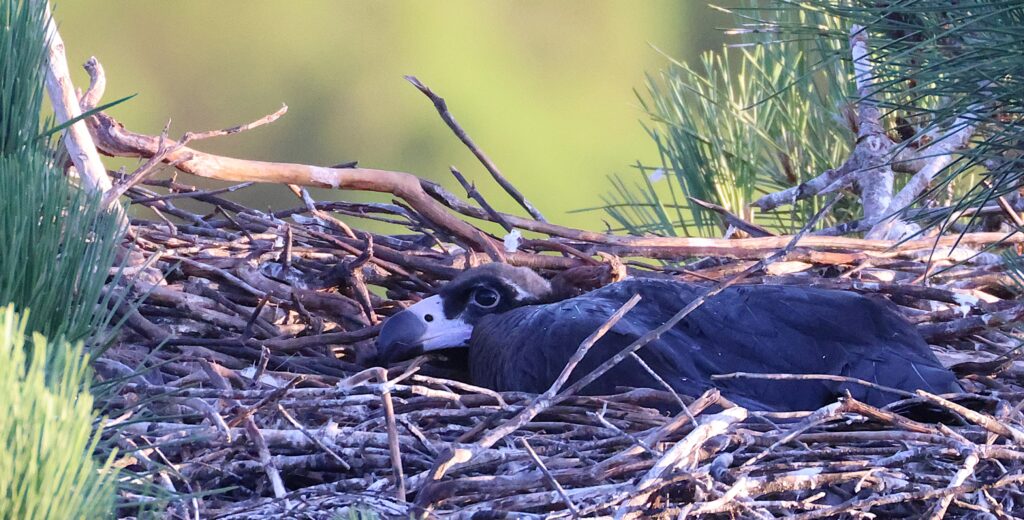
Nest management also continued across all colonies. Just over half of the planned artificial platforms have been built, and maintenance on existing nests is also about halfway complete. These artificial structures provide vultures with better nesting opportunities and higher breeding success, especially in areas where natural trees are vulnerable to collapse. Restoring artificial platforms after the Douro wildfire was also essential.
Facing down threats
Not all news this year was positive. Poisoning remains a serious danger. In total, ten vulture carcasses were analysed in Spain to improve diagnosis and rapid response, and one case was confirmed in the project area. However, three new anti-poison patrols were deployed, and a new reference study is starting with the LIFE WildLIFE Crime Academy project.
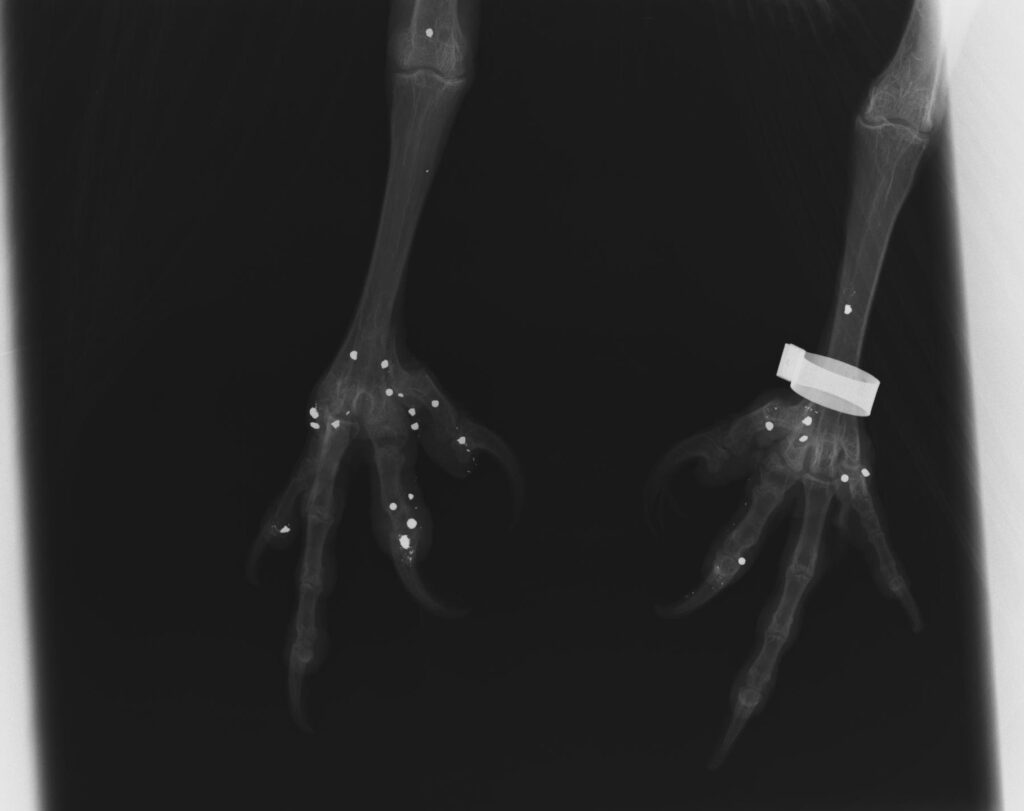
Unfortunately, three vultures were shot this year, a reminder that illegal persecution is still a reality. These incidents underline the importance of continuing dialogue with hunting communities and reinforcing enforcement.

Wildfires also struck a heavy blow in the Douro region. A major blaze affected six of eight vulture nests, and at least two chicks died — possibly more. Restoration began quickly, and the recovery of damaged habitat will remain a priority in 2026.
Working with people
Coexistence is key to long-term success. The project is running a study on farmer–vulture relations to better understand concerns and improve outreach.
Meanwhile, the expansion of renewable energy infrastructure poses another risk, particularly for large soaring birds like vultures. In response, the project issued over 40 technical opinions and held multiple meetings with developers and public bodies to ensure new installations are planned with bird safety in mind.
Raising awareness and boosting outreach
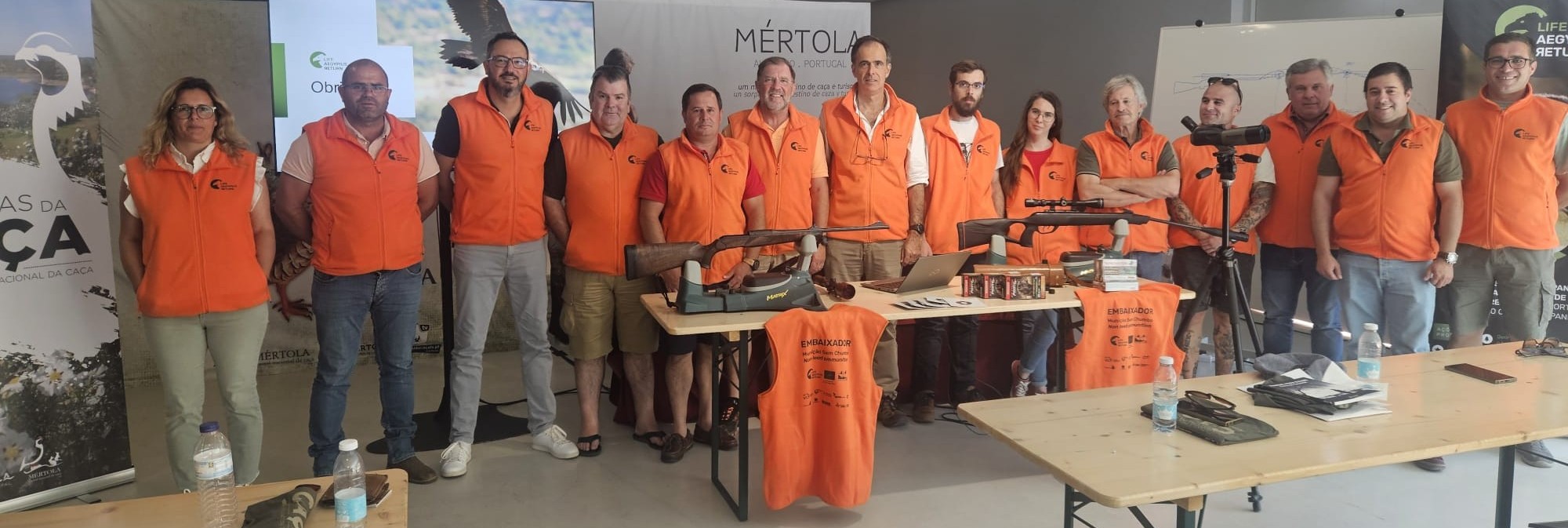
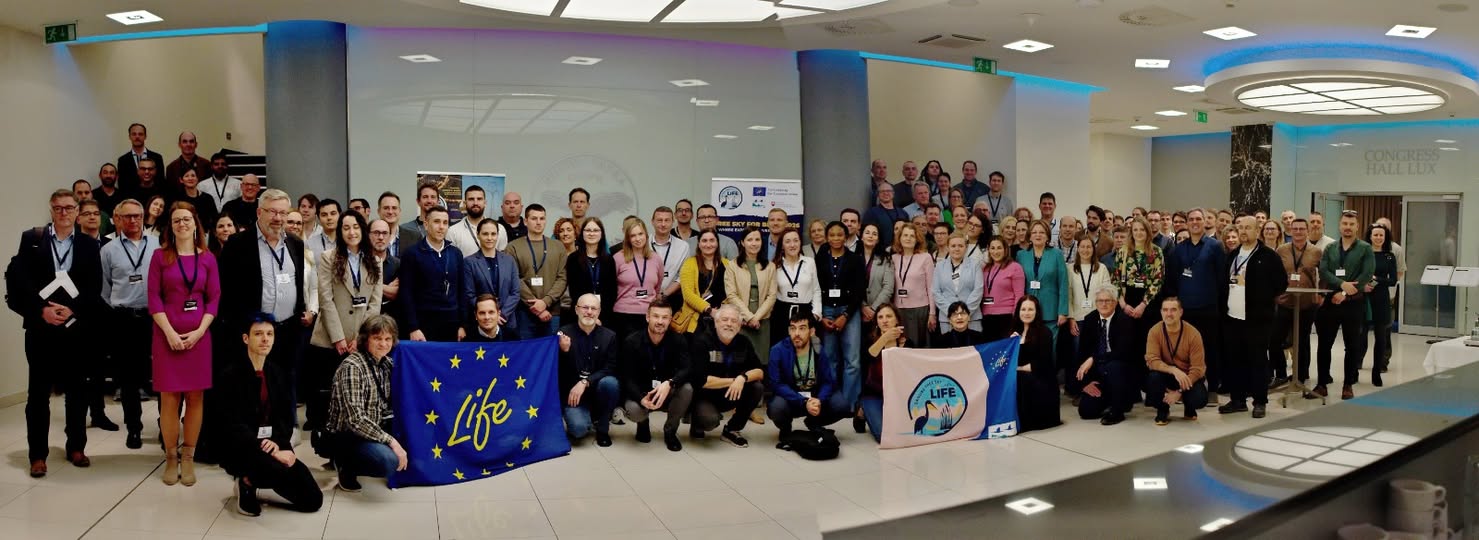
LIFE Aegypius Return had a strong presence in the media this year, with national coverage and progress on a full documentary. The team also stepped up engagement with landowners, hunters and local policymakers, building stronger partnerships and trust. Cooperation with WildLIFE Crime Academy deepened, and a new collaborative initiative, NECROBIOME, received official approval.
What to expect next
The final phase of the project kicks off in 2026, and it’s set to be a busy one. Major reports are due, including the much-anticipated vulture movement and soft-release report, scheduled for completion soon.
Meanwhile, annual tagging and sampling will continue through July.
Ongoing work in 2026 will include:
- Training hunters in non-lead ammunition
- Forestry and habitat restoration
- Managing and approving feeding stations
- Building and repairing nesting platforms
- Advocating for safe, renewable development
- Communication and education campaigns
- Continued capacity training and wildlife crime response with the WildLIFE Crime Academy
- Deepening work under the NECROBIOME initiative
The progress made in 2025 shows just how far the species has come. Even with wildfires, illegal shootings and habitat pressures, the Cinereous Vulture is continuing its return to Portugal. That’s only possible because of a united effort: conservationists, landowners, communities, researchers, government bodies, and the EU all working toward the same goal.
About LIFE Aegypius Return
The LIFE Aegypius Return project is co-financed by the European Union’s LIFE programme. Its success depends on the involvement of all the relevant stakeholders, and the collaboration of the partners: the Vulture Conservation Foundation (VCF), the coordinating beneficiary, and the local partners Palombar – Conservação da Natureza e do Património Rural, Herdade da Contenda, Sociedade Portuguesa para o Estudo das Aves, Liga para a Protecção da Natureza, Associação Transumância e Natureza, Fundación Naturaleza y Hombre, Guarda Nacional Republicana and Associação Nacional de Proprietários Rurais Gestão Cinegética e Biodiversidade.