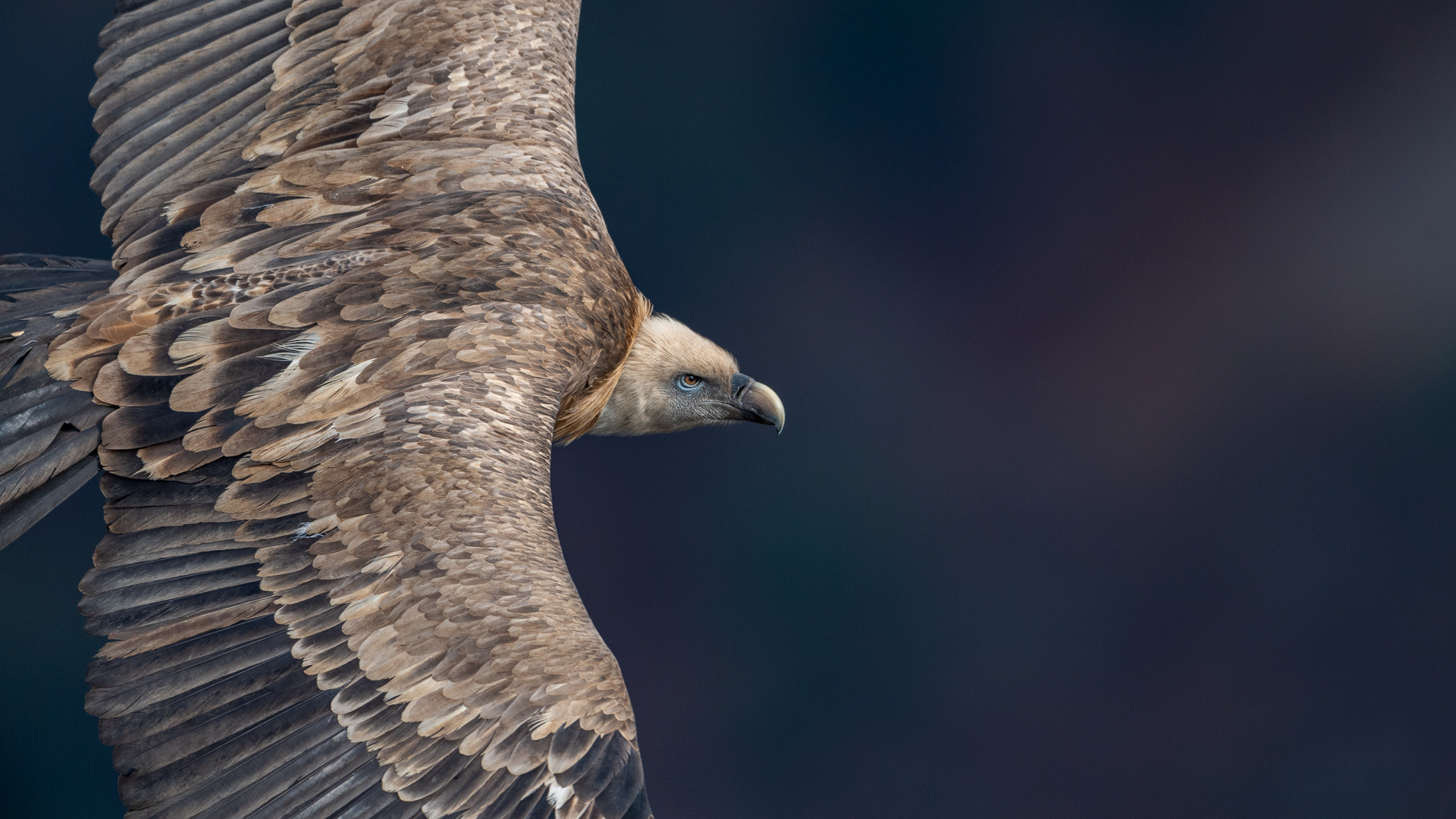
This initiative by the LIFE Aegypius Return project aims to strengthen the country’s most fragile and isolated Cinereous Vultures (Aegypius monachus) colony of. The action has gained renewed urgency following the devastating wildfire that swept through the region last August.
Four juveniles and a familiar face
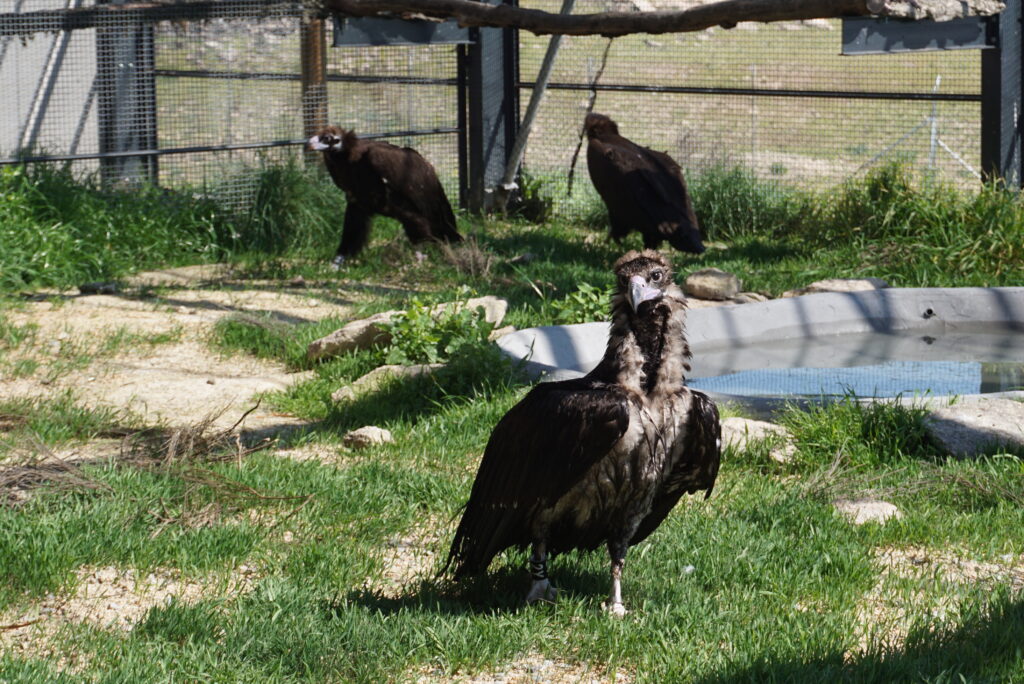
The 2026 acclimatisation cohort consists of five Cinereous Vultures: four juveniles born in 2025 and a young male named Pousio, born in the Vidigueira colony in 2024.
The four juveniles were rescued from different locations in Central Portugal – Escalhão (Figueira de Castelo Rodrigo), Torredeita (Viseu), Santa Comba (Seia) and Guarda – in September and October. All showed signs of weakness and malnutrition.
Cinereous Vultures typically fledge in August, roughly four months after hatching. After initial flights near the nest, they gradually become independent and often embark on long exploratory journeys. Due to their inexperience in navigating or locating food, they can easily become disoriented. It is common to find them far from breeding sites, exhausted and malnourished.
This was the case with the four juveniles that have now entered the acclimatisation centre. The individual found in Guarda was even discovered in an industrial zone of that city, having been promptly rescued by Rewilding Portugal and the PSP (Public Security Police), and transferred to CERVAS (Centre for Ecology, Recovery and Monitoring of Wild Animals), managed by the ALDEIA Association in Gouveia, where the other three juveniles were already recovering.
A second chance for Pousio
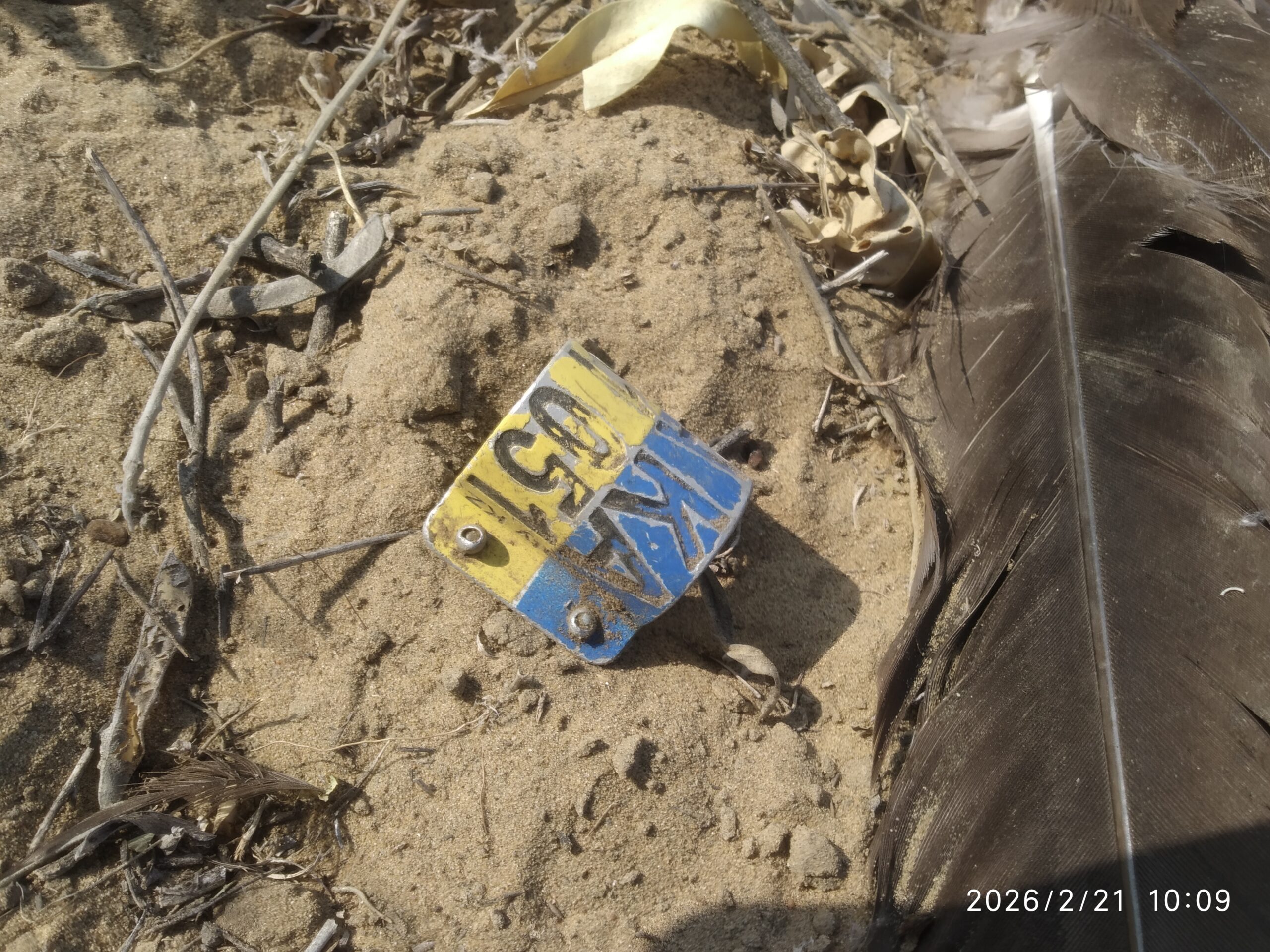
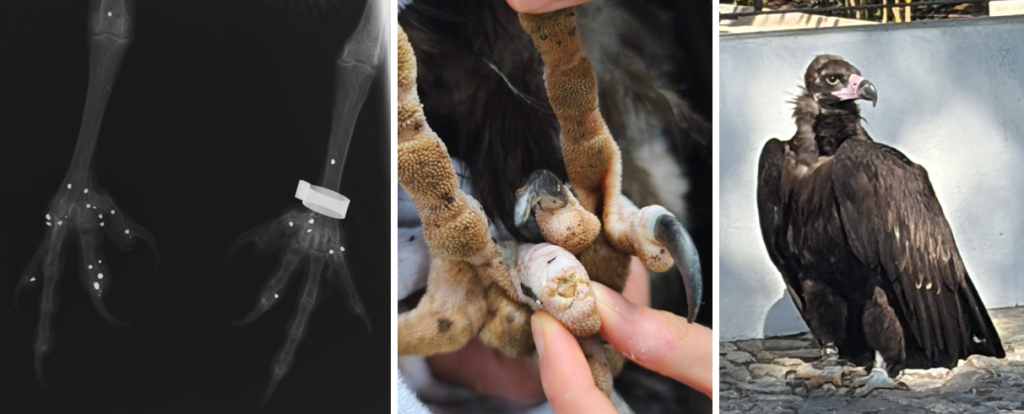
Pousio was the first known chick from the recently discovered Vidigueira colony (2024), born at the Herdade do Monte da Ribeira (HMR) estate. While still in the nest, he was ringed and fitted with a GPS/GSM transmitter. This technology proved vital in January 2025 when it revealed a horrific incident: Pousio had been shot at dawn, while perched.
Found incapacitated at HMR with over 22 lead pellets and shrapnel embedded in his legs and body, he was collected by the ICNF (Institute for Nature Conservation and Forests) and taken to LxCRAS – the Wildlife Recovery Centre run by Lisbon City Council. A long recovery process followed, involving several veterinary procedures. The complexity of the situation required his transfer to the Veterinary Hospital of the University of Trás-os-Montes and Alto Douro (CRAS HV-UTAD), where he underwent further procedures. Following his recovery period, Pousio was then transferred to CIARA, where he completed flight training and an early moult. Finally, after eight long months, Pousio was fully rehabilitated and released back into his native colony in September 2025.
However, in the days that followed, Pousio failed to feed and eventually landed in the city of Serpa, apparently seeking food near human settlements. He was rescued once again and taken to LxCRAS, where he remained until entering the acclimatisation programme.
Having lived in the wild for only about four months, and following a complex rehabilitation process involving multiple veterinary procedures and a long recovery period, Pousio appears to have become habituated to human presence and to obtaining food through artificial means. Consequently, he is not currently in a condition to return to the wild safely. For this reason, the acclimatisation process will provide him with an opportunity to relearn essential skills and regain his autonomy before being released.
Post-fire acclimatisation
The LIFE Aegypius Return project’s acclimatisation programme is based in the Douro Internacional Nature Park (PNDI), which is home to the Portugal’s smallest and most fragile Cinereous Vultures colony.
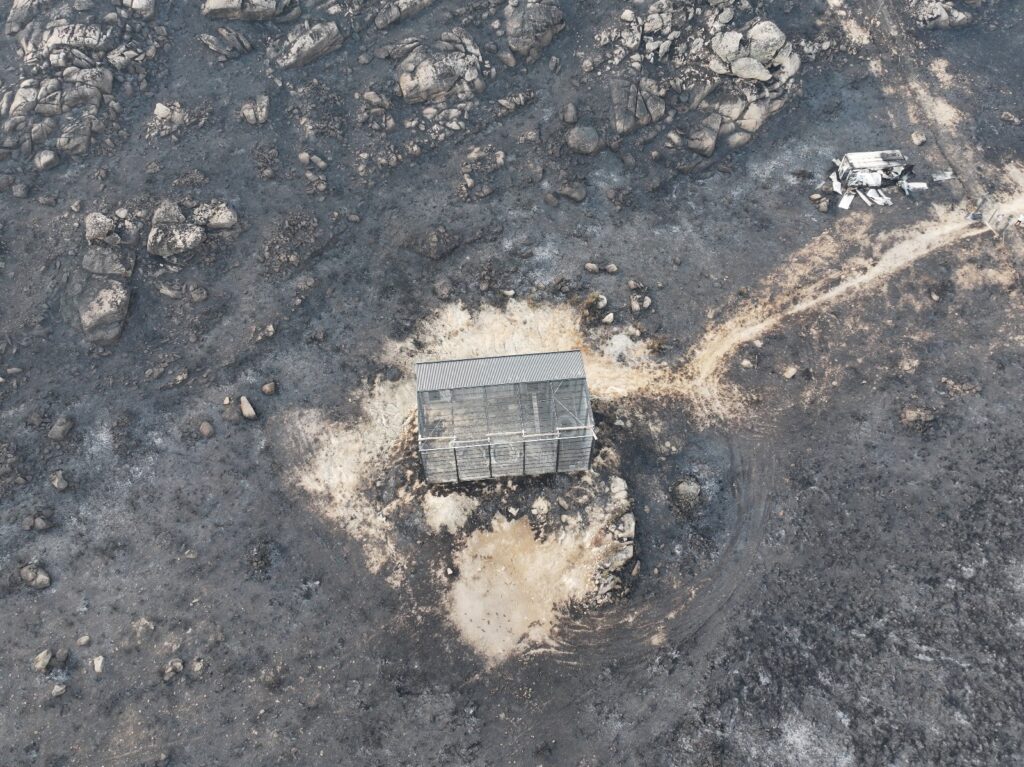
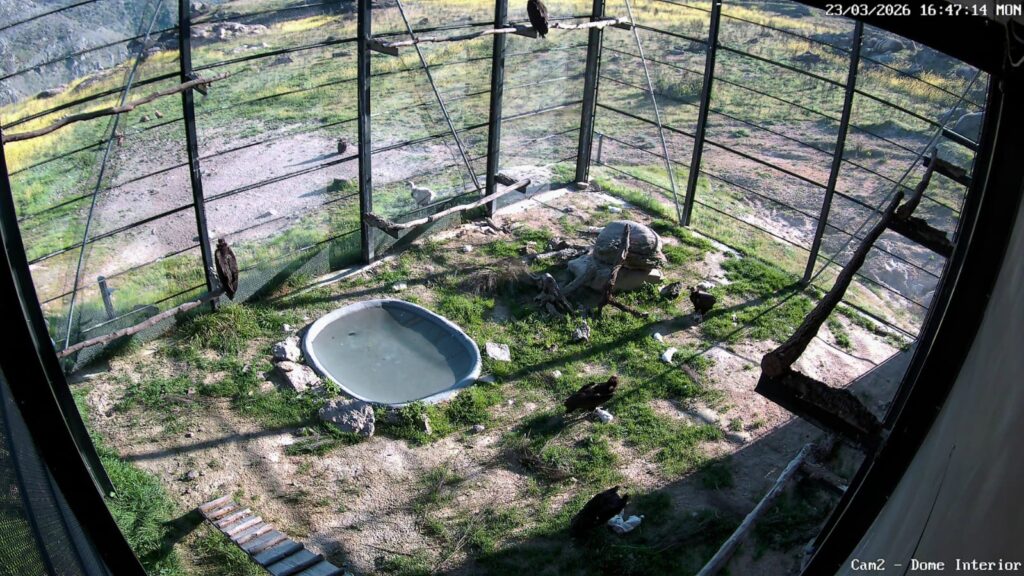
Located in Fornos, near the Douro cliffs, the acclimatisation station sits on land owned by the partner Faia Brava and is managed by Palombar. The facility features an 18-metre-long aviary, an infirmary, and a logistics centre equipped with a video surveillance system, enabling constant non-intrusive monitoring of the birds.
All these facilities were severely affected by the fire that raged in the PNDI last summer. Thanks to donations from many individuals and organisations, and the swift action of partner Palombar, the acclimatisation station and the surrounding habitat were restored in time to complete the 2025 acclimatisation programme and to enable the 2026 programme.
In the PNDI, eight Cinereous Vulture nests were affected by the 2025 fire, with several completely destroyed. Two to four chicks died as a result of the fire. The restoration of the habitat and feeding areas appears to have kept most of the adult birds in the area, but it is still too early to assess the impact of the fire on the colony’s sustainability.
The fire has highlighted the importance of the acclimatisation programme in addressing the colony’s vulnerability.
How are vultures acclimatised? And why?
The Cinereous Vultures entering the programme are juveniles whose colony of origin is unknown, which were admitted to and treated at wildlife rehabilitation centres. This year, for exceptional reasons, the programme also received Pousio, whose place of birth is known.
During the acclimatisation period, the vultures (re)learn the normal behaviours of their species by socialising with various companions. From inside the aviary, the vultures also observe their conspecifics and other species in the wild, both outside and in the feeding area for scavengers located opposite. Over a period of approximately six to eight months (soft release), they learn normal social interactions, such as feeding, cooperation and competition, amongst others. Feeding and care are provided without any contact with human carers. When the time comes to return them to the wild, the aviary is opened, and each vulture leaves freely when it chooses to do so.
Soft release is a well-established procedure in vulture conservation, with proven effectiveness in several European countries. Compared to alternative techniques, this method promotes philopatry (loyalty to the area) and is recommended to accelerate the individuals’ attachment to the acclimatisation site, increase survival, and strengthen the demographic stability of the released populations.
Most of the Cinereous Vultures previously acclimatised at the PNDI have indeed remained in the vicinity and are continuously monitored.
Acknowledgements
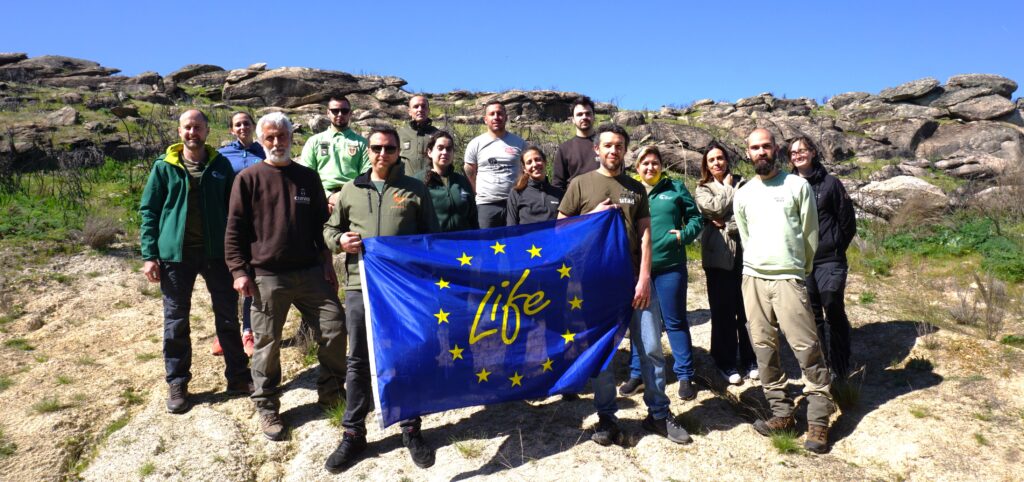
The arrival of a new group of Cinereous Vultures at the acclimatisation station is always a significant milestone for the LIFE Aegypius Return project, but also for nature conservation. It is, furthermore, a moment to highlight and celebrate inter-institutional cooperation and to acknowledge the work of everyone involved at every stage:
– Detection and rescue of weakened Cinereous Vultures. Thanks are due to all the individuals and organisations who were vigilant and collaborated in the timely rescue of the birds: anonymous citizens, Herdade do Monte da Ribeira, GNR – National Republican Guard, PSP, ICNF and Rewilding Portugal.
– Rehabilitation. Special recognition is due to all the Wildlife Recovery Centres that take in, treat and rehabilitate the vultures. For the five Cinereous Vultures that have now entered the acclimatisation phase, the teams at CERVAS, LxCRAS/Lisbon City Council, CRAS HV-UTAD, and CIARA have been tireless.
– Transport. We would like to thank the ICNF, CERVAS, the VCF (Vulture Conservation Foundation), and Faia Brava, for ensuring the safe transport of the birds from the rehabilitation centres to the PNDI.
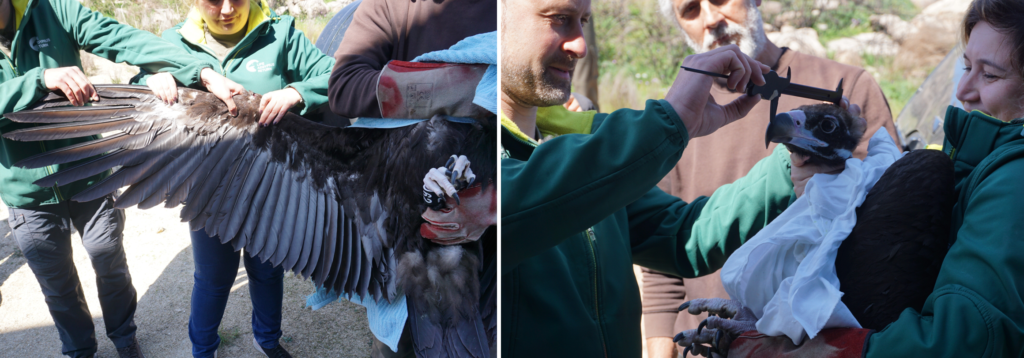
– Check-up and ringing. The cooperation of Palombar, Faia Brava, CERVAS, CRAS HV-UTAD, and CIARA was essential for carrying out the veterinary check-up, ringing, samples collection and biometric measurements.
– Celebration event. Finally, we would like to thank all the people and organisations that made possible or who took part in the arrival of the new group of vultures for acclimatisation: Palombar, Faia Brava, CERVAS, CRAS HV-UTAD, CIARA, Rewilding Portugal, ICNF, and Viridia – Conservation in Action.
About the LIFE Aegypius Return project

The LIFE Aegypius Return project is co-funded by the European Union’s LIFE programme. Its success depends on the involvement of all the relevant stakeholders and the collaboration of the partners: the Vulture Conservation Foundation (VCF), the coordinating beneficiary, and local partners Palombar – Conservation of Nature and Rural Heritage, Herdade da Contenda, the Portuguese Society for the Study of Birds, the League for the Protection of Nature, the Transhumance and Nature Association, Fundación Naturaleza y Hombre, the National Republican Guard and the National Association of Rural Owners of Game Management and Biodiversity.