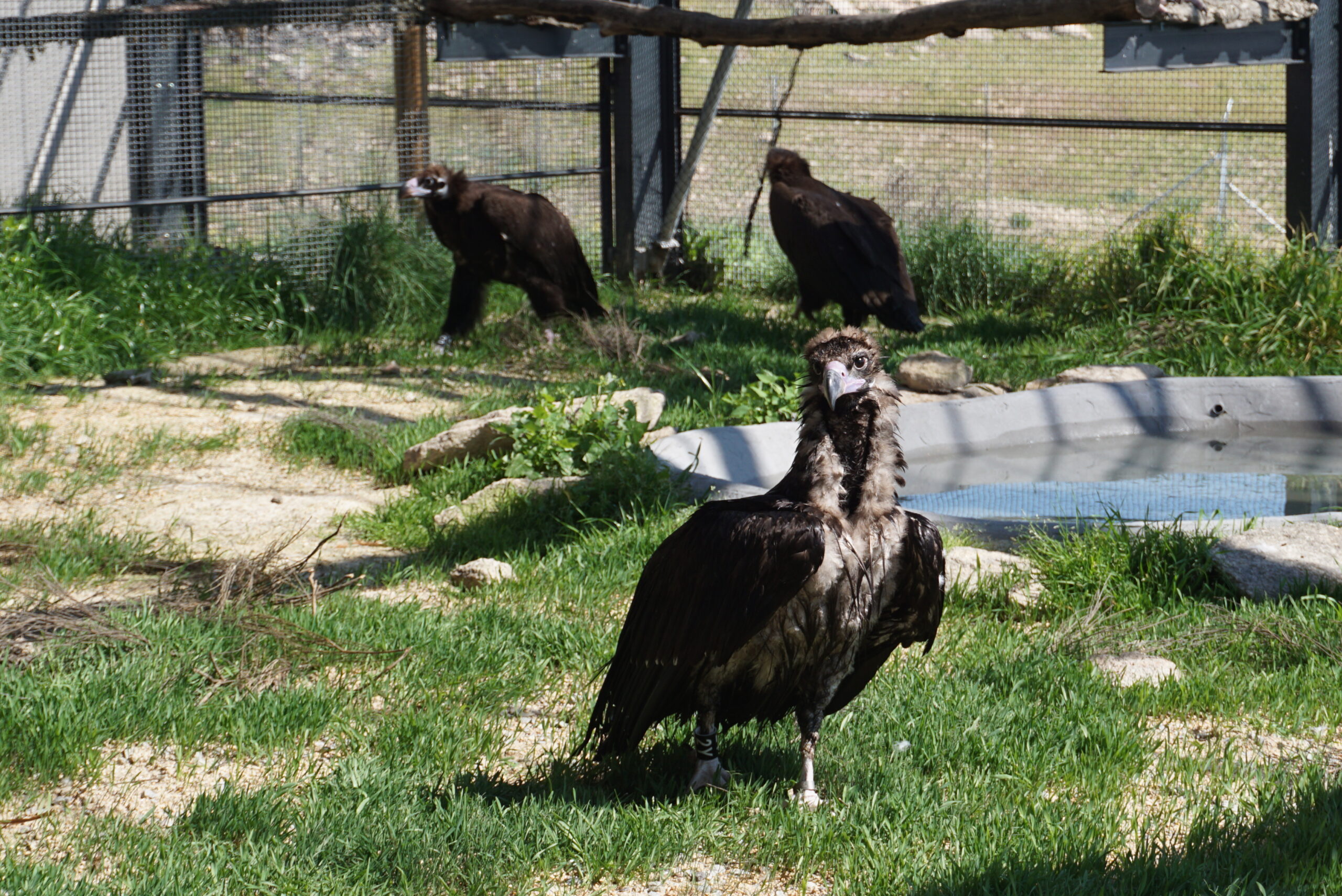
A new study, published in the journal Biological Conservation, highlights the effects of windfarm placement on Cinereous Vultures in Thrace. Vultures’ flight behaviour changes significantly when a windfarm is placed, with an average increase in energy expenditure.
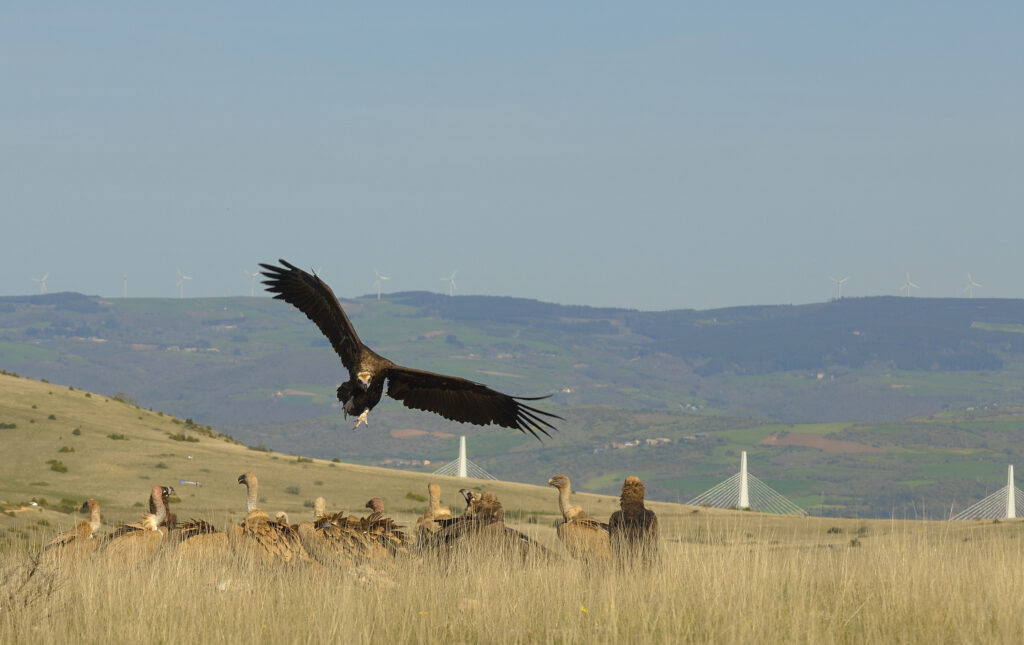
The study “Displacement effects on an endangered cinereous vulture population in a landscape of increasing wind power development” by Bounas et al., published in the journal Biological Conservation, analyzes two decades of GPS data, examining how the Cinereous Vulture (Aegypius monachus) population in Thrace is responding to the increase in wind farm construction in their territory. The researchers compared an earlier period (2004–2009), during which 185 wind turbines were operating in the Evros and Rhodope regions, with a more recent period (2016–2022), during which 276 wind turbines are now operating, within or adjacent to Natura 2000 sites.
Reduced habitat use and changes in flight trajectories
According to the study, Cinereous Vultures adapt to the presence of wind farms by avoiding areas where they are installed. In fact, comparing the vultures’ movements, scientists highlighted an 85-89% drop in habitat use rates after the installation of wind farms. In addition, they change their flight trajectories to avoid the areas where wind turbines are active.
This behaviour translates into functional habitat loss; namely, vultures will not use suitable habitats because they are disturbed by wind turbines. Wind turbines are powered by the same thermal updrafts that vultures use to soar, which makes them compete with wind power plant development for the same high-wind areas. Habitat loss is one of the many threats that vultures face daily, and any further damage to their habitat may take a critical toll on their survival.


Increased energy consumption: the “barrier effect”
To avoid wind turbines, vultures detour from their normal flight path, spending more energy than normal. This is the so-called “barrier effect”. The extra energy expenditure might look minimal compared, for example, to the energy required during the breeding season, but it can seriously affect the health of each individual over time.
The cumulative effect of increased daily energy use must be taken into consideration when planning a wind farm. Wind power plant development should be viewed as a continuous process rather than a static before-versus-after event. In repowering or building new wind power plants, it is critical to ensure that the presence of one or multiple power plants does not impact vultures’ movements and energy expenditure.
Wind power plants and wildlife can coexist, but a brighter future requires careful planning
Wind energy is widely considered to be an integral part of global efforts to mitigate climate change. Nevertheless, this method of energy production can adversely affect biodiversity, especially soaring birds – like vultures – which rely on the same high-wind landscapes targeted for turbine construction. Windfarms can affect birds directly by increasing mortality due to collision with turbines or indirectly, as demonstrated by this study, through displacement, habitat degradation, and increased energy expenditure.
Vultures already face a number of threats all over Europe. From poisoned baits to collision with power lines, from habitat destruction to lack of food availability, their survival is never guaranteed. The additional pressure of functional habitat loss and increased energy expenditure created by wind farms placed in critical habitats is particularly worrying for Cinereous Vultures classified as Endangered (EN) within Greece and Near Threatened (NT) globally on the IUCN Red List. Therefore, it is crucial to implement all available instruments to evaluate the cumulative impact of wind power plant placements before building one. Vultures cannot afford to lose more habitats in the name of energy production, and neither can we.
Source: Bounas, A., Kret, E., Sidiropoulos, L., Zakkak, S., Kapsalis, E., Arkumarev, V., Dobrev, D., Stamenov, A., Stoychev, S., Vasilakis, D., 2026. Displacement effects on an endangered cinereous vulture population in a landscape of increasing wind power development. Biological Conservation 315 (2026) 111728. Download here