Only a few days after the devastating poisoning incident that wiped out nine Cinereous Vulture lives in the Dadia-Lefkimi-Soufli National Forest Park in Greece, a new case claimed the life of another Cinereous Vulture on the Bulgarian side of the border.
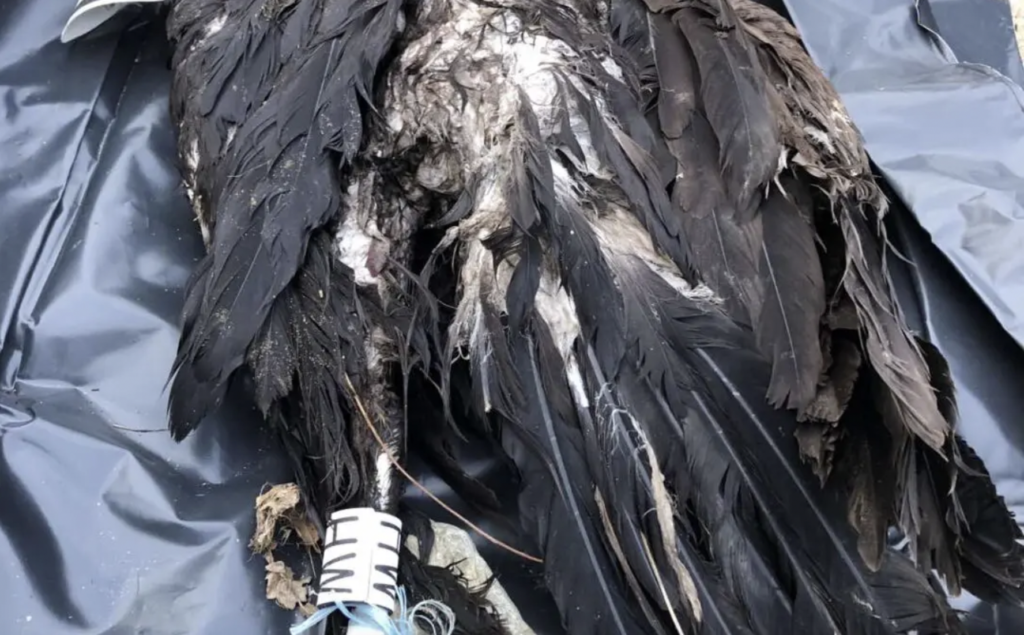
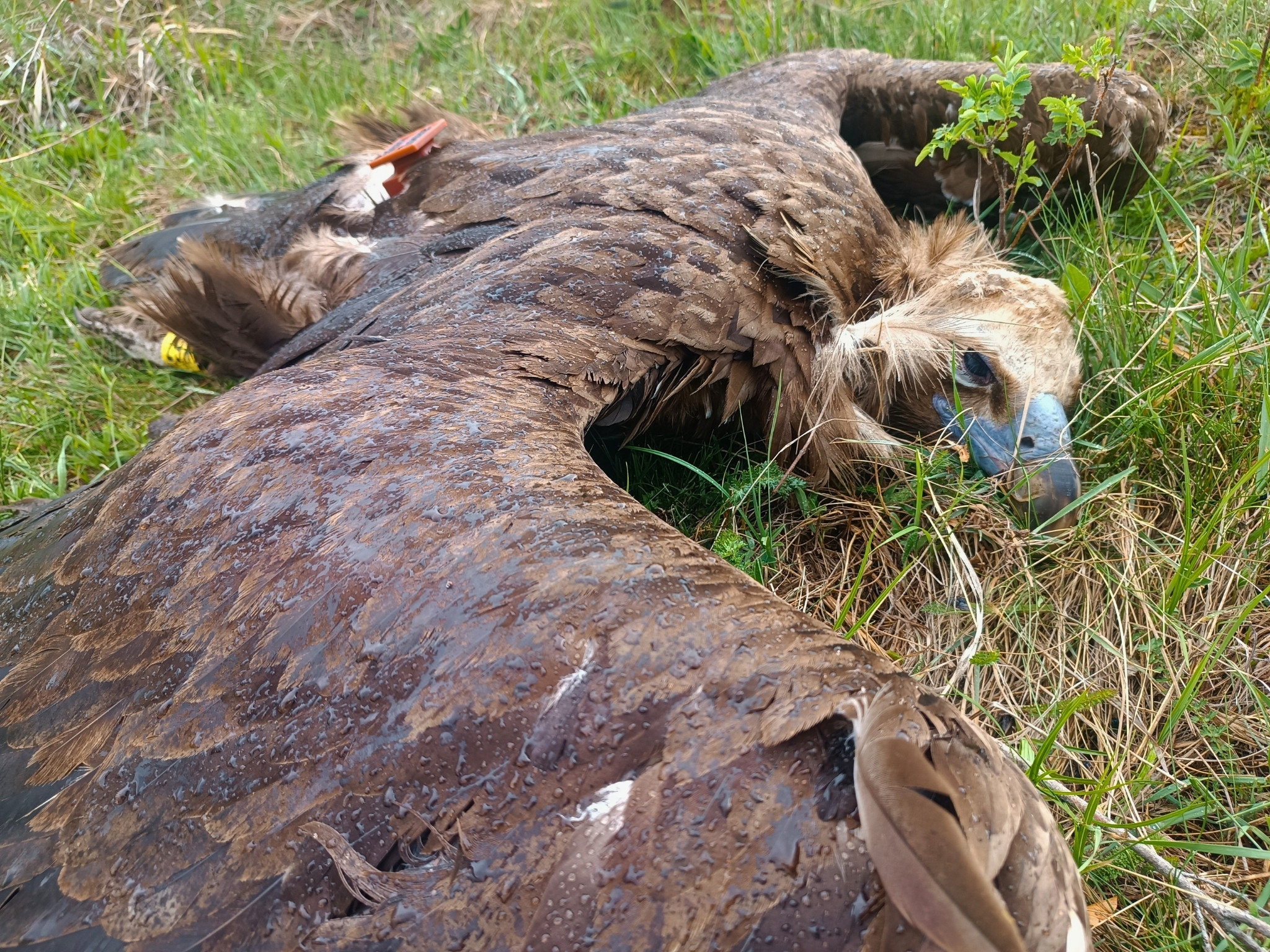
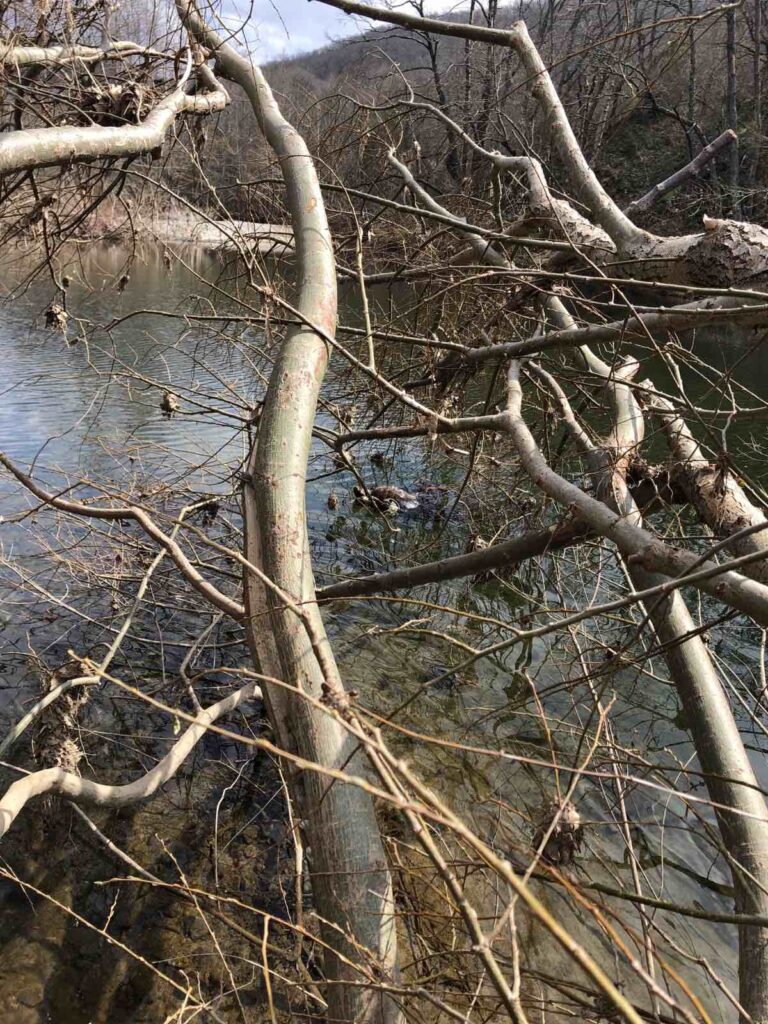
On the evening of March 16, a team from the Dadia–Lefkimi–Soufli National Park in northeastern Greece alerted the colleagues of the Bulgarian Society for the Protection of Birds (BSPB) that the GPS transmitter data was indicating abnormal behaviour in one of the monitored birds. The research started the morning after. Following the last coordinates provided by the GPS transmitters, the team found a dead Cinereous Vulture in the waters of the Byala Reka River. The bird’s leg was entangled with a synthetic fibre tied to a stone.
Further investigation brought the team to the location of the vulture’s last meal. A grim discovery was waiting for them. The team found the remains of a dead animal with an unidentified substance and numerous dead flies. Everything on the scene indicated a criminal poisoning case. The team immediately reported the case to the local authorities, which conducted an on-site inspection and collected evidence.
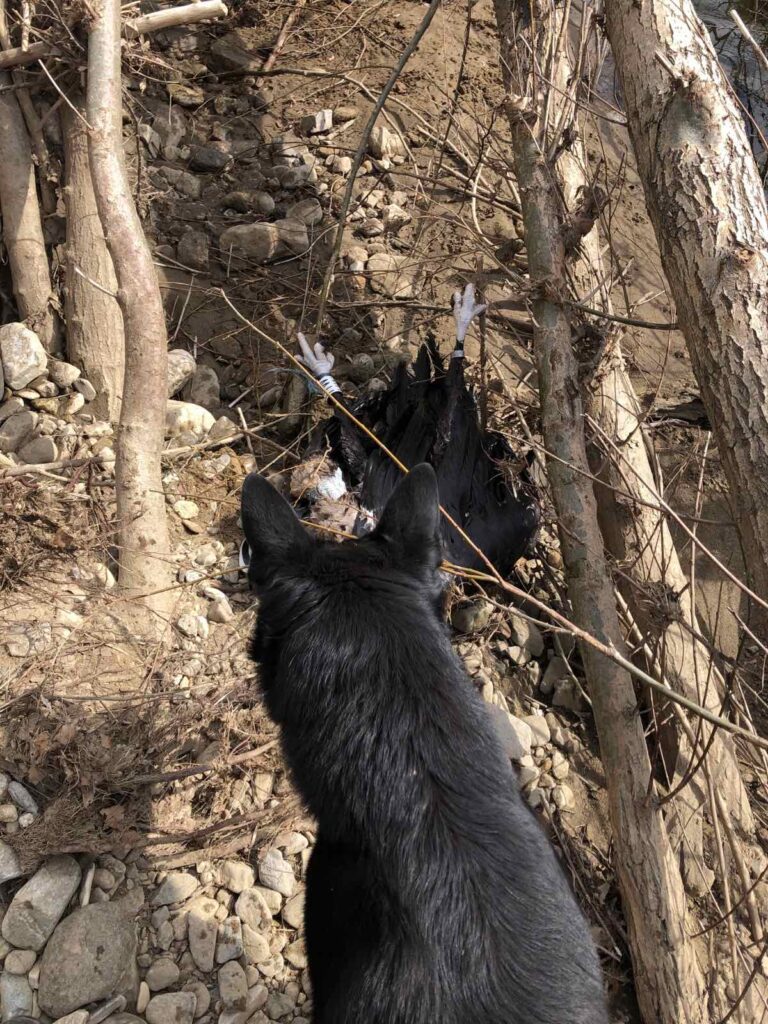
A second chance cut short
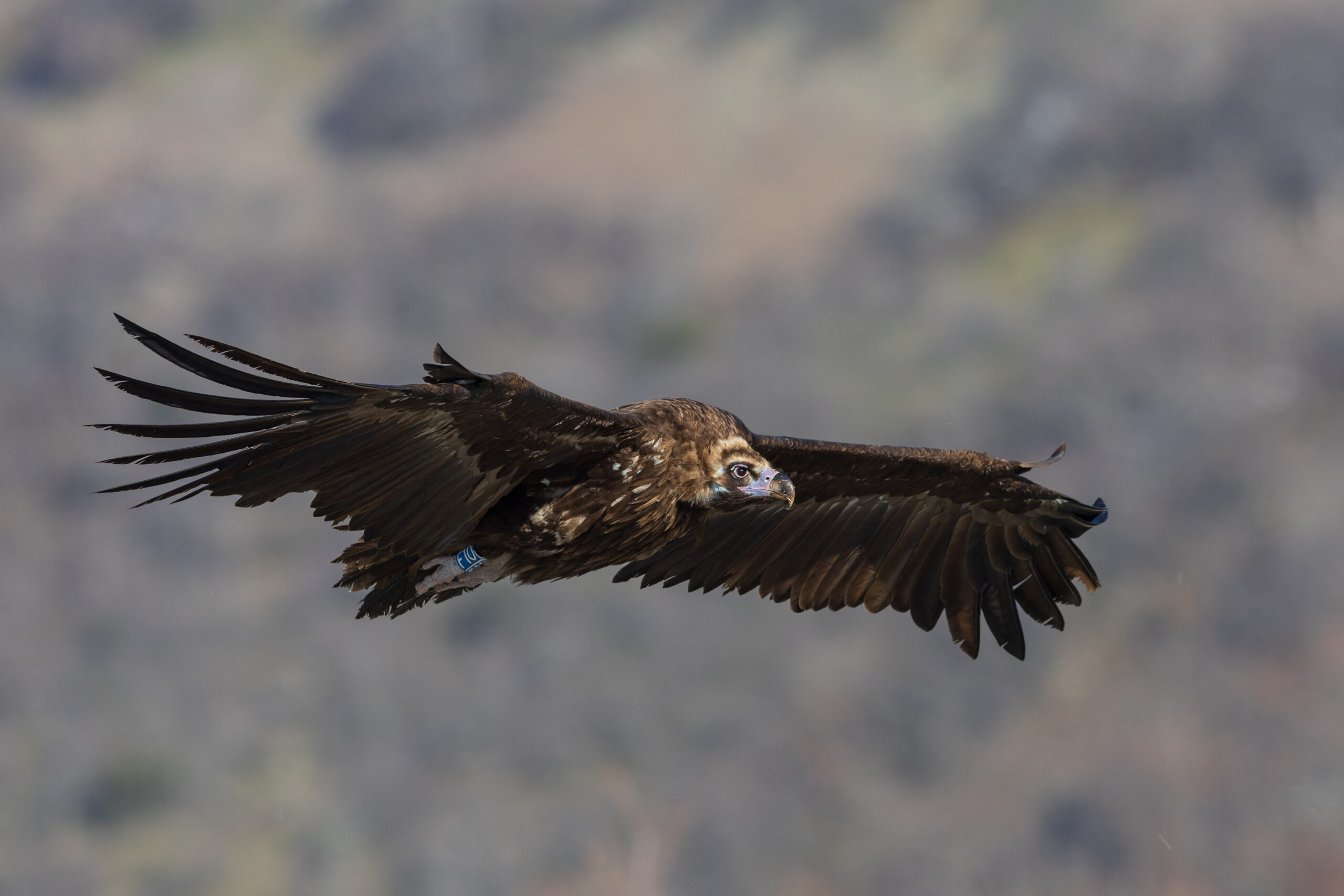
The victim was a Cinereous Vulture rescued in August 2025 by the Wildlife Rescue Centre of Green Balkans in Stara Zagora. After a successful rehabilitation, it was equipped with a GPS transmitter and transferred to an acclimatisation aviary. The BSPS team released it at the beginning of this year.
By monitoring the data recorded by the GPS transmitter, the team at the Dadia–Lefkimi–Soufli National Park was able to immediately identify an unusual behaviour. The immediate communication between the two teams and the precise coordinates transmitted by the device prevented what could have been a catastrophe.
A widespread threat with cascading consequences
Criminal poisoning is the most important threat to vultures worldwide. It undermines years of conservation actions in a single moment, and yet, poisoned carcasses are rarely intended for vultures. Vultures are almost always, especially in Europe, unintended victims of human-wildlife conflict involving predators or feral dogs. Spring is usually the season with the highest count of poisoning incidents. It coincides with the calving season and consequently an increased number of predations on livestock.
After the dramatic events that are threatening the survival of Cinereous Vultures on the Bulgarian-Greek border, the LIFE Rhodope Vulture is improving its rapid response capacity and on-site coordination. While the contribution of conservation projects and NGOs is vital to protect Cinereous Vultures, the conservation community in its entirety calls on the authorities to strengthen control and prosecution of these criminal actions against wildlife.
LIFE Rhodope Vulture
Co-funded by the LIFE Programme of the European Union and Rewilding Europe, The LIFE Rhodope Vulture project is dedicated to the recovery of the Cinereous Vultures population in the Rhodope mountains, between Bulgaria and Greece. The project aims to increase food availability for the species and address human wildlife conflicts. It will reintroduce birds from Spain to establish a new colony in Bulgaria and conserve the Greek colony in Dadia-Lefkimi-Soufli National Park. Lastly, the project aims to foster cooperation among local businesses, conservation initiatives, and stakeholders, and raise awareness about the ecological benefits of Cinereous Vultures. The project duration is 5 years, from June 2024 to May 2029. The total budget is €4,160,118 Euro. It is coordinated by Bulgarian Society for the Protection of Birds (BSPB) with the participation of Rewilding Rhodopes Foundation. It also benefits from international collaboration, including the Vulture Conservation Foundation.