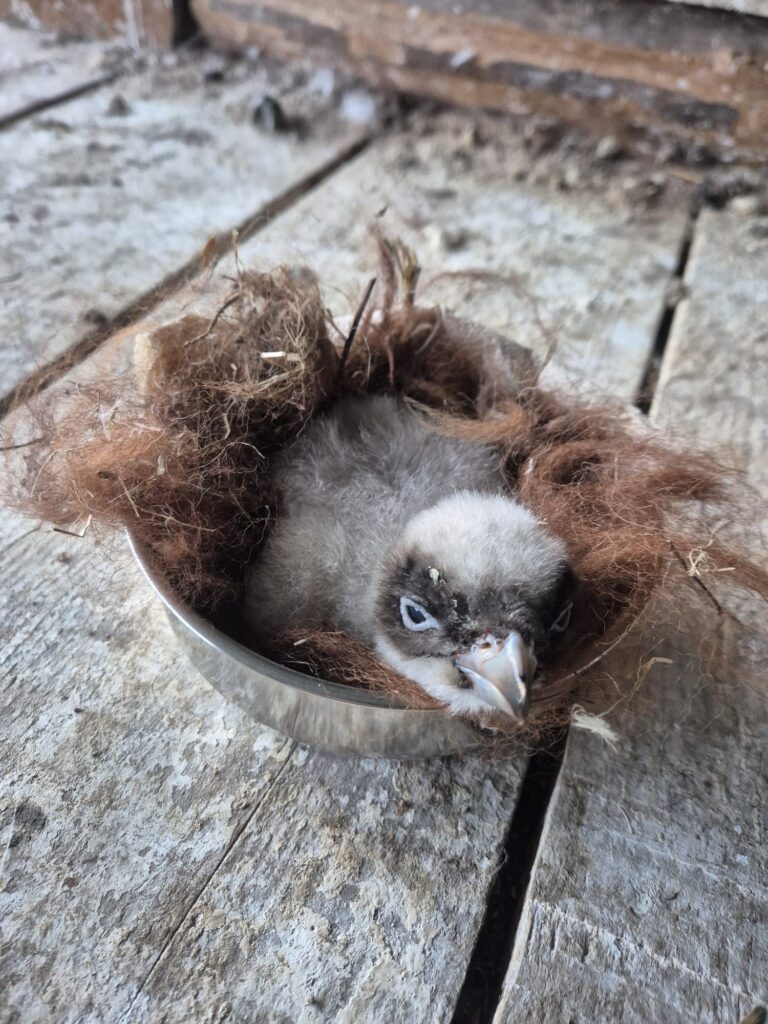
The 2025–2026 Bearded Vulture captive breeding season has officially kicked off: the first chick has hatched at Parc Animalier des Pyrénées– one of the zoos part of the Bearded Vulture EEP captive breeding network.
The laying of the first egg by the pair BG850 × BG469 on November 30 has now turned into a fluffy, living milestone — setting a positive outlook for the season ahead and giving the staff at Parc Animalier des Pyrénées and the whole Bearded Vulture (Gypaetus barbatus) community plenty to smile about.
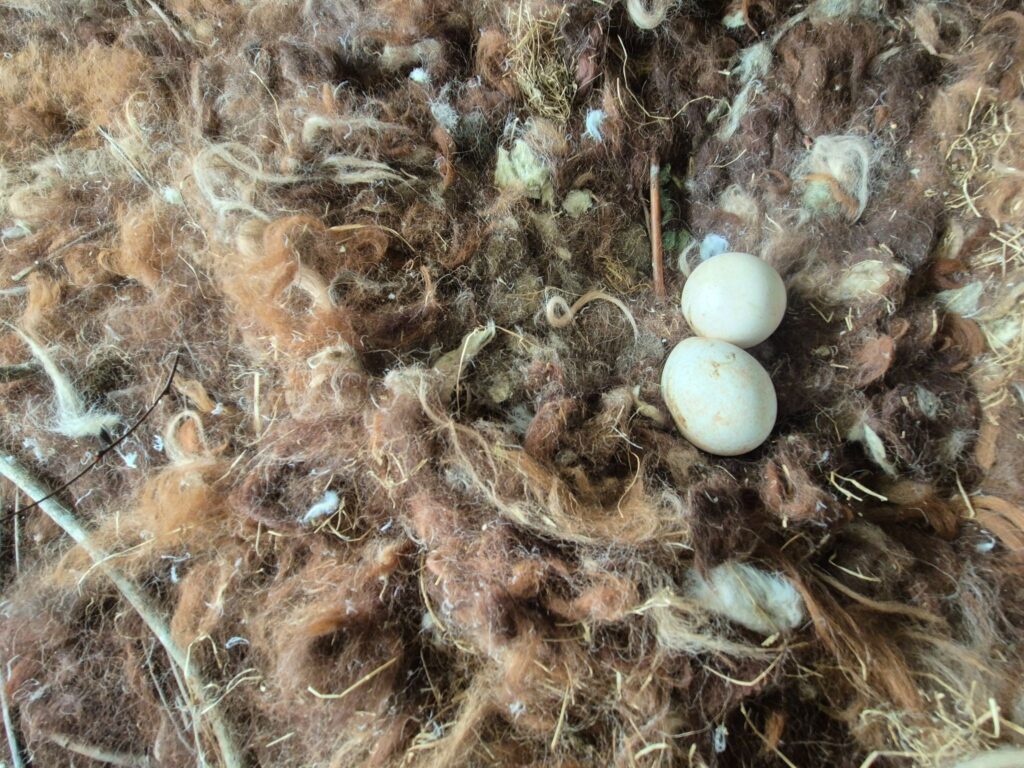
First egg of the season
The first egg of the season was laid on November 30 by BG850 × BG469 — almost two months earlier than the same pair’s laying last year. This unusually early start suggests that the pair has adapted exceptionally well to their new environment in the Pyrenees. A second egg followed on December 9, further confirming the stability and success of the pairing.
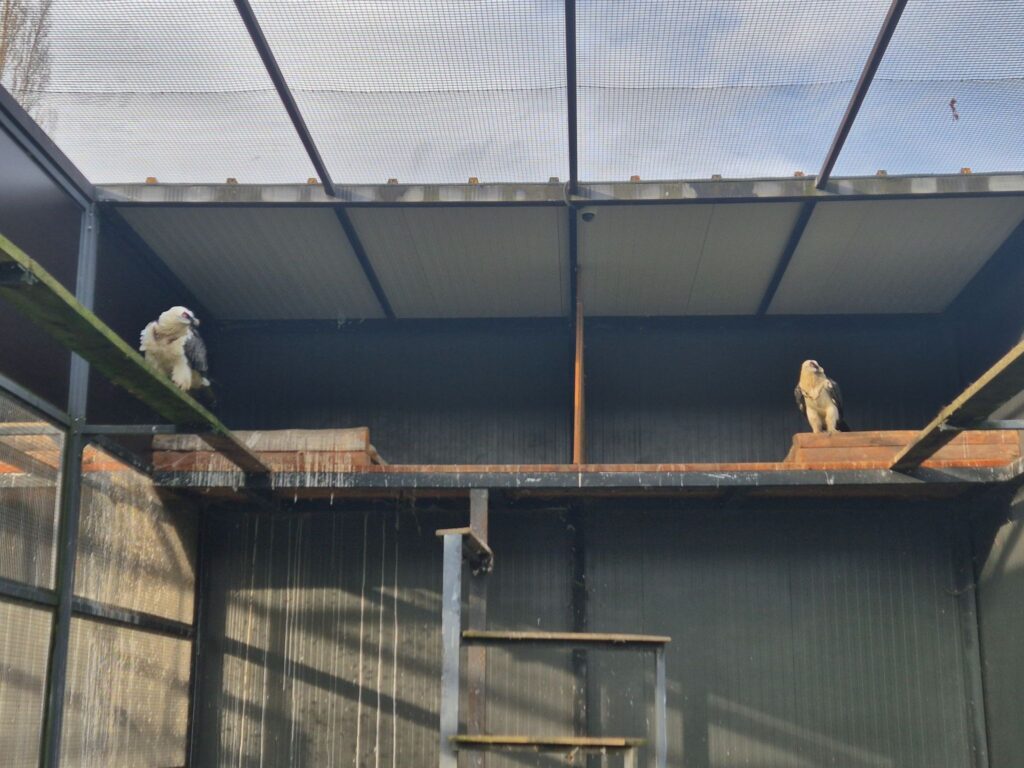
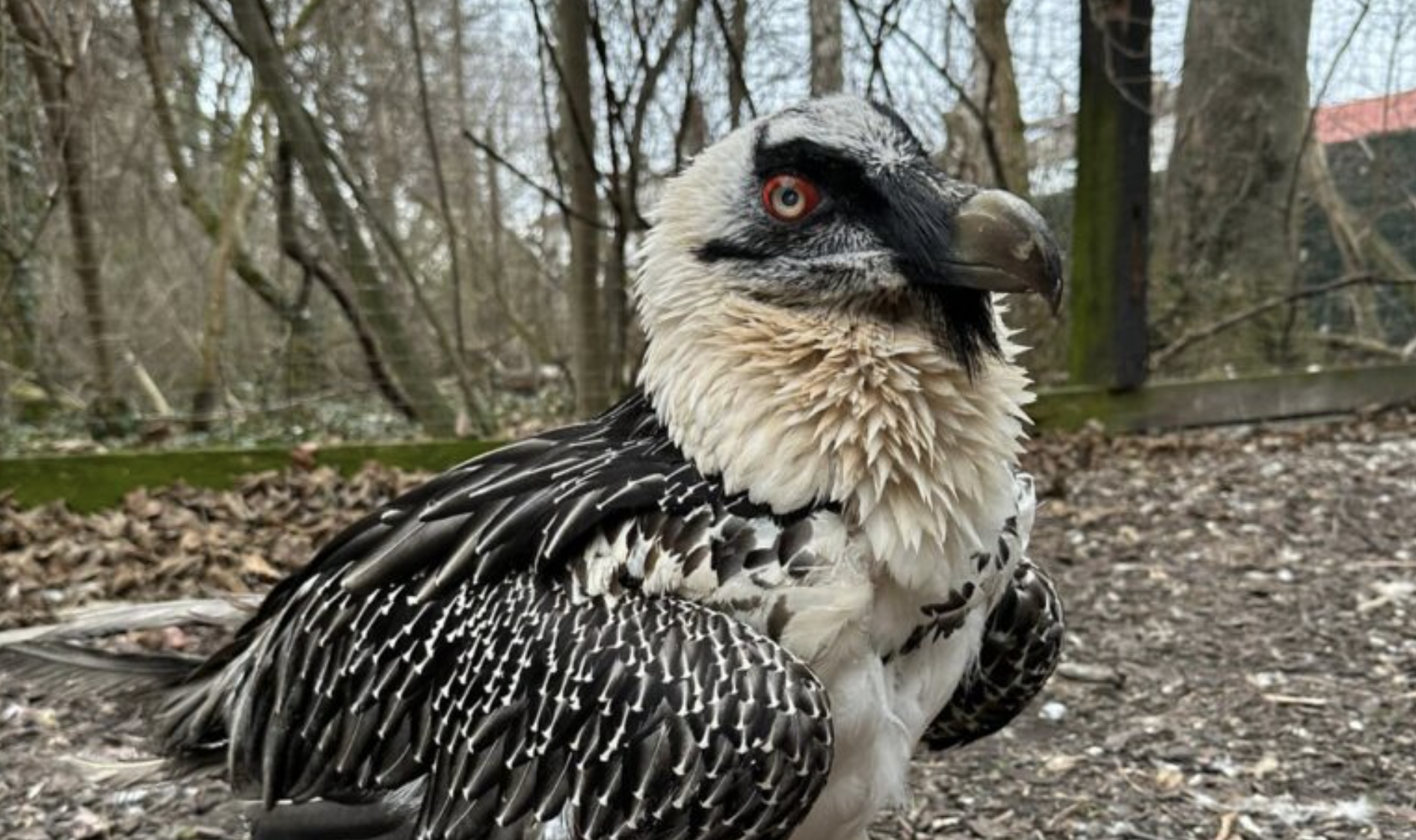
The proud parents are BG850, a male hatched in 2015 and BG469, who hatched in 2005 and spent many years at Parco Natura Viva in Italy. After moving to Parc Animalier des Pyrénées in 2024, BG469 was paired with BG850 — and the match was clearly a good one, as the pair wasted no time producing their first chick together, adding a valuable genetic boost to the programme.
Hello to the world!
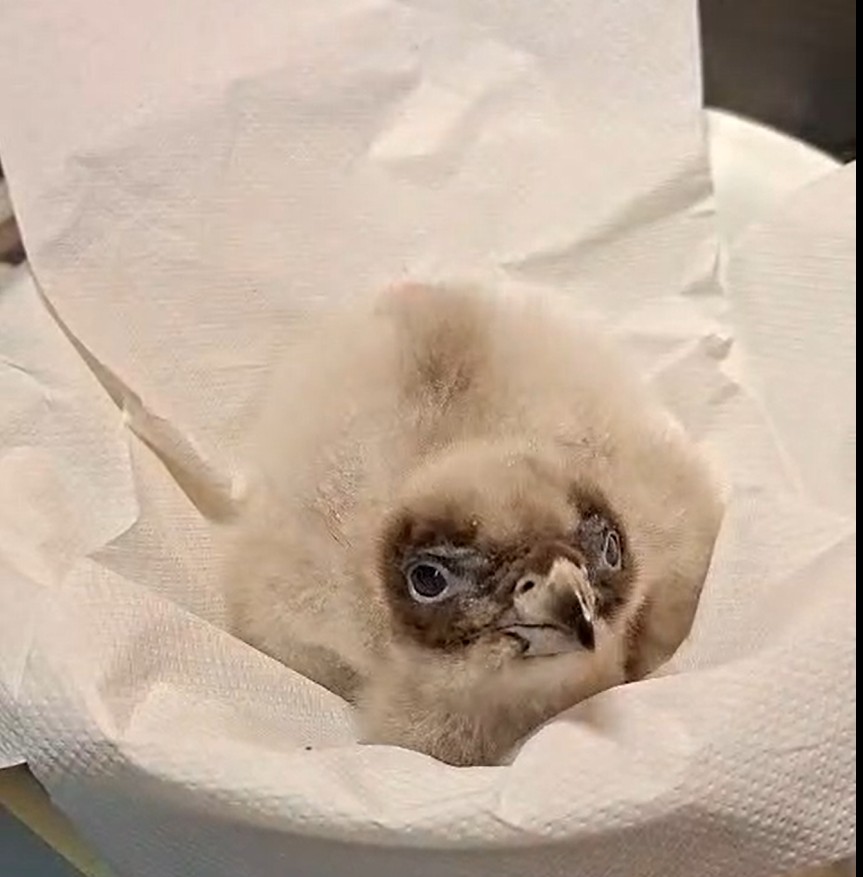
To the delight of the zoo staff, the chick hatched on the morning of January 22 after a successful incubation period of 53 days — right on schedule for the species. Bearded Vultures typically lay their eggs between December and February and incubate them for around 54 days, a demanding task shared equally by both parents.
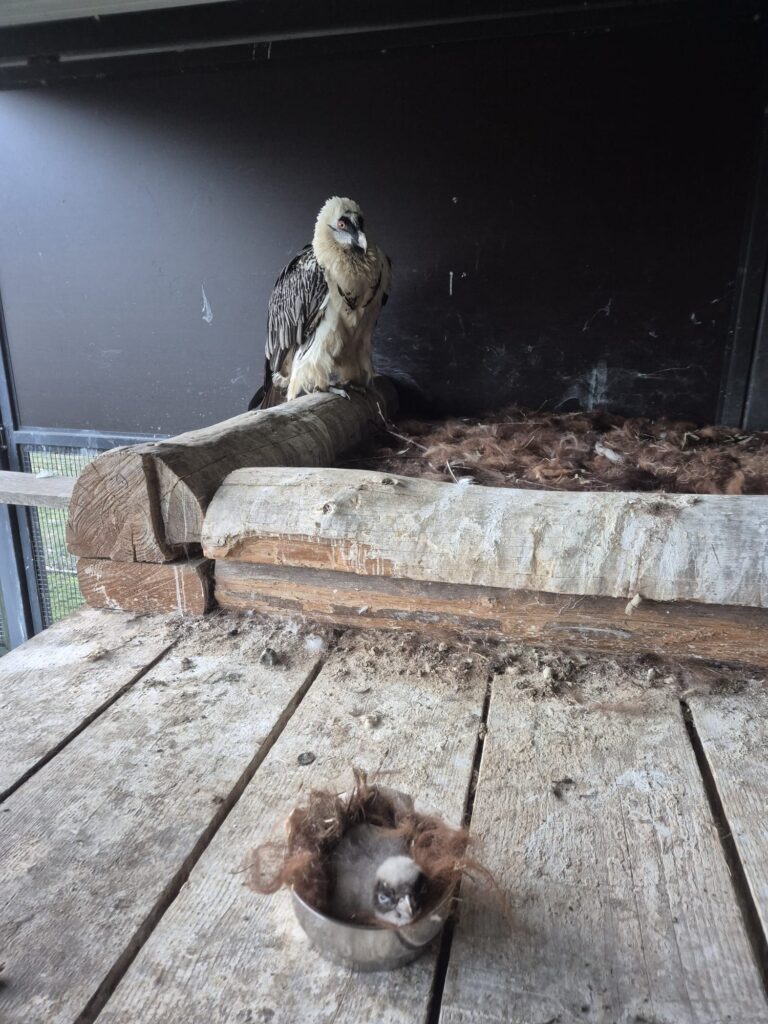
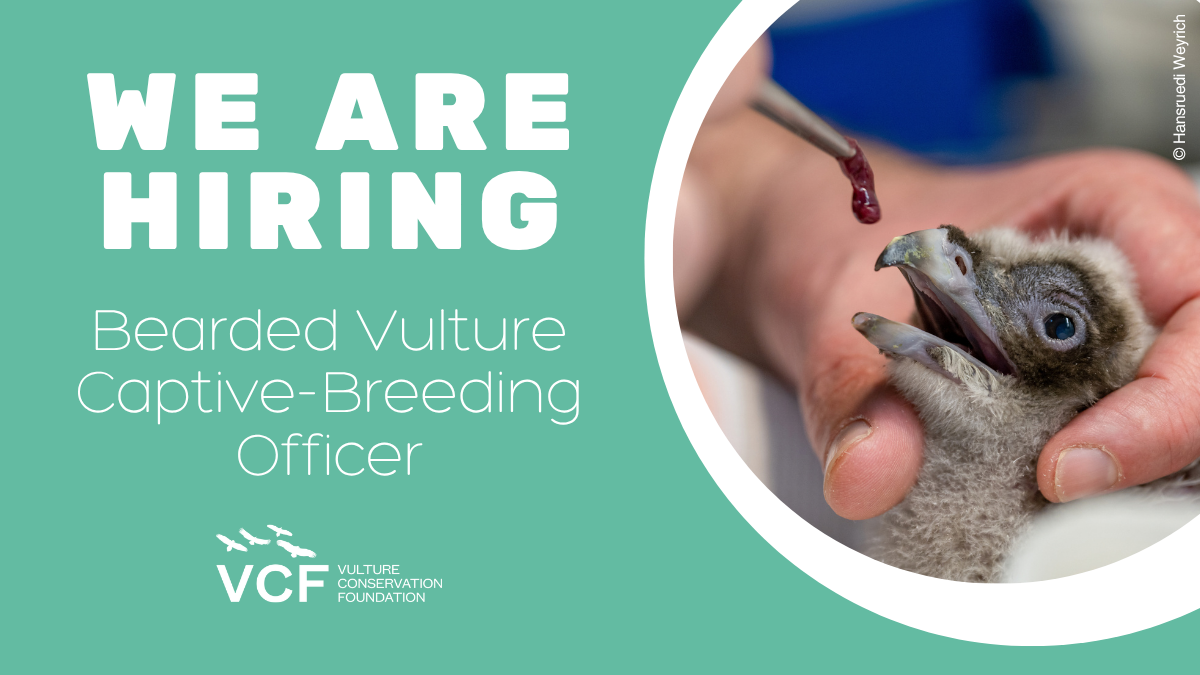
Each hatching of a captive-bred Bearded Vulture chick is the result of a meticulous and carefully managed process. It begins with strategic breeding programme management, including thoughtful pair selection, close monitoring, and the provision of optimal conditions for egg-laying and incubation. Following hatching, the work intensifies. For the first days of its life, the chick receives around-the-clock care, with the team carefully monitoring its development.
Why is captive breeding important?
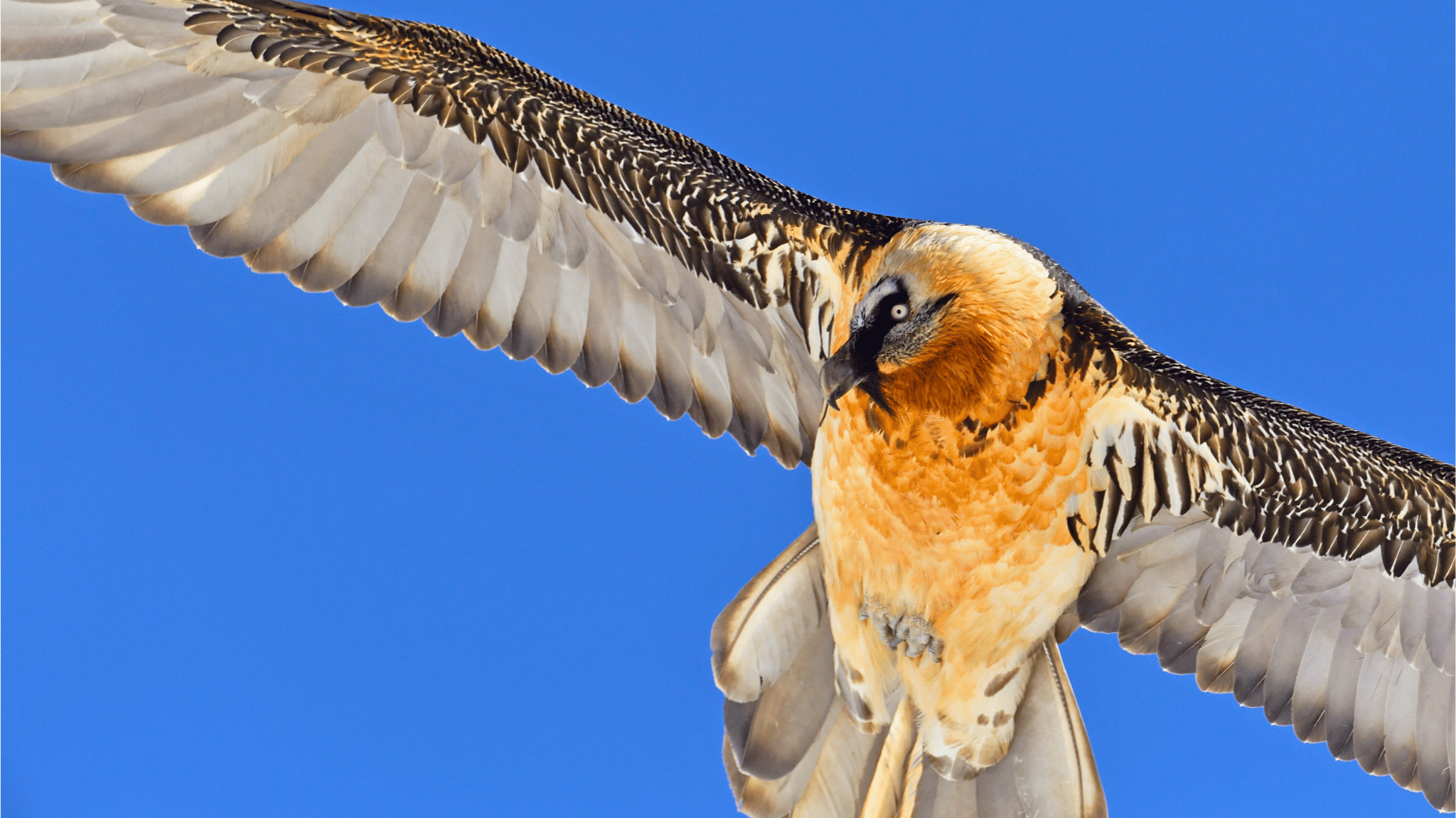
Captive breeding is essential for restoring Bearded Vulture populations across Europe. Young, captive-bred vultures adapt more easily to new environments than adult birds, making them ideal candidates for reintroduction. Over the past decades, this approach has enabled the successful return of the species to the Alps—where it was once extinct—and continues to support reintroduction and reinforcement efforts across multiple regions. Ultimately, captive breeding underpins the long-term goal of restoring a connected European Bearded Vulture population across its former range.
What’s next?
In the coming weeks, the newly hatched chick will be closely monitored to ensure its health and proper development. If all goes well, in around 90 days the chick may be selected either for release into the wild or to remain within the breeding programme, contributing to future generations. As the season progresses, more chicks are expected across the network, so stay tuned for more updates!
Bearded Vulture EEP
The Bearded Vulture EEP, coordinated by the Vulture Conservation Foundation (VCF) on behalf of EAZA, plays a central role in enhancing the genetic diversity and long-term stability of the European Bearded Vulture population. With a network of more than 40 participating institutions, the programme provides the backbone for captive breeding efforts that underpin reintroduction and reinforcement projects throughout Europe.