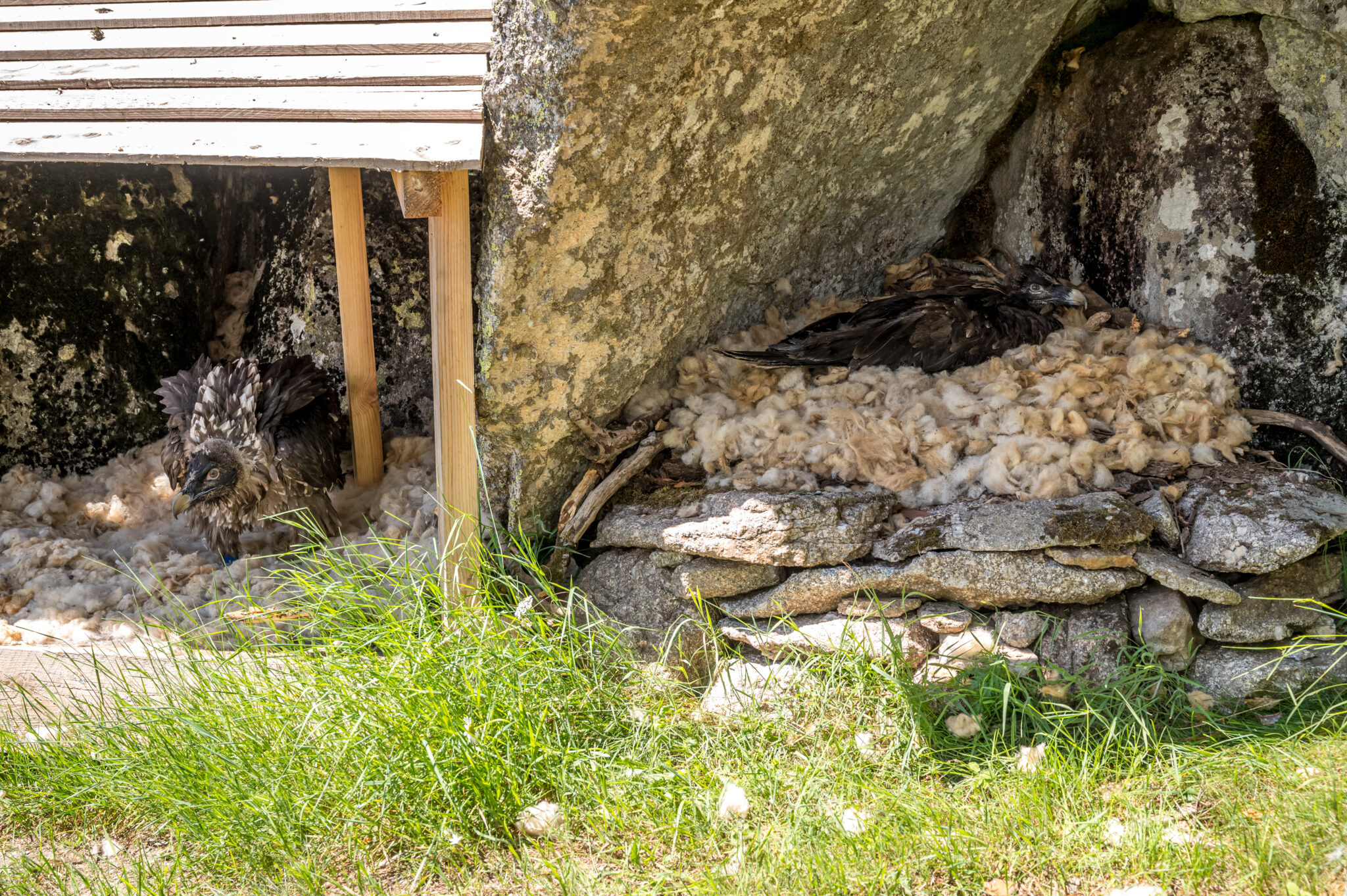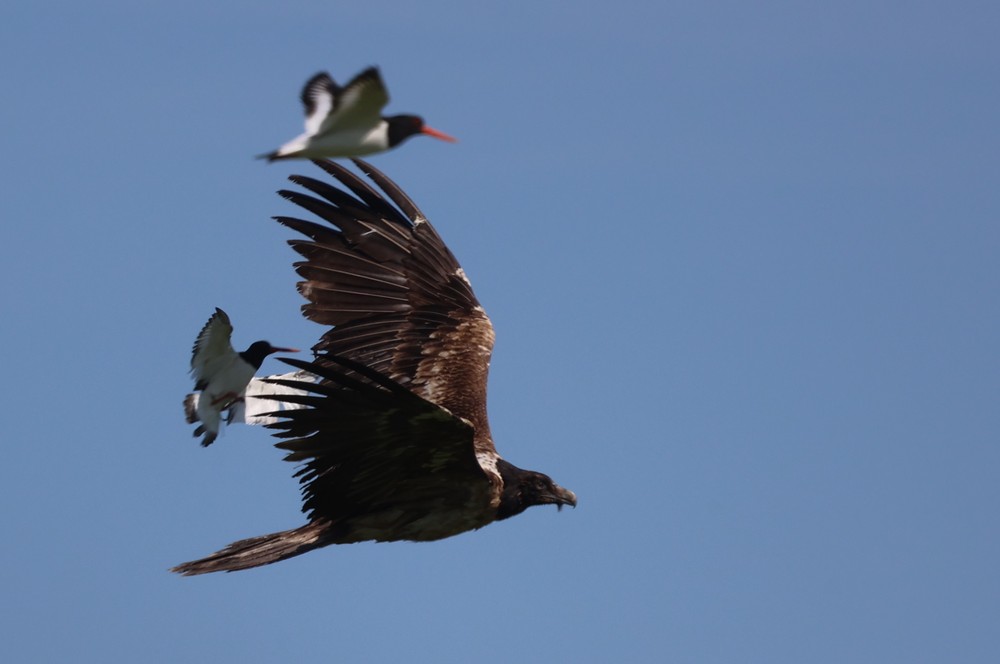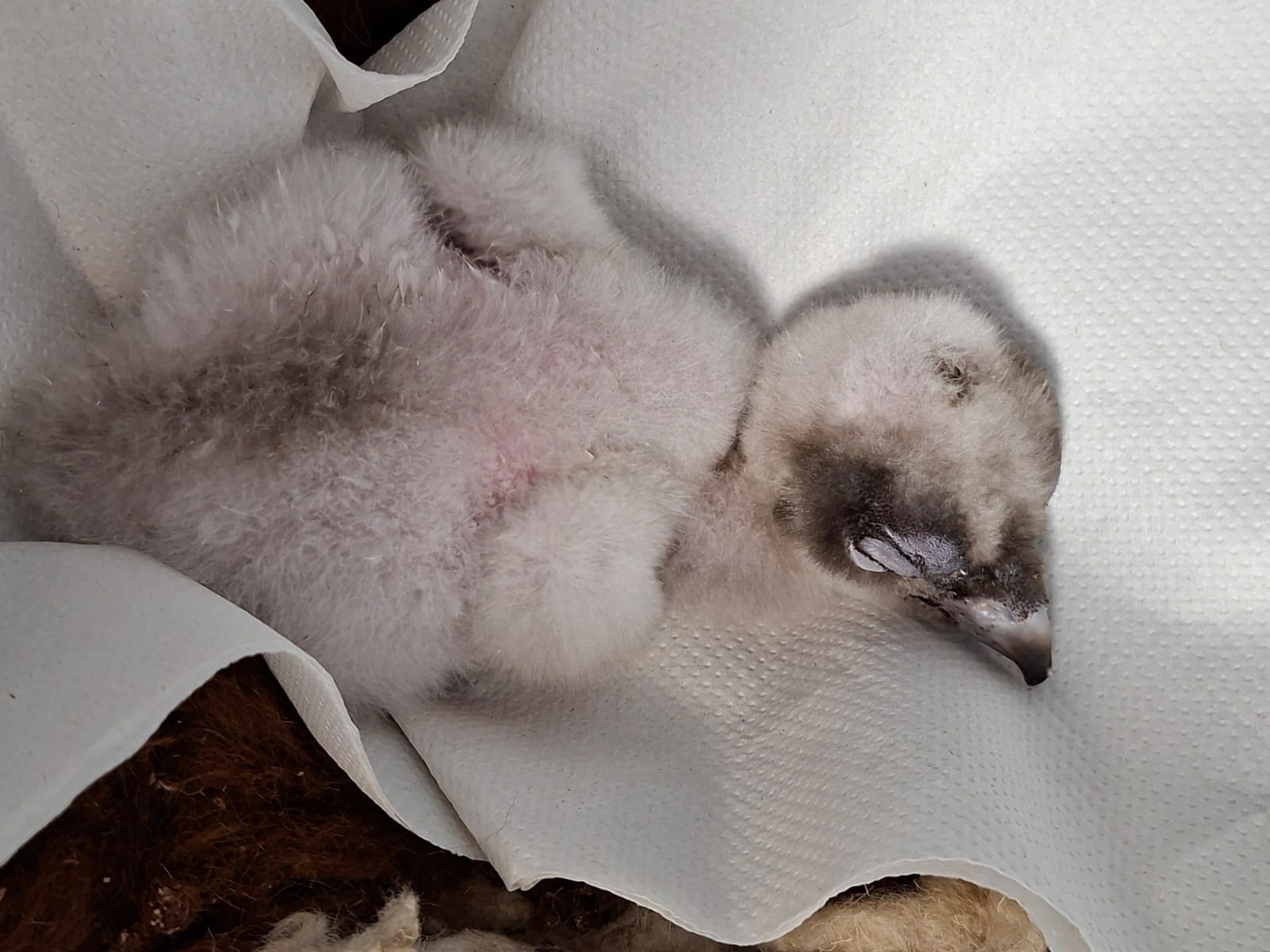
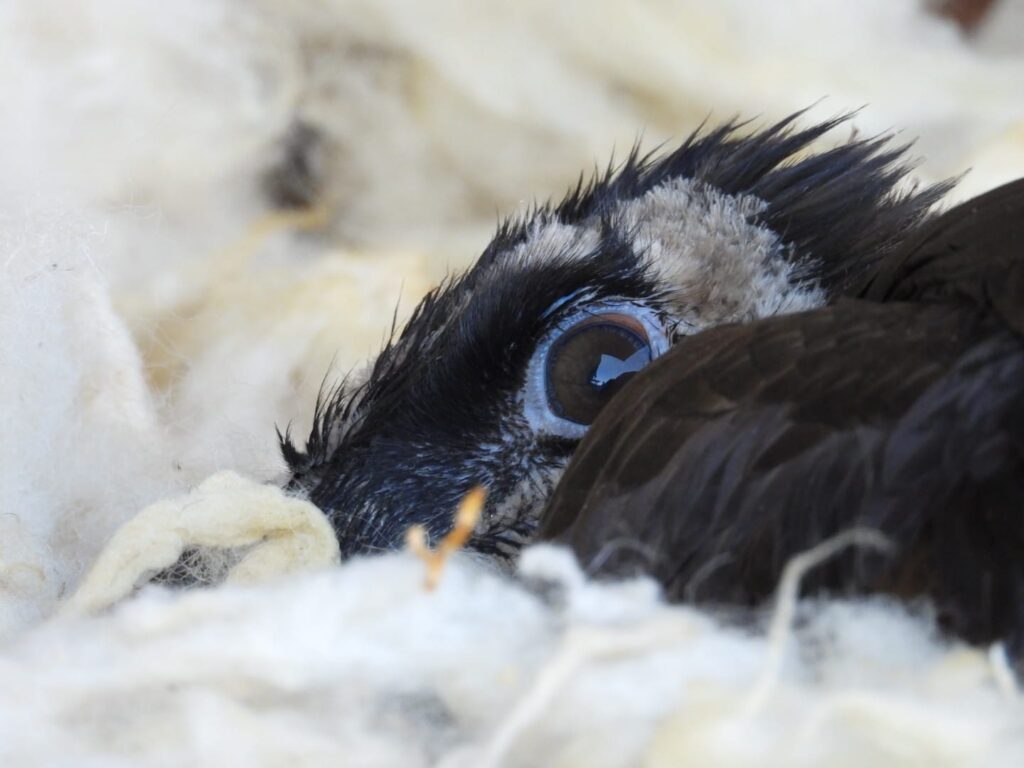
The Maestrazgo Reintroduction Project has carried out its ninth consecutive release of captive-bred Bearded Vultures in eastern Spain. On 20 May 2026, two young birds were placed in the hacking site in the Tinença de Benifassà Natural Park, where they will spend the next few weeks adapting to life in the mountains before eventually taking their first flights.
This year’s pair consists of a female, BG1297, hatched on 19 February 2026 at the Richard Faust Specialised Bearded Vulture Breeding Centre (RFZ) in Austria, and a male, BG1299, hatched on 18 February 2026 at Zoo Ostrava and later adopted and raised at Liberec Zoo in the Czech Republic, all part of the Bearded Vulture Captive Breeding Network (Bearded Vulture EEP).
Before the release
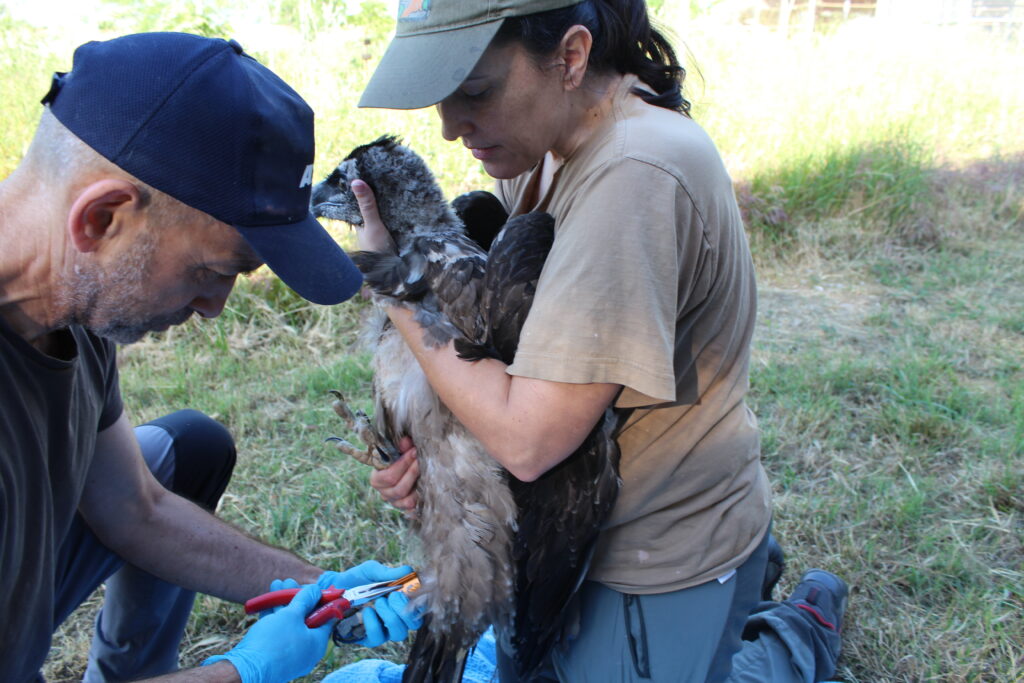
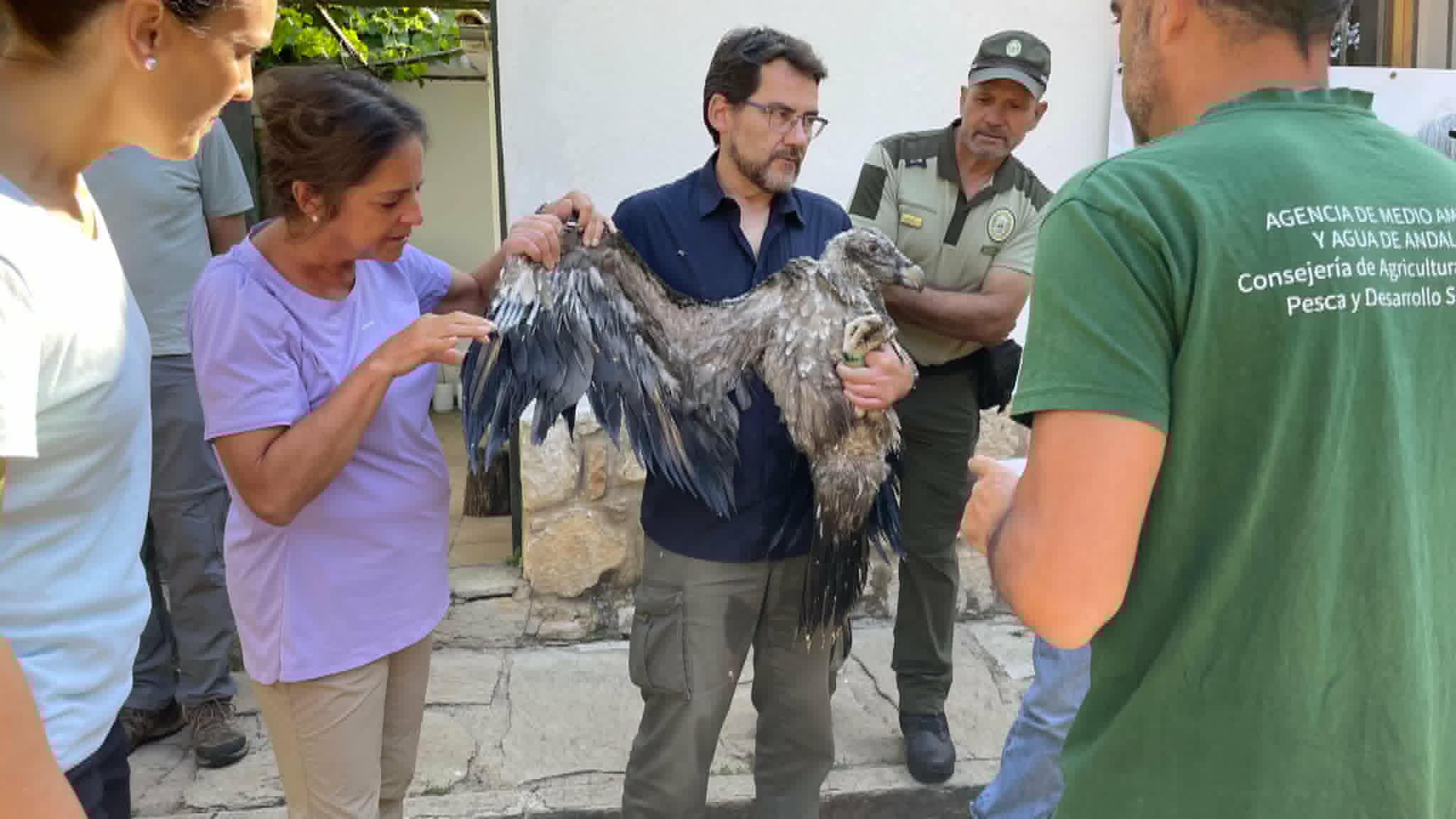
The two birds arrived at the Vallcalent Bearded Vulture Breeding Unit on 18 May, where they were fitted with rings and GPS transmitters and given time to rest before the release.
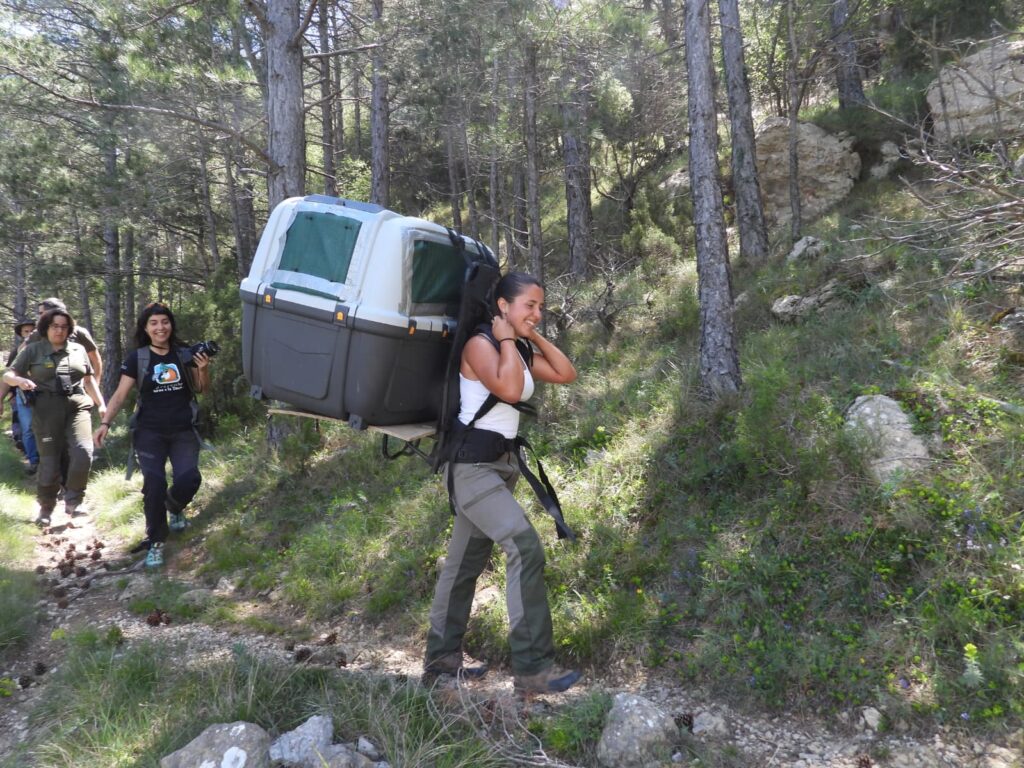
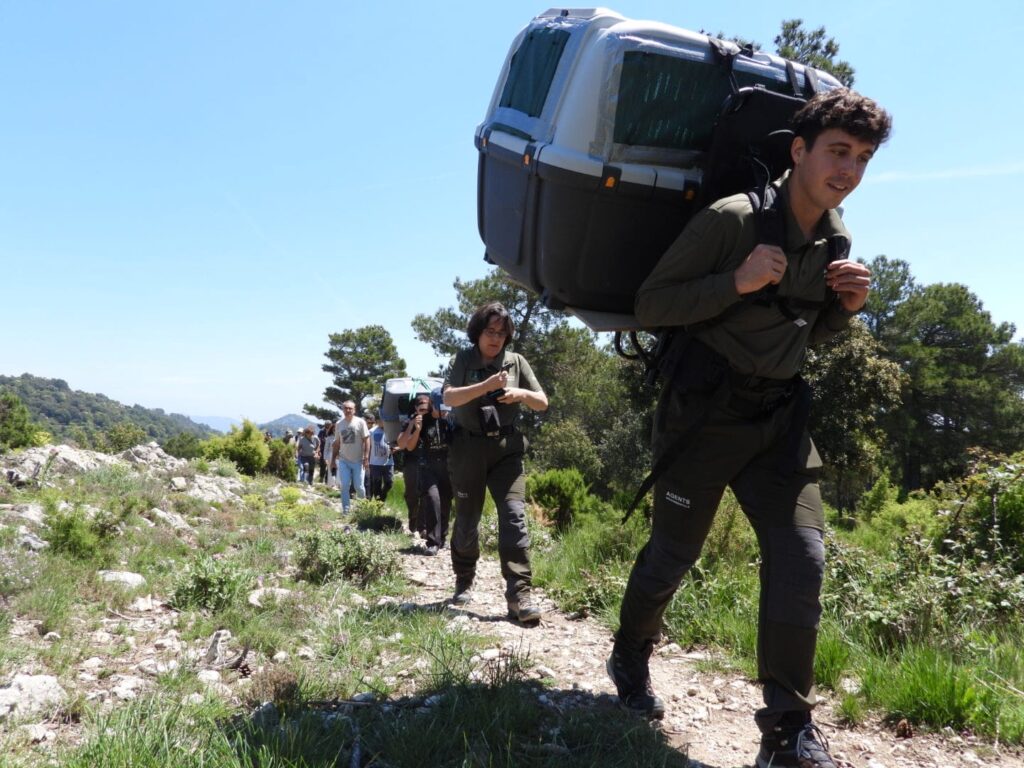
On 20 May, they were transported to Bell, the village closest to the hacking site in Maestrazgo, by the specialised animal transport company Komodo Zoo Services, which had also collected them from Barcelona Airport.
A small gathering of local authorities and project partners took place in Bell before the release. During the event, the names chosen for the birds were announced. Following the project’s naming sequence, which uses a different letter each year, the female was named Insa and the male Iberis.
To minimise stress, the birds were not presented to the public. There were no photographs with the authorities and no public display. After the announcement, they were taken directly to the hacking site and placed in the artificial nest.
A careful start in the mountains
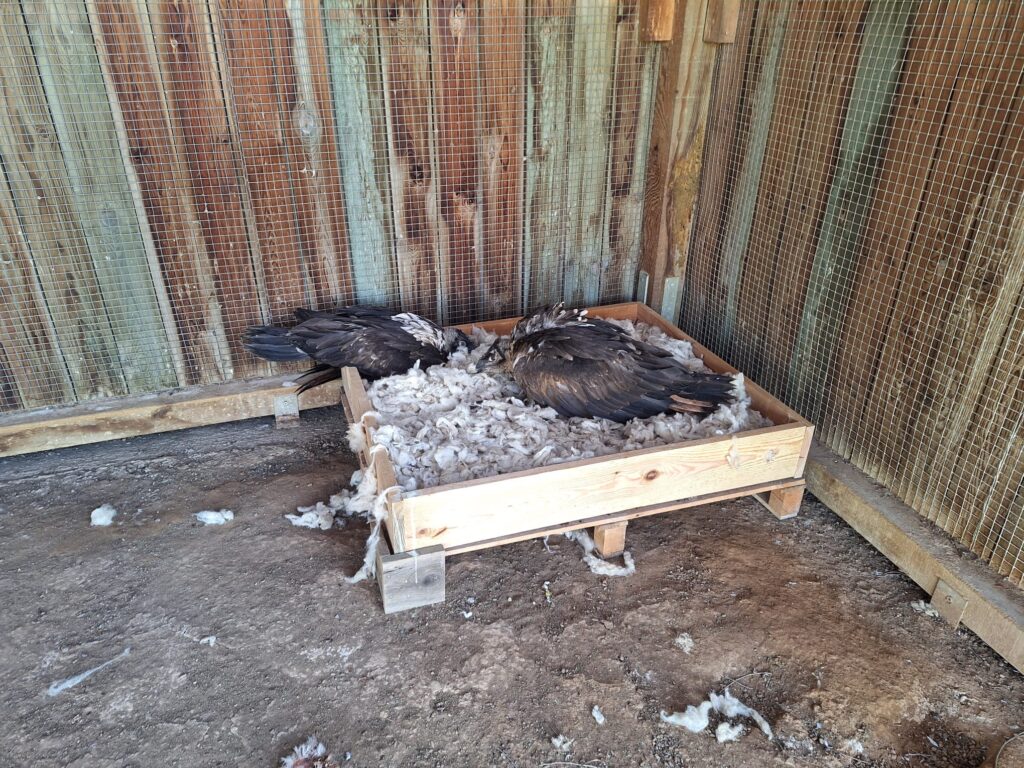
The nest is located inside a cave close to suitable Bearded Vulture habitat. For now, Insa and Iberis will remain inside the hacking site under regular monitoring by the field team. As in previous years, the aim is to give the birds time to become familiar with their surroundings while limiting stress and human contact.
Both birds are doing well. Insa is the larger of the two and has so far appeared more nervous. Iberis has shown more dominant behaviour and has largely taken possession of the main nesting area.
They are expected to remain in the hacking site for several more weeks before making their first flights and beginning to explore the surrounding mountains. Their progress will be monitored through GPS tracking and regular field observations.
Support during the first months
The first period after fledging is often the most challenging for young Bearded Vultures. To help them through this stage, supplementary feeding stations in the area will continue providing food while the juveniles learn to navigate and survive independently.
These feeding points also encourage the birds to remain connected to the Maestrazgo massif, which remains a key area for the long-term recovery of the species in Spain.
Reconnecting two populations
The Maestrazgo Reintroduction Project is led by the Generalitat of Valencia, in collaboration with the Autonomous Communities of Aragón and Catalonia, the Spanish Ministry for the Ecological Transition and the Demographic Challenge and us here at the Vulture Conservation Foundation. The project’s main objective is to establish a wild breeding population that will bridge the populations in the Pyrenees in the north and Andalusia in the south.
Bearded Vultures historically bred in the Maestrazgo region before disappearing from the area decades ago. Since the first releases began in 2018, the project has steadily worked toward bringing the species back to these mountains.
To date, 21 Bearded Vultures have been released within the project:
- 2018: Amic and Alòs (2 males)
- 2019: Bassi and Boira (1 male, 1 female)
- 2020: Cocó and Celest (1 male, 1 female)
- 2021: Dena, Dalila and Durall (2 females, 1 male)
- 2022: Ereta and Esperit (1 female, 1 male)
- 2023: Fredolic, Farigola and Flora (1 male, 2 females)
- 2024: Gea, Guatia and Genista (3 females)
- 2025: Hera and Hades (1 female, 1 male)
- 2026: Insa and Iberis (1 female, 1 male)
With Insa and Iberis now beginning their lives in the wild, the project takes another step forward in rebuilding a future for the species in the Iberian Peninsula.