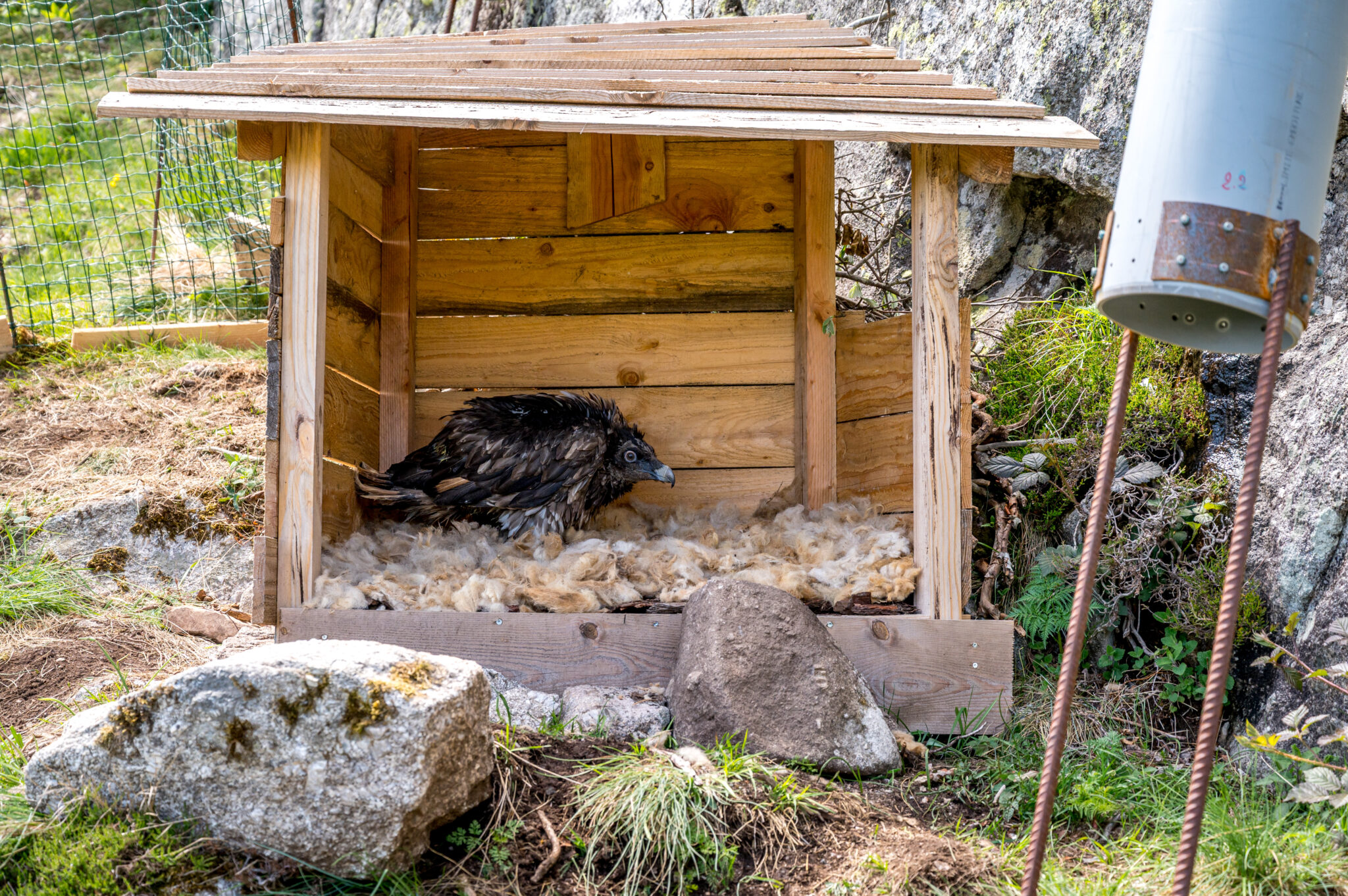
On 22 May 2026, two captive-bred Bearded Vulture chicks were released at the Léoux reintroduction site in the Baronnies, southern France, marking ten years since the first birds were reintroduced in this part of the Drôme.
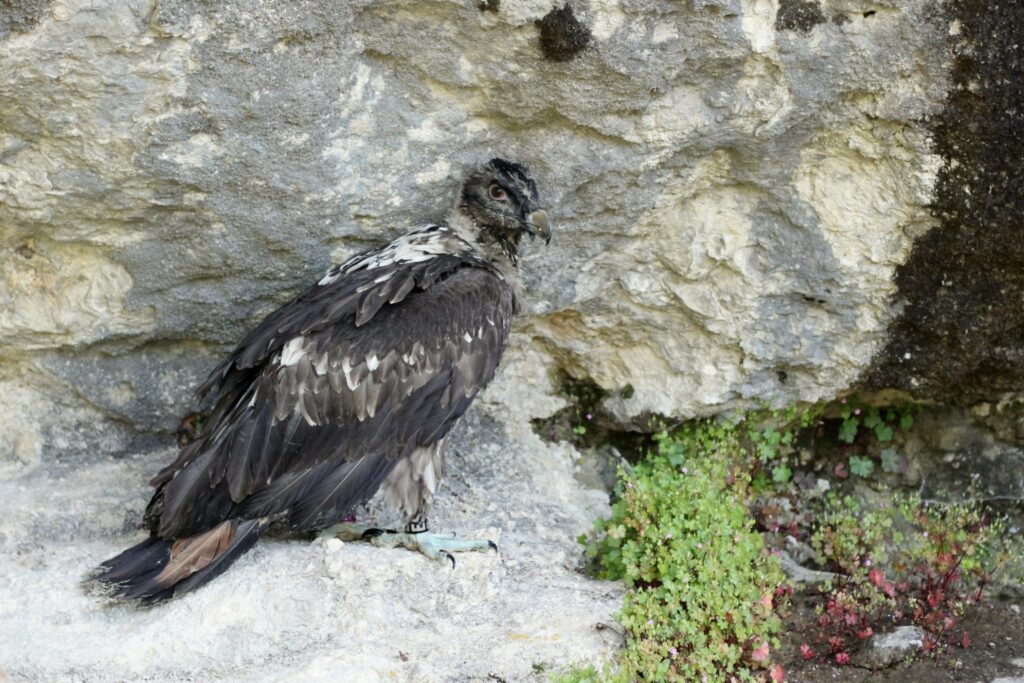
The two chicks, named Pathos and Remos, came from Andalusia, Spain, and are now at the hacking site where they will stay until they are ready to take their first flights.
Two new arrivals from Spain
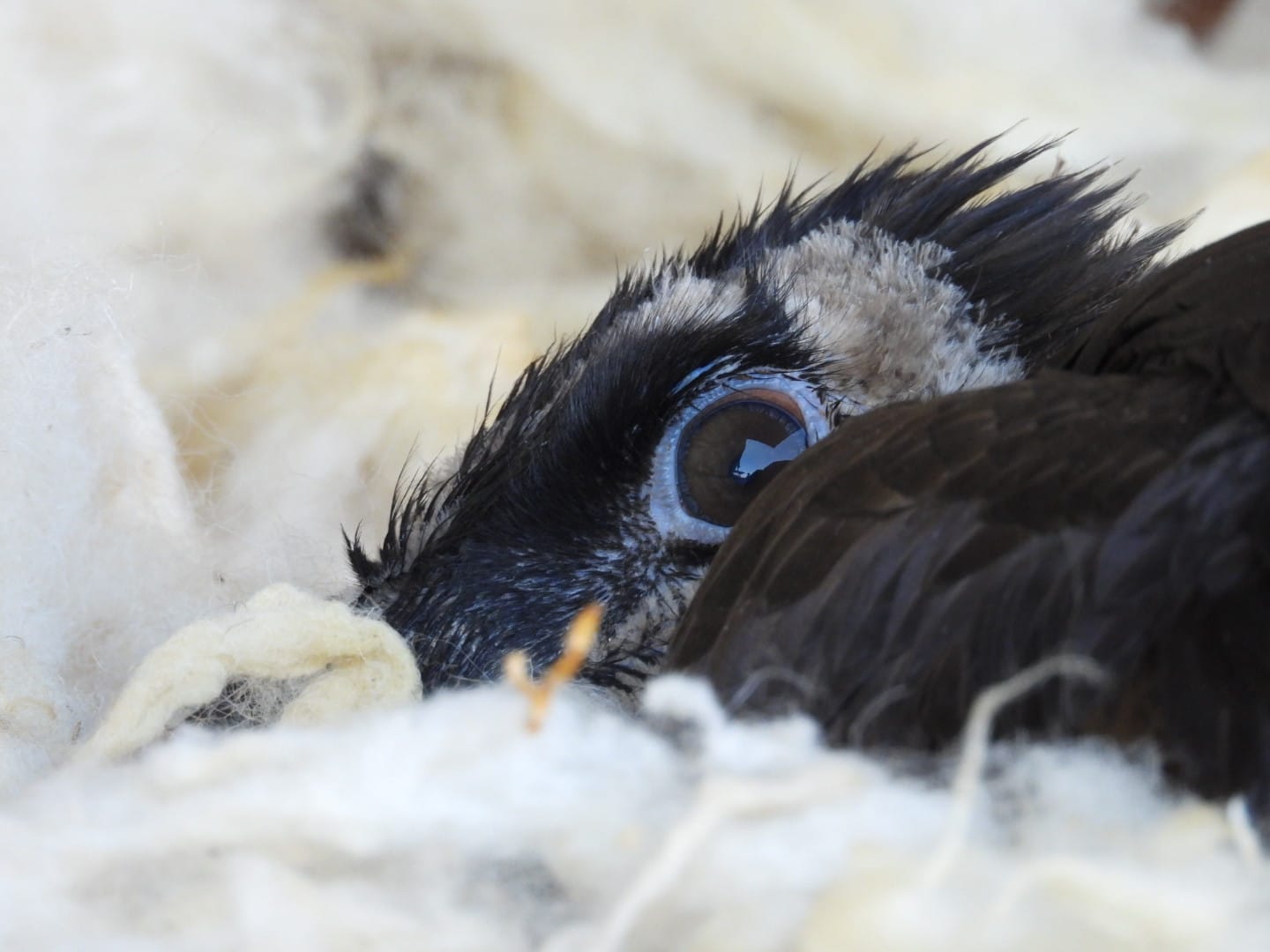
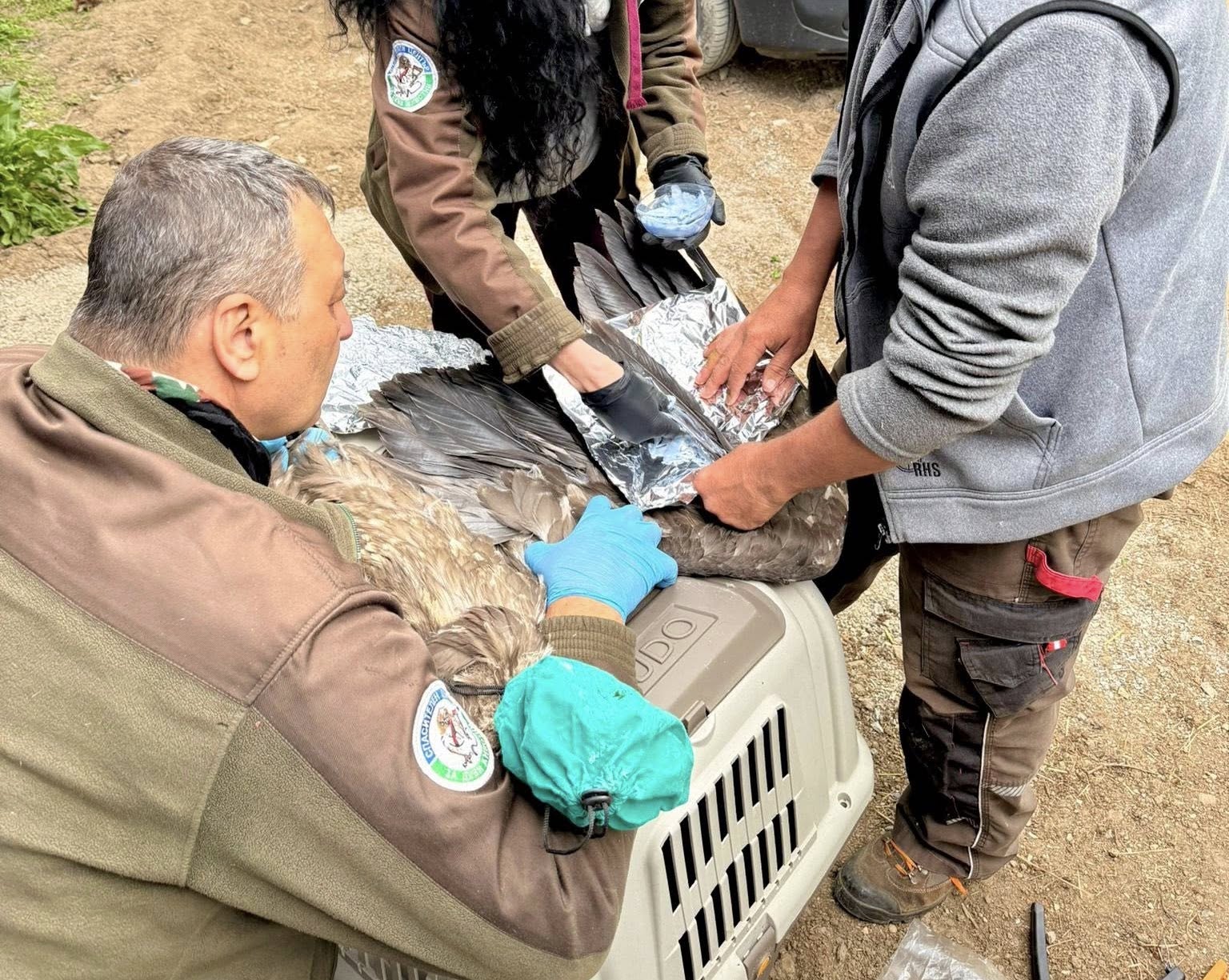
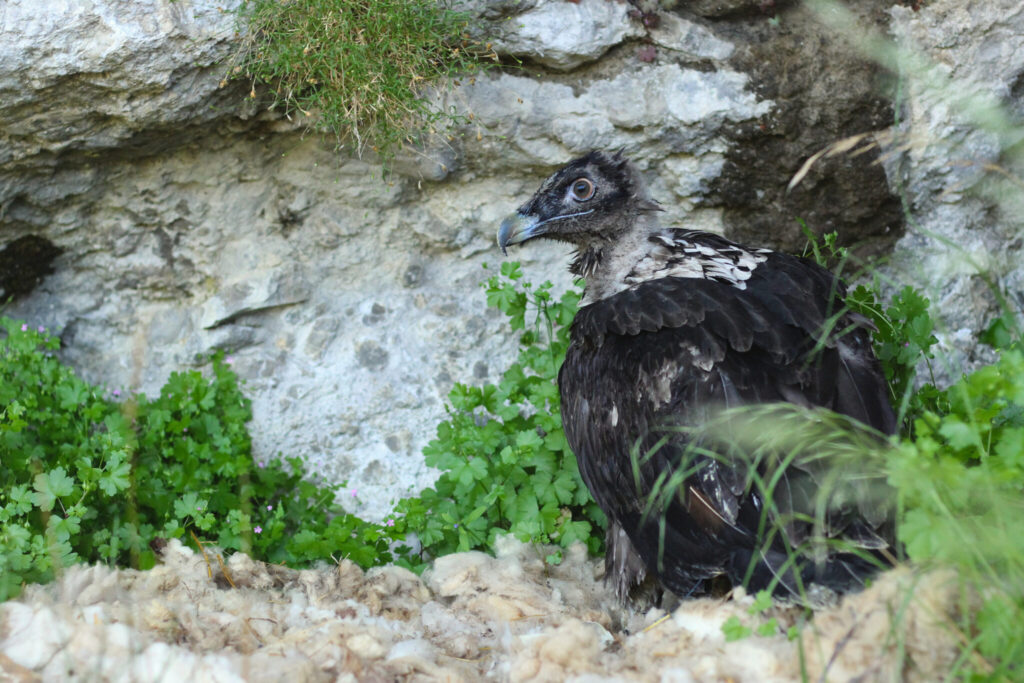
Pathos, a female, hatched at the Guadalentín Breeding Centre on 21 February 2026. Remos, a male, hatched the following day at Jerez Zoo. Both birds were fitted with identification rings and GPS transmitters before the journey to France, so conservation teams can monitor them once they leave the site.
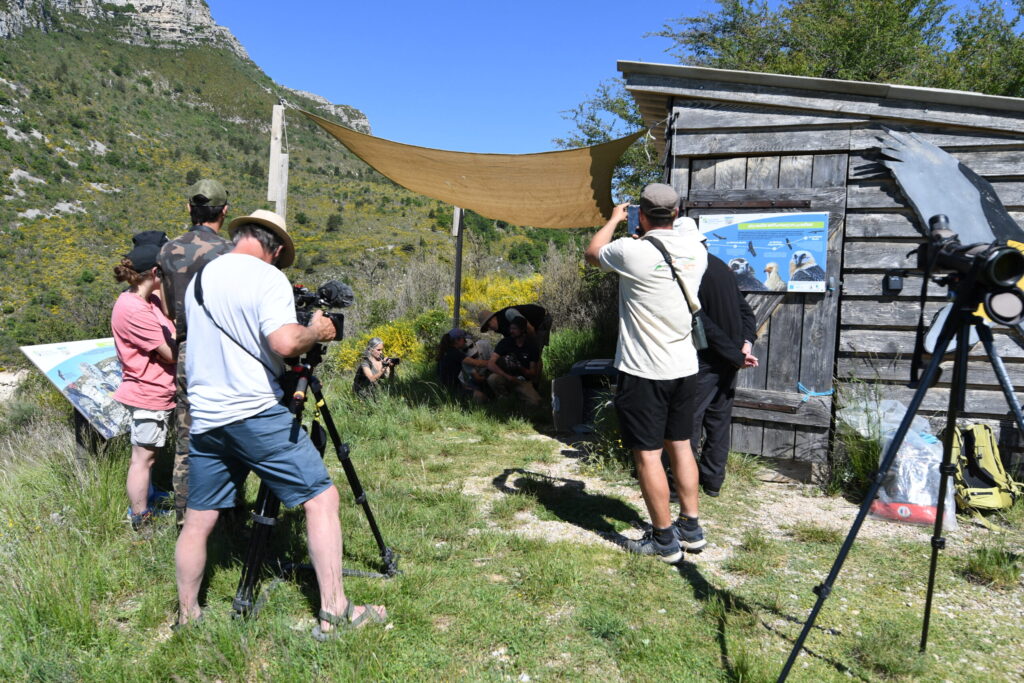
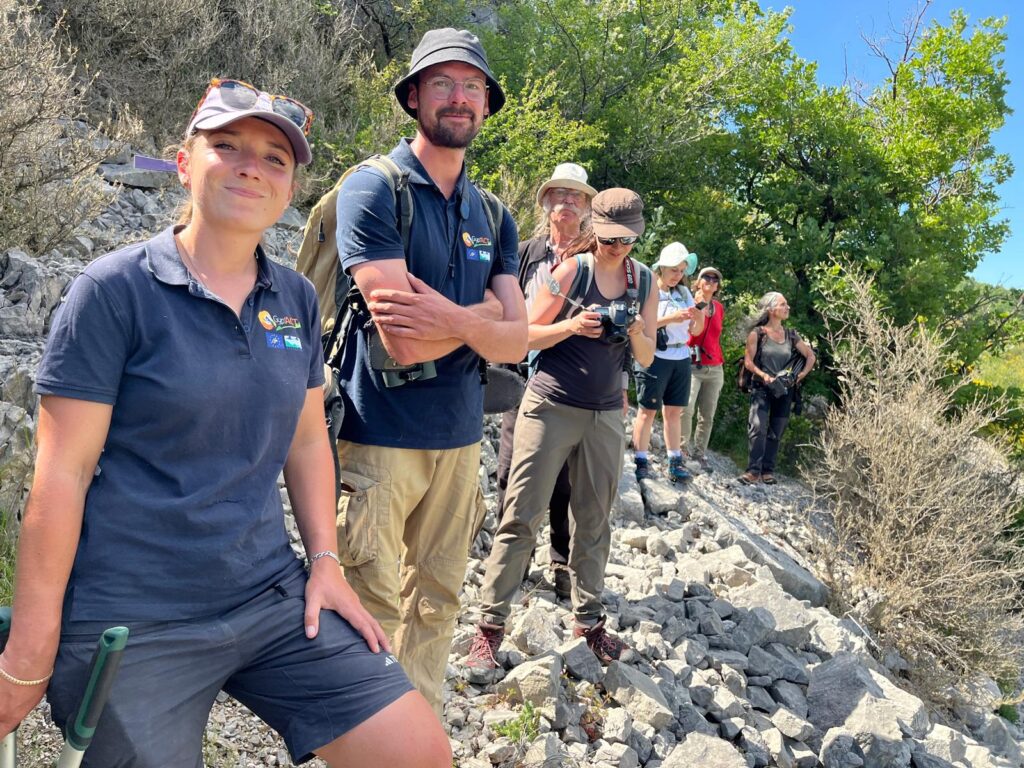
On arrival, the Vautours en Baronnies team transported the chicks to the release site, ran final checks and placed them in the hacking cave. Their sponsors were also there for the occasion – wildlife filmmaker Marie Amiguet is godmother to Pathos, and Franck Soulignac, President of the Drôme Departmental Council, is godfather to Remos. Jacques Nivon, Mayor of Villeperdrix and a longstanding supporter of the programme, attended as well.
Preparing for life in the wild
Pathos and Remos were placed in an artificial nest inside the hacking cave, a method that mimics how Bearded Vultures naturally fledge. The Vautours en Baronnies team monitors the site daily and puts out food every two days after sunset, keeping disturbance low.
At the time of release, the birds were 89 and 90 days old. Bearded Vultures typically take their first flight at around 120 days, so that’s roughly a month away.
Ten years of releases in the Baronnies
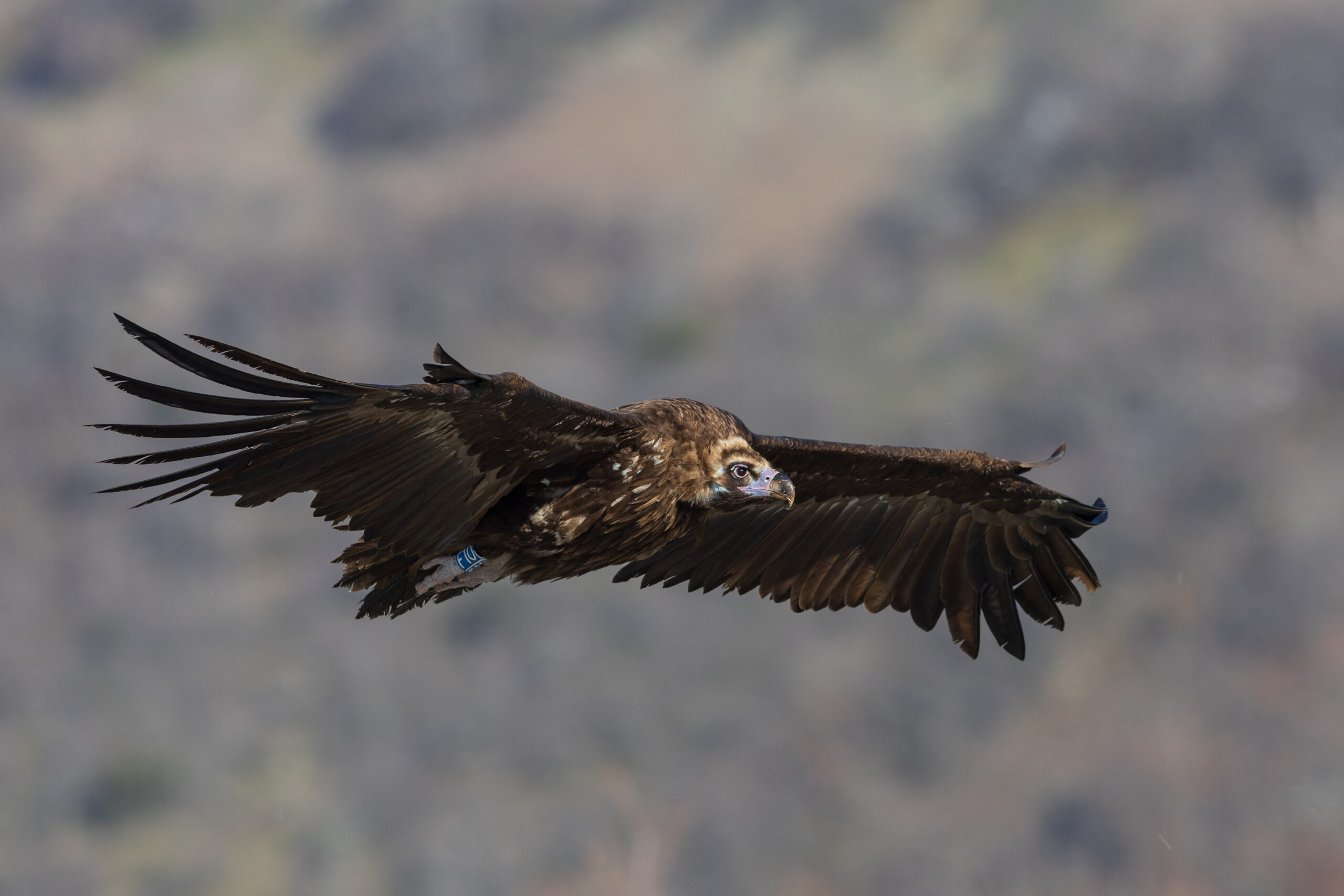
This release is part of the LIFE Gyp’Act project, which works to strengthen the Bearded Vulture population in south-eastern France and improve connectivity between the Alpine and Pyrenean populations. The project involves partners across France and Europe, including members of the Bearded Vulture captive breeding network coordinated by the Vulture Conservation Foundation.
For now, attention is on Pathos and Remos as they settle in above the Baronnies, and on the first flights that should follow within the coming weeks.
Restoring the Bearded Vulture Alpine and Pyrenean populations
To restore the Bearded Vulture metapopulation between the Alps and the Pyrenees, the LIFE Gyp’Act project plans to release 60 captive-bred juveniles in different locations across Southern France and the Pre-Alps. The LIFE Gyp’Act builds on the legacy of the LIFE GypConnect and ensures the continuity of the conservation measures implemented so that Bearded Vultures continue to flourish.

LIFE Gyp’Act is a 13M€ project, co-funded by the EU’s LIFE programme, that will run until 30 November 2028. Project partners are LPO – Ligue pour la Protection des Oiseaux as coordinator beneficiary, and the Vulture Conservation Foundation, Association Vautours en Baronnies, LPO Auvergne-Rhone-Alpes, LPO Occitanie, Sorbonne Université, ENEDIS, Centre National d’Informations Toxicologiques Vétérinaires, Parc National des Cévennes and Parc Naturel Régional du Vercors as associated beneficiaries.